Electricity prices are becoming a competitive disadvantage for Kenyan manufacturers as regional rivals pursue cheaper industrial power. Lower tariffs could help, but reliability, predictable billing and the cost of running factories outside peak hours will also determine whether businesses can expand.
By Kirimi Mbogo
Kenyan manufacturers face a problem that goes beyond the electricity bill. Power costs affect the price of every product that passes through an energy-intensive factory, from processed food and packaging to steel and chemicals. When electricity is expensive, manufacturers must absorb the cost, raise prices or accept lower margins. Each option can weaken their position against competitors.
The World Bank’s 2026 review of Kenya’s private sector, as reported by Business Daily on 6 October, put average industrial electricity tariffs at US$0.18–US$0.23 per kilowatt-hour, compared with about US$0.03–US$0.05 in Egypt, Ethiopia and Morocco. The report described Kenyan electricity prices as a material burden on formal manufacturers competing with producers in other markets.
The difference is large enough to warrant attention, although tariff comparisons must account for customer categories, taxes, network charges and the precise components included in each country’s figures. They are not, by themselves, a complete measure of manufacturing competitiveness.
The underlying question is whether Kenya can reduce the cost of dependable industrial power enough to support investment, production and exports without undermining the financial sustainability of its electricity system.
The bill tells only part of the story
The Kenya Association of Manufacturers (KAM) has made electricity costs a central part of its policy agenda. At the launch of its 2026 Manufacturing Priority Agenda, chief executive Tobias Alando said: “Energy costs remain a major pain point.”
KAM wants the government to remove VAT on levies imposed on fuel prices, scrap the six per cent growth requirement for the time-of-use tariff and open the electricity market to competition beyond Kenya Power. These are proposals from the manufacturers’ lobby, not evidence that each proposed measure would necessarily lower the final cost of power.
The distinction matters because an electricity bill contains more than the base energy tariff. It can include fuel-cost adjustments, foreign-exchange adjustments, taxes and other levies. Demand charges and the applicable tariff category also affect what an industrial customer pays.
For October 2026, published reporting on EPRA’s adjustments put the fuel energy charge at KSh3.22 per kWh and the foreign-exchange adjustment at KSh0.87, alongside a water-resource management levy of KSh0.0134. Together, these components amounted to approximately KSh4.10 per unit. They were adjustments, not the full electricity price.
For a factory consuming millions of units each year, small changes in per-unit charges can add up. But the impact varies by plant. A steel mill, a food processor and a garment factory have different energy demands, operating schedules and opportunities to shift production to cheaper hours.
A national average can indicate the scale of the problem. It cannot establish what every manufacturer pays.
The price of power can shape investment
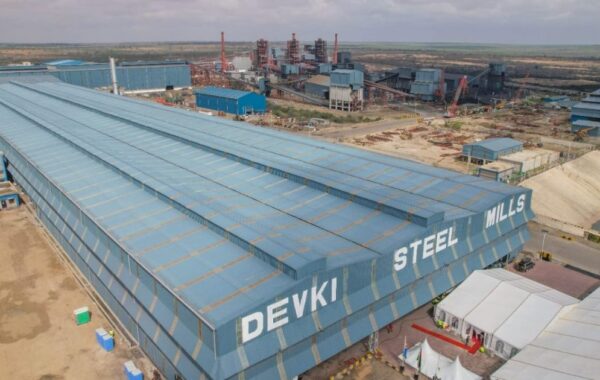
KAM’s 2024 Manufacturing Priority Agenda offered a concrete example. It reported that one steel manufacturer paid an average of KSh19.86 per kWh in 2023 and spent KSh1.1 billion on electricity that year. The association estimated that reducing the cost to KSh10 per kWh would lower the bill to KSh560 million, a potential saving of about 51%.
That estimate illustrates the possible scale of savings for an energy-intensive business. It is a policy scenario, however, not a verified saving achieved by the factory. The calculation also does not establish how the lower tariff would affect the electricity system’s revenue or what other changes might be required.
The broader point is that power prices influence more than short-term profitability. A manufacturer deciding whether to expand a production line, buy more efficient machinery or establish a new facility must estimate future operating costs. Unpredictable electricity bills make those decisions harder.
If a competitor in another country can produce the same item with a lower energy bill, the Kenyan business may have to offset the difference through greater productivity, lower costs elsewhere or a higher selling price. In export markets, where buyers can compare suppliers across borders, that difference can matter.
Time-of-use pricing offers some relief
Kenya has already introduced a mechanism that allows eligible businesses to reduce their electricity costs by shifting consumption to periods of lower demand.
The time-of-use (ToU) tariff offers a 50% discount on energy charges during designated off-peak hours. According to Business Daily, businesses saved KSh8.13 billion through the scheme between July 2021 and June 2026, including KSh1.87 billion in the latest financial year. The number of participating businesses reached 2,614 in the year to June 2026.
The savings demonstrate that tariff design can make a measurable difference. But the scheme is not equally useful to every factory. Businesses must meet consumption requirements, and production cannot always be shifted to the night or weekends. Labour arrangements, customer orders, storage capacity and the nature of the manufacturing process all affect whether off-peak electricity is practical.
KAM’s 2026 agenda argues that the six per cent growth requirement restricts access to the preferential tariff. Its proposal is to make the scheme more accessible and predictable.
The policy challenge is to encourage factories to use electricity when the system has spare capacity without making the discount inaccessible to businesses that cannot rapidly expand consumption.
Uganda’s industrial tariff offers a regional test
Uganda has treated industrial electricity pricing as part of its manufacturing strategy. Its Electricity Regulatory Authority maintained the tariffs in place at the end of 2025 for the first quarter of 2026. The approved base tariff for large industrial manufacturers was UGX300.4 per kWh, while extra-large industrial consumers paid UGX203.6 per kWh.
In September 2025, Uganda Manufacturers Association executive director Ezra Muhumuza Rubanda welcomed the country’s preferential rates for extra-large industrial users, saying: “Manufacturers are leveraging price competitiveness on power to enhance production.” He also linked the lower rates partly to growth in manufactured-goods exports.
That is a manufacturer’s assessment, rather than proof that cheaper electricity caused the export increase. Trade performance also depends on exchange rates, access to markets, transport, product quality and demand.
Nevertheless, Uganda’s approach raises a relevant question for Kenya: can a more competitive industrial tariff attract investment and increase production enough to offset some of the cost of providing electricity at lower prices?
A sound answer requires comparable evidence on actual factory bills, industrial output, investment and export performance. Comparing headline tariffs alone would not establish which country offers the better operating environment.
Manufacturers are beginning to generate their own power
Some Kenyan businesses are responding to the cost of grid electricity by investing in their own generation.
In October 2026, The Star reported that Unilever had invested KSh70 million in an 800-kilowatt solar installation at its Nairobi factory. The company expects the system to supply about 30% of the factory’s electricity needs and save approximately KSh30 million annually.
João Ribeiro, Unilever’s 1UL supply chain head, said: “Investments like this make our operations more resilient and more competitive while reducing our reliance on conventional energy.”
The project illustrates how energy costs can change investment decisions. Solar generation can reduce a factory’s exposure to grid tariffs and improve the predictability of part of its electricity supply. The economics depend on installation costs, financing, available roof space, operating hours and the amount of electricity generated when the factory needs it.
Self-generation also presents a challenge for Kenya Power. If major industrial customers buy less electricity from the grid, the utility must recover the cost of maintaining a network that still serves those customers when their own generation is insufficient.
This creates a policy tension. Manufacturers want cheaper and more reliable energy, while the electricity system needs enough revenue to maintain infrastructure and supply. A durable solution must address both.
The measure that matters
Kenya’s industrial energy problem cannot be solved by looking at one tariff figure. The relevant measure is the cost of obtaining reliable electricity and turning it into saleable output.
That requires better evidence on actual industrial bills, interruption frequency and duration, backup-power spending and the relationship between energy costs and factory productivity. It also requires regulators to assess whether tariff reductions produce measurable gains in investment, employment and exports.
The World Bank’s reported tariff comparison suggests that Kenyan manufacturers face a substantial cost disadvantage against some competing economies. KAM’s factory example illustrates how much electricity can matter to an energy-intensive business. The time-of-use scheme shows that tariff design can deliver savings, while Unilever’s solar investment demonstrates that companies are already adapting their energy strategies.
The next test is whether Kenya can turn these individual responses into a broader improvement in industrial competitiveness. That means making electricity more affordable, ensuring that it is available when factories need it and creating a pricing system businesses can plan around.
Until factory-level data establish the size of the losses, claims about the precise effect of electricity costs on manufacturing growth should remain qualified. But the direction of the policy challenge is clear: Kenyan manufacturers need power that is not only available, but competitively priced.