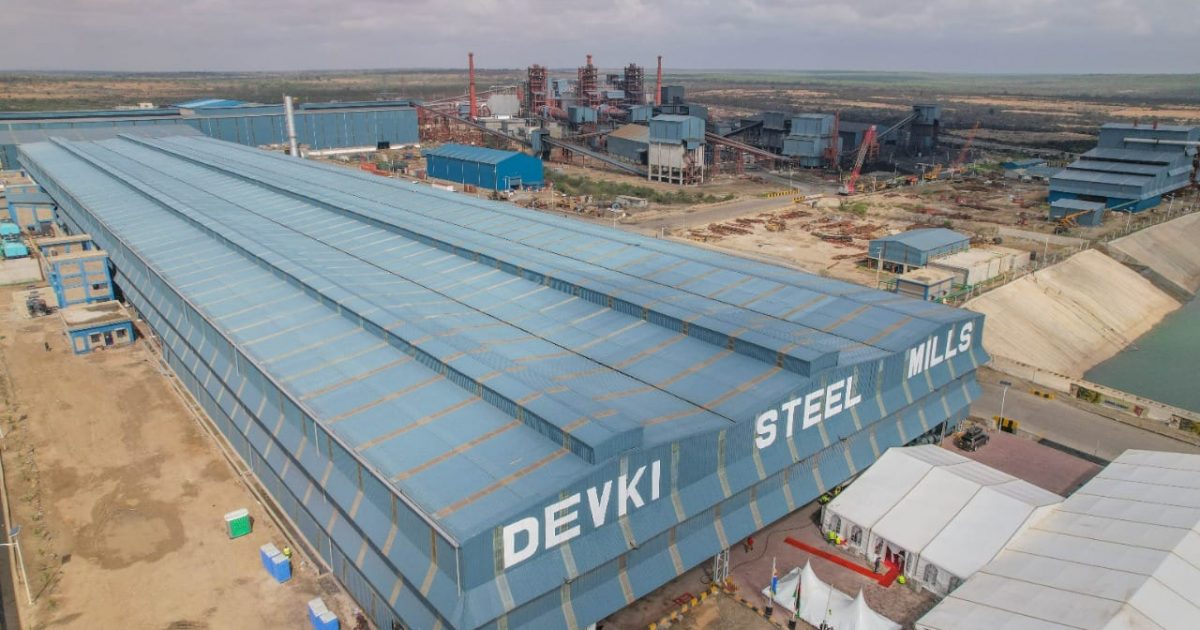
How a heavy industrial input became a test case for Kenya’s manufacturing ambitions, high power tariffs, and the raw economics of capital import substitution.
By The Ledger Team
Steel is rarely a romantic subject. It does not trade on sentiment, nor does it feature prominently in venture capital pitches or consumer tech exhibitions. It sits heavily and silently in the foundations of apartment blocks in Nairobi, the frames of warehouses along Mombasa Road, and the reinforcing bars snaking through rural infrastructure projects. Yet, in the machinery of economic development, steel is the base layer. If a nation cannot secure a reliable, competitively priced supply of it, construction costs rise, manufacturing margins compress, and broader industrial ambitions stall before they leave the drafting table.
For Kenya, a country trying to lift manufacturing’s contribution to gross domestic product from under 8 percent toward a long-held 15 percent target, the domestic steel sector is a crucial battleground. It is an industry caught in a persistent tug-of-war: squeezed between expensive, unreliable electricity grids, the capital intensity of primary production, and a flood of cheaper imported billets and finished products from global competitors that operate with vast economies of scale.
To understand why Kenyan steel matters is to understand the hard arithmetic of trying to industrialise an East African economy against a backdrop of high financing costs and structural input disadvantages.
The economics of the mill
To trace the arc of Kenyan steel, one must look beyond the rhetoric of import substitution and examine the balance sheet of an average rolling mill.
Kenya’s steel sector is split between primary producers who melt scrap metal or process imported steel billets into finished reinforcement bars (rebar), and secondary fabricators who shape those bars for construction. For years, the industry has grown on the back of East Africa’s urban construction boom. As real estate developers carved out gated communities, commercial towers, and multi-lane expressways, demand for local rebar surged.
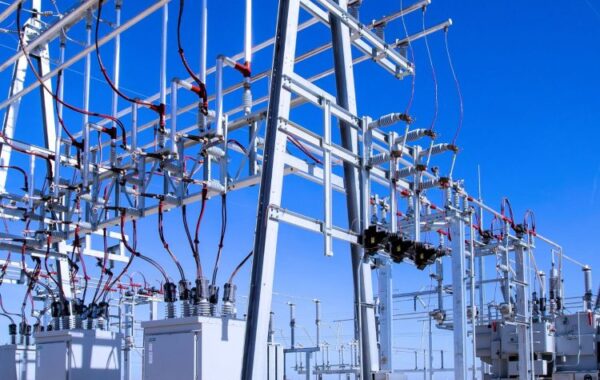
Yet, local producers face a heavy structural penalty: energy. In heavy manufacturing, electricity is not merely an overhead; it is the single largest variable cost after raw materials.
Data compiled by the Kenya Institute for Public Policy Research and Analysis (KIPPRA) shows that industrial electricity tariffs in Kenya range from approximately $0.10 to $0.20 (KES 13 to KES 26) per kilowatt-hour.
When matched against best-in-class or regional manufacturing peers, the handicap becomes stark. Industrial users in Ethiopia pay as low as $0.01 to $0.03 per kilowatt-hour due to heavy hydropower reliance, while Egyptian manufacturers pay roughly $0.03 to $0.05. Even South Africa and neighboring Tanzania maintain lower structural power baselines than Kenya.
“When power accounts for up to 30 or 40 percent of your operational expenditure at the furnace level, you are not just competing against rival mills down the road; you are competing against the structural efficiency of foreign energy grids,” notes an industrial economist based in Nairobi who tracks the manufacturing sector.
When electricity supply flickers or tariffs spike, smelting furnaces must either absorb the margin compression or pass the cost down a fragile supply chain. KIPPRA research notes that a minor percentage increase in electricity input prices historically triggers an exponentially larger surge in ex-factory prices. For the consumer, this manifests as higher building costs. For the manufacturer, it creates a narrow margin for error where any shock can tip a profitable quarter into the red.
The scrap shortage and the import trap
Compounding the energy challenge is a fundamental raw material bottleneck. Kenya lacks the massive iron ore deposits that feed the mega-mills of China, India, or South Africa. Instead, the local industry relies heavily on scrap metal collection, supplemented by imported steel billets.
This creates a peculiar vulnerability. As local construction activity expands, the demand for scrap metal outstrips domestic generation. Scavengers, traders, and aggregators comb through scrap yards across the country, but the supply is finite. When local scrap prices rise, mills are forced to import billets, exposing their cost structures to foreign exchange volatility and global commodity price swings.
Furthermore, reliance on imported billets blunts the purpose of a domestic steel industry. If a mill is merely importing semi-finished steel, heating it up, and rolling it into rebar, the value addition is modest, and the operation remains tethered to global shipping lanes and dollar-denominated pricing.
Industry executives argue that true industrialisation requires moving backward up the value chain by investing in local beneficiation of iron ore deposits, such as those found in parts of Kitui, though commercial exploitation remains constrained by infrastructure gaps, funding deficits, and complex property rights.
“There is a vast gulf between assembling finished products from imported inputs and building a fully integrated industrial ecosystem,” says a senior executive at a major East African manufacturing holding. “Until we solve the raw material and power equation, we are essentially running a processing outpost rather than an independent industrial sector.”
The policy paradox: protection versus competitiveness
This operational reality places policymakers in Nairobi in a delicate bind. Local steel manufacturers lobby fiercely for protective tariffs, anti-dumping duties, and strict standard enforcement to keep out cheap, heavily subsidised foreign steel that threatens to undercut domestic production.
Conversely, real estate developers, infrastructure contractors, and smaller fabricators argue that artificial protectionism inflates construction costs. If local mills cannot supply enough volume, or if their prices remain too high due to structural inefficiencies, protective tariffs act as a tax on national development. Every extra shilling added to the cost of a tonne of steel ripples outward, making affordable housing projects harder to finance and roads more expensive to build.
The state has repeatedly attempted to balance the survival of local industrial capacity with the broader imperative of keeping the economy open. Yet, enforcement remains uneven. Illicit trade, under-invoiced imports, and substandard steel slipping past regulatory checkpoints continue to undermine legitimate domestic producers who invest heavily in compliance, quality testing, and tax obligations.
“Protectionism without a strict timeline for operational efficiency is a trap,” observes a trade policy analyst at a Nairobi-based research institute. “If you shield an industry indefinitely without forcing it to modernise its energy use and technology, you reward inefficiency and penalise the rest of the economy.”
Capital, debt, and the regional horizon
Beyond the factory floor lies the quiet engine of any capital-intensive sector: financing. Modernising a steel mill requires substantial capital expenditure, including millions of dollars sunk into continuous casting machines, high-efficiency induction furnaces, and automated quality-control systems.
In Kenya’s monetary environment, characterized by elevated commercial lending rates and a cautious banking sector, securing long-term capital for heavy manufacturing is extraordinarily difficult. Commercial banks are naturally risk-averse when underwriting projects with long gestation periods. As a result, many local industrialists rely on retained earnings, expensive foreign debt, or private equity partnerships.
Despite these hurdles, the regional market offers an incentive for survival. Through the East African Community (EAC) and the African Continental Free Trade Area (AfCFTA), a competitive Kenyan steel mill does not look merely at a domestic market of roughly 55 million people. It looks across borders toward landlocked neighbors like Uganda, Rwanda, South Sudan, and the eastern Democratic Republic of Congo, economies that rely heavily on Kenyan transit corridors for their construction inputs.
If Kenyan manufacturers can achieve scale, streamline logistics, and rationalise power costs, they are positioned to serve as the industrial anchor for a rapidly urbanising East Africa. The region’s demographic momentum guarantees underlying demand for steel that few other sectors can match.
The foundation beneath the ambition
Steel does not make headlines by offering quick returns or disruptive software models. It demands patience, deep pockets, reliable megawatts, and coherent state policy.
To watch a Kenyan rolling mill at work, amid the roar of induction furnaces, the blinding glow of molten metal, and the heavy rhythmic thump of rebar being sheared to length, is to witness the gritty reality of economic transformation. It is an industry burdened by high costs and policy friction, yet essential to the physical architecture of the region’s future.
Whether Kenya can build a globally competitive manufacturing sector depends less on ambitious policy pronouncements and more on whether it can solve the unglamorous mechanics of powering a furnace, securing raw materials, and financing heavy capital investment. Until those fundamentals are fixed, the country’s industrial ambitions will remain structurally exposed, built on foundations far more fragile than the steel they seek to produce.