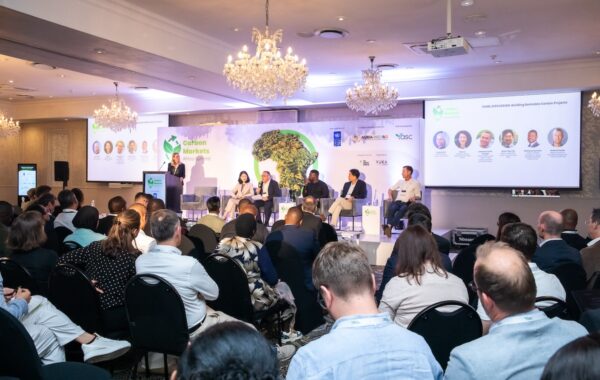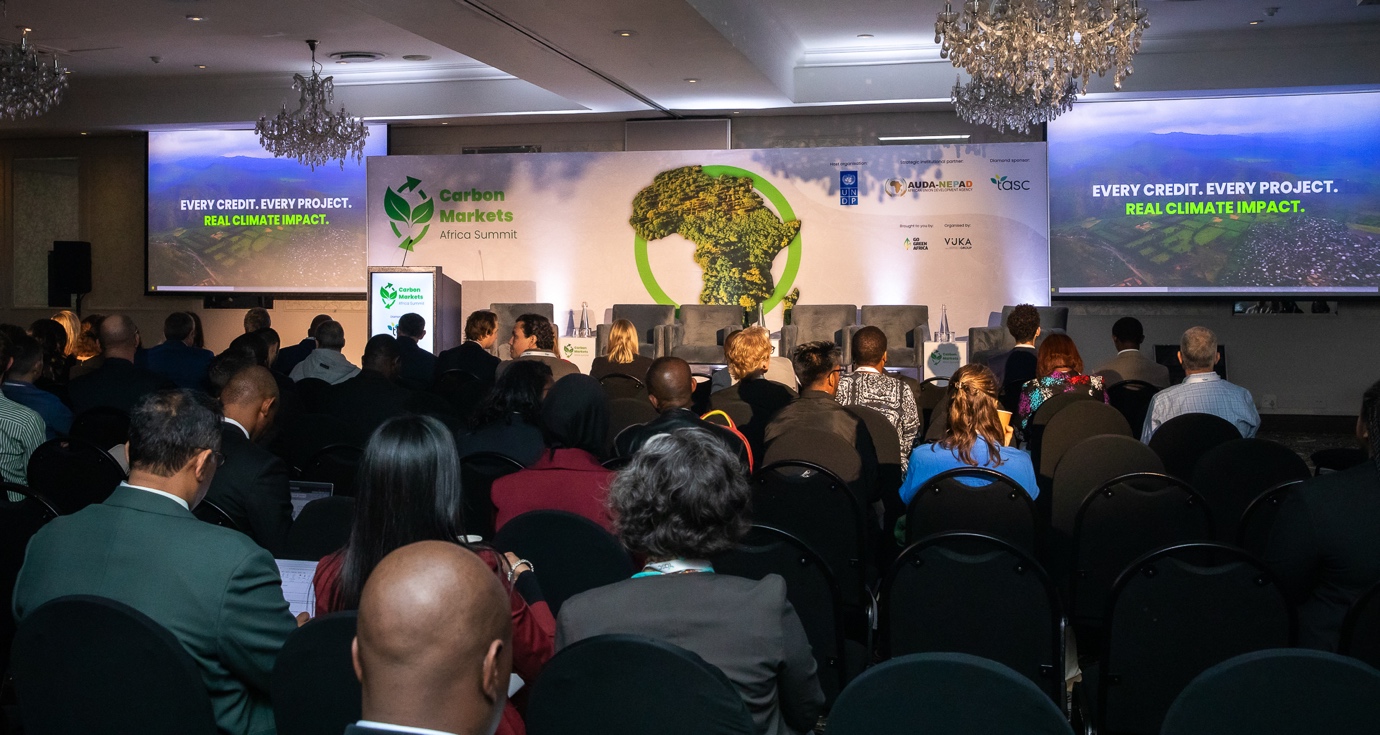
Delegates from 45 countries gather in Rwanda to bridge the gap between global carbon finance and African sovereign integrity.
By Napoleon Mugenzi
KIGALI, RWANDA — When the Carbon Markets Africa Summit (CMAS 2026) opens at the Kigali Convention Centre on 13 October, the conversations inside the plenary halls will mark a decisive structural pivot in how the continent engages with global climate finance.
For years, African voluntary carbon markets operated under a sub-scale, fragmented dynamic: international intermediaries purchased credits from local developers at steep discounts, re-selling them in global capital hubs at significant markups.
The gathering in Kigali, drawing official delegations from 20 African governments, 50 institutional investors and buyers, and over 40 project developers across 45 nations, signals the end of that passive era. African policymakers, backed by regional development institutions, are moving directly to rewrite the commercial terms, capture market margin, and embed sovereign oversight into the continent’s carbon value chain.
“This gathering of the leading players in African carbon markets represents a continental ownership in driving the future of carbon markets shaped by Africans, for the benefit of Africa,” says Ibrahim Shelleng, Senior Special Assistant to the President on Climate Finance & Stakeholder Engagement for the Government of Nigeria.
The economics: From marginal offsets to asset class
Africa holds an estimated annual potential to generate carbon credits worth between KSh 6.48 trillion (US$50 billion) and KSh 12.97 trillion (US$100 billion) by 2030. Yet historically, the continent has captured only a small fraction of global voluntary market value, hindered by regulatory uncertainty, weak local measurement, reporting, and verification (MRV) infrastructure, and low primary-market prices.
The Kigali summit arrives amid an intense recalibration of international carbon accounting standards. In Bonn, Germany, the Article 6.4 Supervisory Body, which is the United Nations entity establishing rules for the official Paris Agreement Crediting Mechanism, is holding its 23rd meeting in parallel. The outcome of those technical talks directly dictates how host nations authorise credits and split sovereign economic benefits with private developers.
The commercial stakes are clear: African nations are demanding that carbon credits shift from cheap corporate off-setting tools into bankable, high-integrity financial assets.
“Africa should not just participate in carbon markets. We should help shape them,” says Maggie Kinyanjui, Sourcing Manager for Africa at Climate Impact Partners. “The opportunity is to build a market that attracts capital, rewards integrity and ensures that value reaches the countries and communities delivering climate impact.”
Following the money: Risk, returns, and value capture
At the core of the three-day summit are structured, closed-door Investor Roundtables and deal rooms designed to connect capital directly to project developers in nature-based solutions, agriculture, waste management, clean cooking, and technological carbon removals.
The multilateral infrastructure supporting the summit underscores the institutional money driving this shift. Hosted by Rwanda’s Ministry of Environment, the event is backed by the United Nations Development Programme (UNDP) and the African Development Bank (AfDB), with the Development Bank of Southern Africa (DBSA) acting as host partner and AUDA-NEPAD serving as strategic institutional partner.
By bringing institutional buyers into direct negotiation with project developers and national registries, African hosts are working to eliminate predatory intermediary markups. However, capital allocation hinges on technological transparency.
“Africa isn’t waiting for global carbon markets to mature; it’s actively building them,” notes Amy Rhoades, Chief Communications & Engagement Officer at Carbon Standards. “At Carbon Markets Africa Summit, we’re not just sponsoring a conference, we’re engaging the policymakers, entrepreneurs, and buyers who are building the carbon removal ecosystem in Africa. That engagement is the future of credible CDR and that’s why Carbon Standards is in Kigali.”
Stakeholders and market mechanics
The shifting market structure creates a new matrix of winners, risks, and operational pressures across the ecosystem. African governments are seeking to establish national registries, enforce benefit-sharing ratios, and secure sovereign share-of-proceeds without scaring away private project developers. Simultaneously, project developers face increasing pressure to meet rigorous Carbon Dioxide Removal (CDR) and MRV thresholds while securing early-stage capital and long-term price guarantees.
On the buyer side, global corporate investors and climate financiers remain eager to secure high-integrity African credits to meet net-zero obligations, yet they tread cautiously around regulatory risk, Article 6 double-counting penalties, and sovereign policy shifts. Meanwhile, local communities and conservation organisations are working to ensure that the monetization of regional land and ecosystems yields direct economic returns rather than corporate greenwashing.
“The real opportunity lies in bringing decision-makers, financiers, buyers and project developers into the same room,” states Emmanuelle Nicholls, Portfolio Director at organizer VUKA Group. “Those conversations can help unlock investment, strengthen project pipelines and accelerate the partnerships needed to scale African carbon markets.”
What comes next
Beyond the headlines of high turnout and institutional backing, the real story in Kigali is the pricing power struggle over Article 6 authorisations.
As African governments implement national carbon frameworks, developers face a new reality: credits with sovereign backing and Article 6 corresponding adjustments will command significant price premiums over unbacked voluntary credits. The crucial metric for investors to track in Kigali is not total delegate count, but the speed at which bilateral offtake agreements and national authorization protocols move from discussion to binding commercial contracts.
As CMAS 2026 unfolds through 15 October, the market will reveal whether Africa’s carbon strategy can successfully convert policy frameworks into scalable, high-yielding project pipelines before international capital looks elsewhere.