Organisers announced a nature fund, a Rwandan financing idea and a national roadmap. They gave no figures for credits sold or capital committed to projects.
By Napoleon Mugenzi
KIGALI, RWANDA. The Carbon Markets Africa Summit ended on 15 October with a new investment fund, a Rwandan proposal to pre-finance projects and an updated national sustainable finance plan. The organisers’ account of the event reported no carbon credit sales and no total for investment secured.
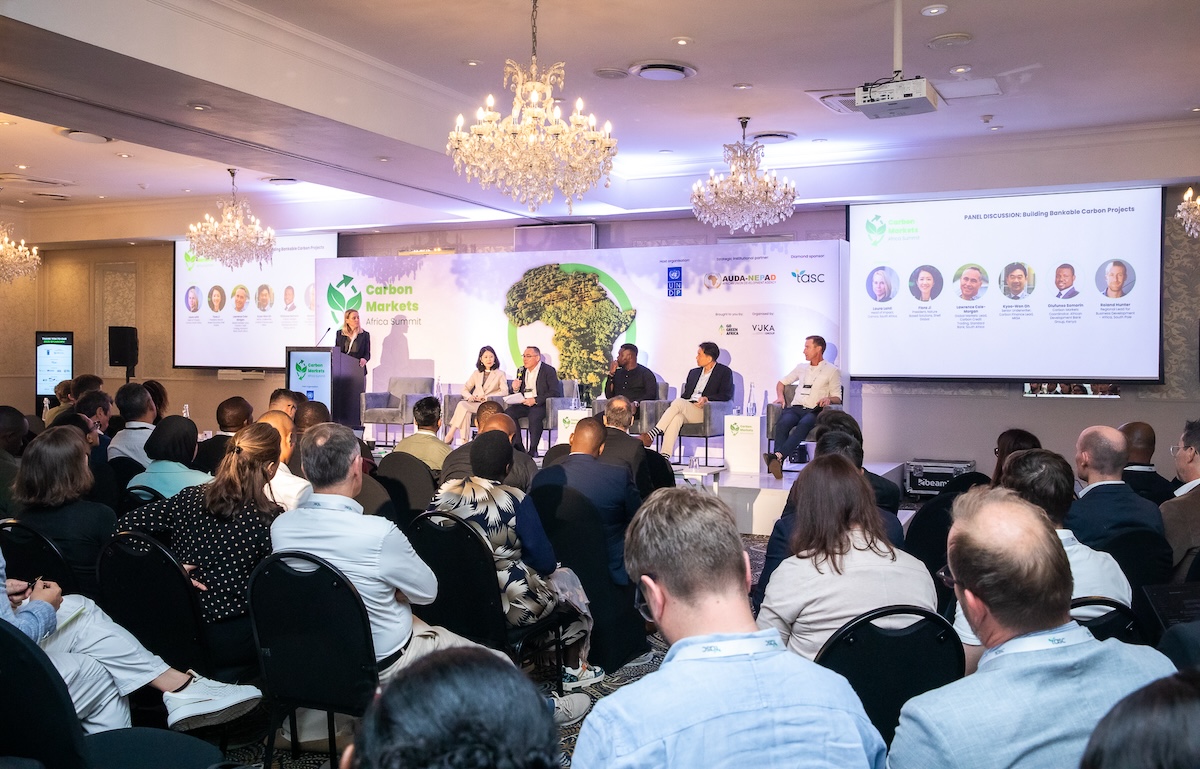
The summit ran from 13 to 15 October at the Kigali Convention Centre. According to the organisers, it drew governments, project developers, investors, buyers and technical specialists. The programme covered blue carbon, reforestation, agriculture, rangeland restoration and waste-related projects.
The most concrete announcement was the Africa Nature Impact Fund, set up by Finance Earth, FSD Africa and FSD Africa Investments. It aims to raise US$100 million for early-stage nature and nature-based carbon projects. FSD Africa Investments has made a £5 million cornerstone commitment, well short of the US$20 million the fund hopes to raise at a first close in 2027. Most of the money is still to be found.
The fund targets a timing problem. A carbon project must pay for design, surveys and verification long before it can issue and sell its first credits, which are tradable certificates, each representing a tonne of emissions avoided or removed. The organisers call the shortage of suitable capital at that stage a persistent challenge.
Rwanda is exploring another answer. Dr Bernadette Arakwiye, the environment minister, said the government is considering using a share of the proceeds from carbon transactions to prepare and pre-finance future projects through the Rwanda Green Fund. The idea is at an early stage. No share, size or start date was given.
On 15 October the Kigali International Financial Centre (KIFC) launched Rwanda’s Sustainable Finance Roadmap 2.0. It sets priorities to 2030, including preparing businesses and projects for investment, strengthening carbon finance and improving sustainability data. Hortense Mudenge, KIFC’s chief executive, said Kigali aims to become a centre for carbon aggregation, which means pooling credits from many small projects, and for structuring investments. She also pointed to the wider promise of sustainable finance, from business growth to jobs and economic resilience. KIFC was the summit’s platinum sponsor, so the launch took place at an event it helped pay for.
Credibility ran through the sessions. Shikha Sharma of SGS, the gold sponsor, said independent validation and verification “play a critical role in ensuring that carbon credits represent measurable climate action”. SGS sells such services, so her view comes from a firm with a commercial interest in the point. Workshops also covered authorisations, changing international requirements, risk-sharing, registry interoperability and local verification capacity.
Maxwell Gomera of the UN Development Programme (UNDP) said the next step is to “turn those connections into well-prepared projects and transactions”. He added that community rights and fair benefit-sharing should be built in from the start. The organisers’ summary offered no measure of how many connections have become deals.
The 2026 event was hosted by Rwanda’s Ministry of Environment, with UNDP and the African Development Bank as host organisations. Emmanuelle Nicholls of VUKA Group said she wants Africa to “shape carbon markets that finance its priorities”, and hopes next year’s summit will show more African projects securing investment and partnerships.
The tests for Kigali are whether the fund reaches its first close in 2027 and whether Rwanda turns its proposal into a rule with a stated size. Signed offtake agreements, in which buyers commit to purchase future credits, would show whether the meetings produced revenue as well as introductions.