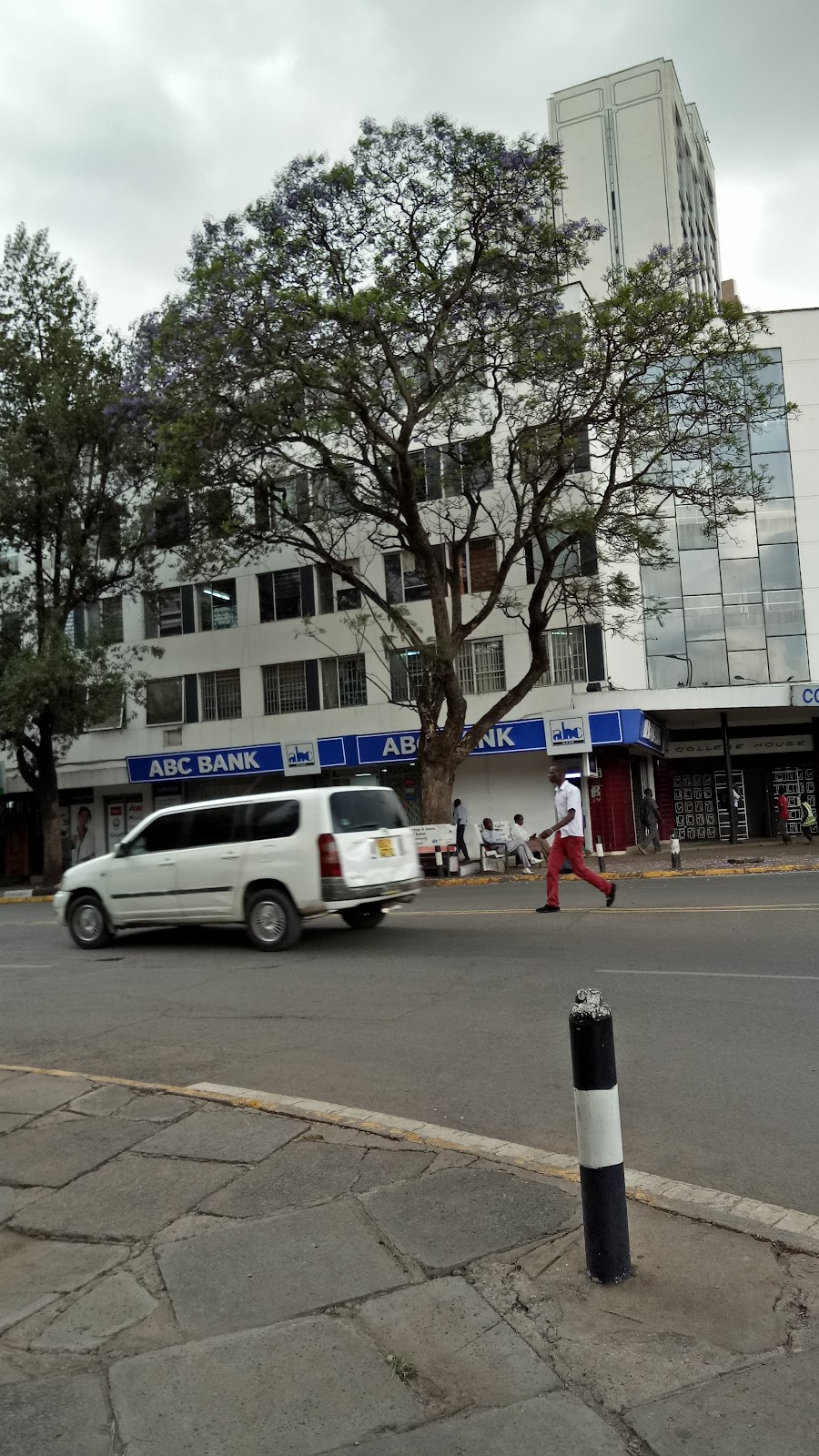
The Competition Authority of Kenya has cleared Jayesh Umesh Saini’s proposed acquisition of African Banking Corporation, but the deal still faces a separate central-bank approval process. For a lender reported to have suffered heavy losses and breached capital requirements, a change of ownership raises a more consequential question: where will the money needed to repair its finances come from?
By Our Reporter
The proposed takeover of African Banking Corporation (ABC Bank) by healthcare entrepreneur Jayesh Umesh Saini has cleared one regulatory hurdle. Whether it can proceed, and what it might mean for the lender’s future, depends on the next stage of scrutiny and the resources its prospective owner is prepared to commit.
The Competition Authority of Kenya (CAK) authorised the proposed acquisition in a notice dated September 21st 2026, according to The Standard. The transaction would give Saini sole control of the lender, which operates 12 branches. Its financial terms have not been disclosed, and the Central Bank of Kenya (CBK) must still approve the relevant change in ownership.
That distinction matters. Competition approval addresses the effects of a transaction on the market and public interest. Banking supervision must also consider whether the proposed owner meets the necessary standards and whether the institution can operate safely and soundly under the new ownership. One approval does not substitute for the other.
For ABC Bank, the regulatory process comes against a difficult financial backdrop. The figures reported by The Standard, citing the CBK’s 2025 Bank Supervision Annual Report, suggest that the prospective acquisition could involve a substantial turnaround rather than a straightforward change of control.
The balance-sheet problem
ABC Bank was licensed in 1984 and is classified among Kenya’s smaller commercial lenders. Its total assets stood at about KSh50 billion in 2025, according to the report cited by The Standard. Yet the size of its balance sheet tells only part of the story. A bank’s ability to lend, meet withdrawals and absorb losses depends on the quality of its assets, its capital and the cash it can access when required.
The reported numbers are troubling. ABC Bank recorded a pre-tax loss of KSh1.3 billion in 2025. Its gross non-performing loans, which are loans that have stopped generating payments according to the relevant classification rules, stood at KSh23.2 billion. That was 58.7% of its gross loan book of KSh39.5 billion, according to The Standard.
A high ratio of non-performing loans constrains a lender in several ways. Borrowers who fail to repay reduce the cash flowing back into the bank. The lender may have to set aside provisions against expected losses, depressing earnings. If losses erode capital, the bank has less capacity to expand lending or absorb further shocks.
The reported capital position adds to the concern. At the end of 2025, ABC Bank’s core capital-to-risk-weighted-assets ratio was 8.8%, below the reported regulatory minimum of 10.5%. Its total capital ratio was also reported at 8.8%, against a minimum of 14.5%. The bank was among seven commercial lenders reported to have fallen short of the minimum core capital requirement of KSh3 billion.
These are not merely accounting problems. Capital provides a buffer against losses. A lender operating below minimum requirements faces constraints on its ability to take risks and expand its business, while a large stock of troubled loans can make a recovery more expensive and uncertain.
The reported figures need to be read in their proper period and context. They describe the bank’s position in 2025, not necessarily its financial condition on the date the takeover was authorised. Updated accounts and the regulator’s current assessment will be needed to establish whether its position has since improved or deteriorated.
What Saini brings to the deal
Saini is the founder and chairman of Lifecare Group and has interests across healthcare services and pharmaceuticals. His businesses include Bliss Healthcare, Medicross and Lifecare Hospitals, giving him experience in operating service networks that require capital, staff, facilities and relationships with customers and suppliers.
That background may offer commercial advantages. Healthcare businesses and banks both depend on disciplined cash management, risk controls, reliable operations and the ability to assess customers. A business owner with experience in managing complex organisations may bring a different perspective to a lender.
But operating a healthcare network is not the same as owning a bank. A bank takes deposits from the public and lends money, exposing its balance sheet to credit, liquidity, interest-rate and operational risks. Its owners must meet regulatory requirements that extend beyond the ability to run a profitable business.
Nor does Saini’s existing business network establish that he intends to direct customers or funds towards ABC Bank. Any commercial links between his healthcare interests and the lender would need to be assessed on their actual terms, with appropriate safeguards against conflicts of interest.
The immediate questions are more basic. How much will the acquisition cost? What is the source of the purchase funds? Will the buyer inject fresh capital into the bank, and, if so, how much? Will existing management remain in place? What is the plan for dealing with troubled loans?
Neither the purchase price nor a commitment to inject new capital was established in the reporting available for this article. Those gaps make it impossible to assess whether the proposed acquisition is financially sufficient to support a turnaround.
Why central-bank approval matters
Kenya’s banking rules impose a separate approval requirement on changes in ownership. Section 13(4) of the Banking Act provides that a bank cannot transfer more than 5% of its share capital to an individual or entity without the CBK’s prior written approval. The regulator’s assessment is therefore a substantive part of the transaction, not an administrative formality.
The CBK will need to assess the proposed owner under the applicable rules, including the relevant standards of financial soundness, integrity and suitability. The source of acquisition funds and the prospective owner’s capacity to support the bank are important questions where a lender has reported capital deficiencies.
The assessment must also distinguish between the money required to buy the shares and the money required to strengthen the bank. Purchase consideration paid to existing shareholders does not automatically become new capital on the bank’s balance sheet. Unless the transaction includes a separate capital injection or other qualifying support, the lender may change hands without receiving the resources it needs to repair its finances.
This is the central economic question behind the proposed takeover. A new owner can change management, strategy and risk appetite. But restoring a weakened balance sheet may require fresh funds, a credible plan to recover troubled loans and sustained improvement in the bank’s underlying business.
The CAK’s decision does not settle those questions. Its role is to assess the transaction under competition law and the relevant public-interest considerations. The CBK’s role is to protect the safety and soundness of the banking system.
The test is what happens after approval
For customers, a change of ownership does not automatically mean better lending terms, new products or wider access to credit. Those outcomes depend on the bank’s strategy, its financial capacity and the risks it is willing to take. For employees, the consequences will depend partly on the buyer’s operating plan and any subsequent restructuring. For shareholders, the value of the deal will depend on its terms and the bank’s prospects under new control.
The wider banking market also has an interest in how the transaction proceeds. A credible recovery could preserve a lender and potentially strengthen competition. A poorly funded turnaround could leave the underlying weaknesses unresolved. Neither outcome should be assumed before the financing and recovery plan are known.
Saini’s healthcare interests may give him experience in running large service businesses, but they do not by themselves demonstrate that he can restore a troubled bank. That judgement requires evidence of his financial capacity, the capital he is willing to commit and the plan for improving the lender’s asset quality and earnings.
The next meaningful milestones are the CBK’s decision, disclosure of the transaction’s financial terms and evidence of any new capital entering ABC Bank. The bank’s subsequent accounts will show whether its losses and troubled loans are falling and whether it is rebuilding its capital position.
The takeover has cleared a competition hurdle. The harder test is whether the prospective owner can put the bank on a sounder financial footing.