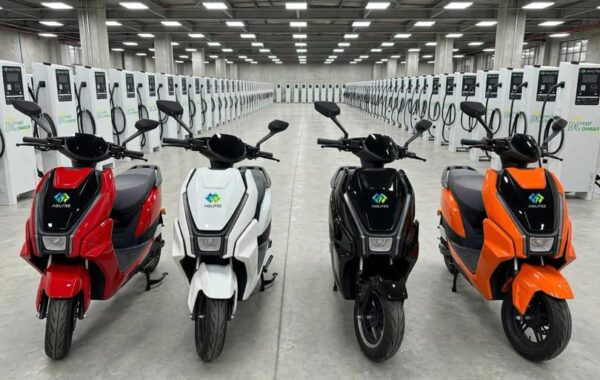
The tripartite agreement aims to establish local production lines for 50,000 four-wheelers and 100,000 two-wheelers annually, positioning Nairobi as an electric vehicle manufacturing base for the regional market.
By Muturi Githae
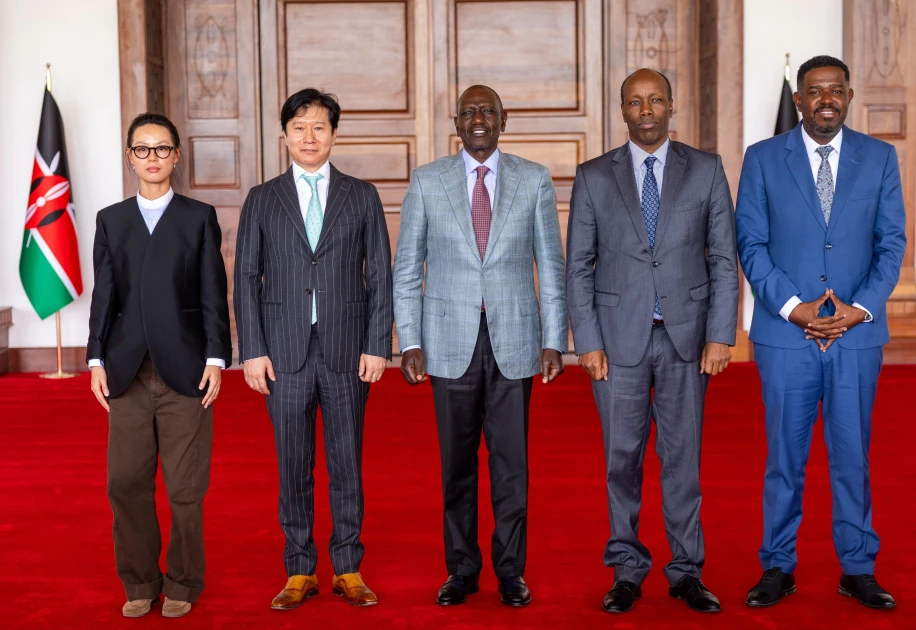
NAIROBI — Kenya has secured one of its largest industrial commitments to date, following an agreement between the government, China’s Geely Auto Group, and local investment vehicle Endevu Enterprise Corporation to establish a US$3bn (KSh388bn) integrated green mobility ecosystem.
The partnership, signed at State House in Nairobi, aims to construct local assembly facilities capable of producing 50,000 four-wheel electric vehicles and 100,000 two-wheelers and light mobility units annually. The project also incorporates plans for 1,000 solar-powered charging hubs and a digital fleet management platform.
President William Ruto told government officials and visiting executives that the investment represents a structural shift in how the country handles energy and industrialisation.
“For decades, Kenya has imported the fuel that runs our vehicles and the vehicles that burn that fuel,” President Ruto said. “We have paid for both in hard currency and with every shipment we have exported jobs that should have been created here. We are determined to change that equation.”
The industrial architecture
The venture brings together Endevu, chaired by Susong Tong, and Zhejiang Geely Holding Group—a Fortune Global 500 enterprise whose brand portfolio includes Volvo Cars, Polestar, Lotus, and stakes in Mercedes-Benz and Aston Martin.
According to project outlines presented during the signing ceremony, Geely will license its intellectual property to local partners, transferring core technologies spanning battery systems, e-drives, electronic controls, and autonomous driving frameworks.
The initiative is projected to generate 2,000 direct jobs on the assembly lines, alongside upwards of 20,000 indirect roles across component supply chains, logistics, and maintenance networks. An additional 80,000 opportunities are anticipated in fleet operations and digital transport services.
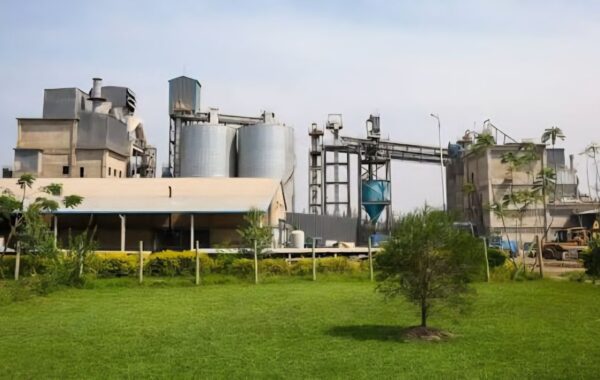
Discussions are already underway between national trade officials and county administrations—including Nakuru—to secure land allocations for the manufacturing plants.
Policy alignment and market realities
The agreement follows a series of state interventions designed to stimulate domestic EV adoption and manufacturing. In February, the administration released the National Electric Mobility Policy, underpinned by a presidential directive exempting the first 100,000 imported electric vehicles from duty.
Data cited by the presidency indicate that electricity consumption for vehicle charging climbed from 2.92 million kilowatt-hours in 2024 to 8.43 million kilowatt-hours in 2025—an increase of 188%.
Proponents argue that scaling domestic electric mobility will insulate the economy from imported petroleum price shocks while leveraging Kenya’s grid, which runs predominantly on geothermal, wind, solar, and hydro generation.
The announcement arrives just a week after groundbreaking ceremonies for a major petroleum refinery project in Lamu, an apparent dual-track strategy that the administration defended as energy pragmatism.
“Some will ask how one nation can refine petroleum and electrify its transport at the same time,” President Ruto said. “The answer is simple: energy security has more than one road. We will refine what we and the region still need, and we will electrify both our present and future mobility opportunities.”
Regional ambitions
The partnership is explicitly structured to look beyond Kenya’s domestic market, targeting the wider East African Community and the broader AfCFTA trading bloc. Vehicles assembled locally and meeting regional rules of origin are intended to supply a market of hundreds of millions of consumers.
While the memorandum establishes the framework, execution now shifts to the Ministry of Investment, Trade and Industry, alongside Invest Kenya, to clear regulatory hurdles and finalize land agreements.
President Ruto indicated that state oversight will remain active through the development phases.
“A memorandum is a framework that we have signed, but it is not the finish line,” he said. “We must move quickly from signature to definitive agreements, from agreements to groundbreaking, and from groundbreaking to production.”