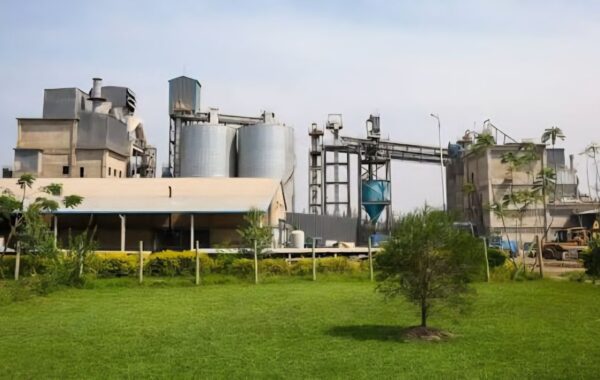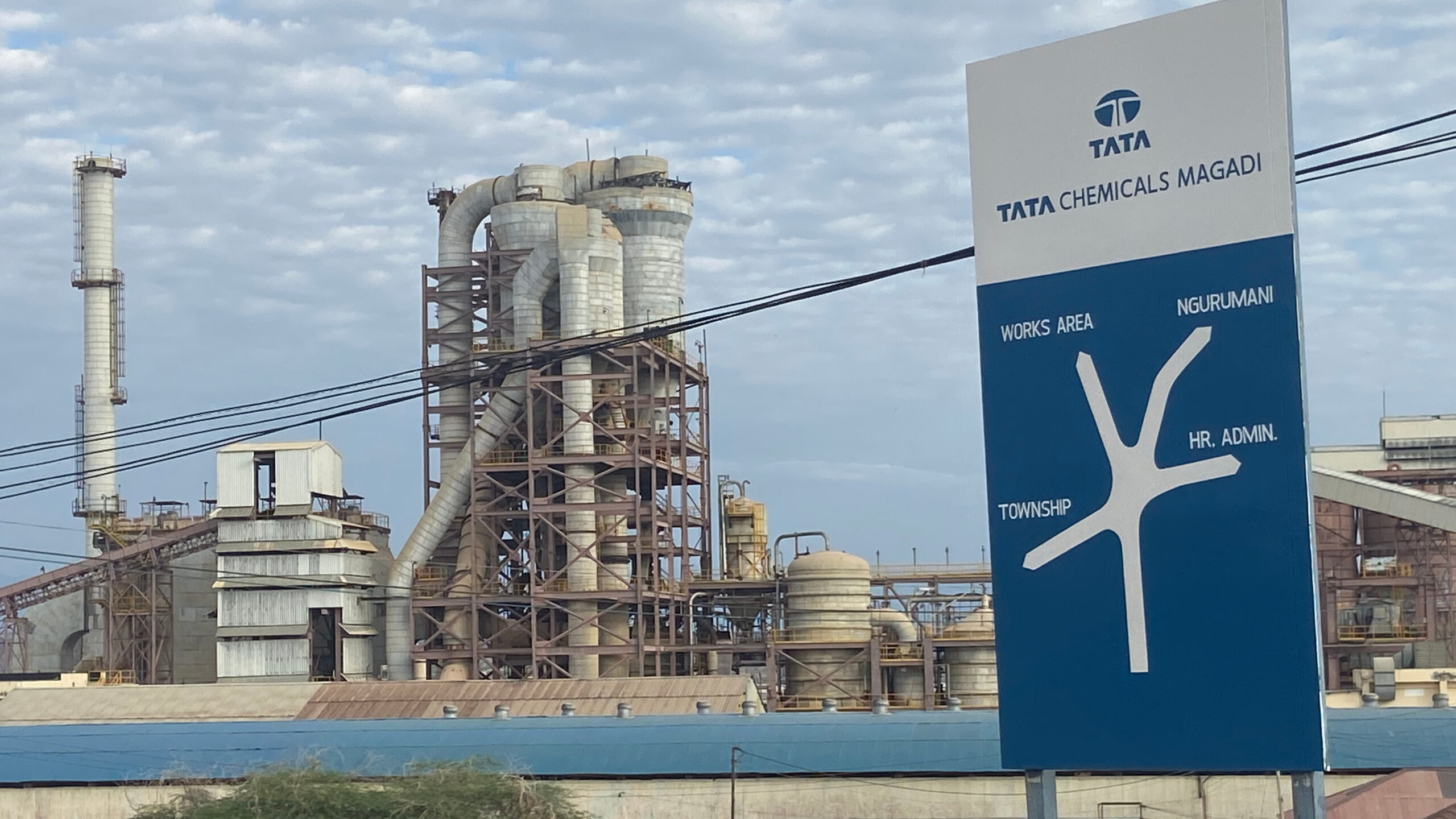
State scrutiny tests the survival of an industrial anchor in Kajiado as a joint technical committee assesses outstanding legal, land and community obligations.
By Our Reporter
Nairobi has opened a formal review into Tata Chemicals Magadi Limited, placing the operations of one of the country’s oldest soda ash processors under strict state scrutiny.
Mining Principal Secretary Harry Kimtai inaugurated a joint technical committee to assess the company’s compliance status across legal, environmental, land, and community obligations. The panel—comprising state officials, regulatory agencies, and technical experts—will determine whether the company has resolved the grievances that prompted the suspension of its operations.
The review examines the friction points between the multinational processor, the Kajiado county government, and the Magadi community. For decades, the extraction of trona deposits from Lake Magadi has formed an economic backbone for the arid southern region, supporting local employment while generating complex disputes over land rights, environmental management, and revenue sharing.
The committee’s findings will be submitted to Mining, Blue Economy and Maritime Affairs Cabinet Secretary Hassan Ali Joho, who will decide whether the company can resume full operations or face stricter conditions.
A century of extraction under the microscope
Commercial soda ash production at Lake Magadi dates back to 1911, making the remote southern Kenyan outpost one of the continent’s most enduring industrial sites. Controlled since 2005 by India’s Tata Chemicals Ltd, a subsidiary of the Tata Group, the facility refines trona into soda ash—a vital raw material used globally in glass manufacturing, detergents, chemical processing, and water treatment.
Yet the operational framework governing the plant has collided head-on with modern legal realities. Following a government-wide compliance audit, the Ministry of Mining asserted that Tata Chemicals Magadi had continued operating primarily on legacy land concessions rather than applying for formal mineral rights under the post-2010 Constitution and the Mining Act.
The state’s grievances extend far beyond paperwork. In July, Cabinet Secretary Hassan Ali Joho suspended the company’s mining operations, citing deep-seated regulatory breaches. The ministry flagged an absence of a clear mineral beneficiation and value addition strategy, unresolved royalty reconciliation and payment obligations, inadequate export reporting, and failure to meet local procurement and employment targets.
Officials have also leveled stark financial claims against the firm. Mr Joho stated that the enterprise owes Kajiado County KES 17 billion in historical arrears and disputes, alongside KES 1 billion in outstanding community obligations.
The collision between legacy concessions and local value
The crackdown reflects a broader policy shift in Nairobi regarding natural resource extraction. President William Ruto’s administration has pushed aggressively for domestic value addition, arguing that decades of exporting raw soda ash have denied Kenya the industrial depth, employment, and capital retention it deserves. The government has signaled that future arrangements must deliver local glass and chemical manufacturing plants rather than simple mineral extraction.
For Kajiado County, the standoff presents an acute economic dilemma. The plant directly employs more than 600 workers, while thousands of residents in the arid Magadi division rely on the surrounding corporate infrastructure, water supply, and transport networks. Company executives have warned that a prolonged shutdown jeopardises about 500 direct jobs and severs critical export supply chains running down to the Port of Mombasa.
Conversely, local leaders and community groups argue that the economic benefits have long failed to match the environmental footprint and scale of extraction.
Seeking a resolution
Tata Chemicals Magadi has defended its record, maintaining that it submitted comprehensive documentation to the Ministry of Mining to address the regulatory queries and demonstrate full compliance.
The newly convened technical committee now faces the task of cutting through the competing claims. Its mandate is to verify whether the company has bridged the gap between its historical operating model and contemporary statutory demands.
The committee will report its findings directly to Mr Joho, whose final determination will dictate whether a century-old industrial titan can reboot its operations in Kajiado or whether Nairobi will force an unprecedented exit to make way for a new model of resource exploitation.