Cement giant builds ten hospitals, but public treasuries must find the cash to run them.
Tanzania’s Amsons Group, the industrial conglomerate moving to consolidate control over Kenya’s cement sector, has pledged KSh4.5bn ($35m) to construct 10 maternal and child hospitals across the country.
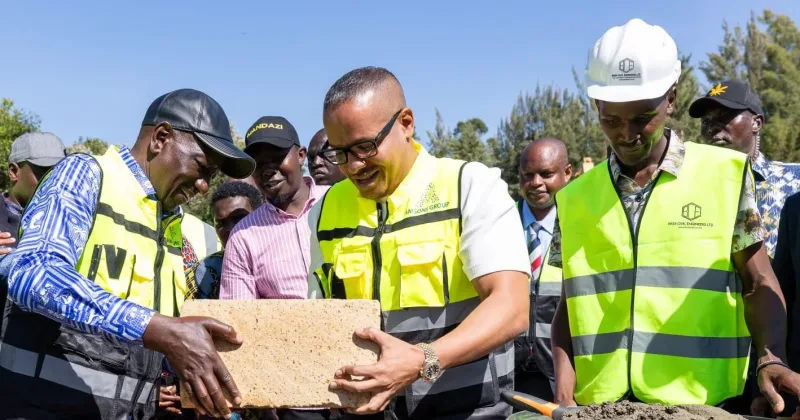
The initiative, branded as corporate social investment following Amsons’ acquisition of Bamburi Cement and a major stake in East African Portland Cement, began over the weekend with a groundbreaking ceremony in Chebunyo, Bomet County. Attended by President William Ruto and Health Cabinet Secretary Aden Duale, the project aims to deliver 250-bed Level 4 facilities across ten counties, including Nairobi, Kisumu, Garissa and West Pokot, within two years.
“This ceremony marks the beginning of a major commitment by Amsons Group to support the Government of Kenya in improving access to quality maternal, newborn and child healthcare,” said Edha Nahdi, Managing Director of Amsons Group. “Through Amsons Group Foundation, we are investing US$35 million to establish ten mother-and-child hospitals across Kenya within two years. This Level 4 facility in Chebunyo is the first of those ten hospitals and will set the standard for the facilities that will follow.”
Under the Build, Equip and Transfer framework agreed with the Ministry of Health, Amsons Foundation will fund civil works and fit-outs before handing the completed assets over to public administration.
The strategy offers immediate political capital for both the investor and the host administration. For Amsons, a high-profile philanthropic commitment helps anchor its presence in Kenya, where industrial cross-border acquisitions often encounter nationalist pushback or regulatory scrutiny. For the government, private capital temporarily buffers public health expenditures, supporting its broader health reform agenda without expanding immediate capital expenditure budgets.
“The support by Amsons Group, a corporate investor in Kenya associated with both Bamburi Cement Plc and East Africa Portland Cement, is a timely intervention,” President Ruto said during the event, framing the private funding as a direct boost to state infrastructure. “With the support of Amsons Group, the government will now be in a better position to guarantee maternal health and curb maternal and newborn mortality as part of our national development agenda.”
Ruto added that the state is actively pursuing a Health Systems Strengthening project to expand adequately equipped medical assets nationwide, noting that these primary facilities are intended to provide “inpatient, referral, emergency and critical care services, as well as advanced diagnostic and treatment services.”
The long-term friction lies in what happens after the ribbon-cutting.
While private capital can efficiently absorb civil works and medical equipment purchases, Level 4 hospitals require substantial recurring operational spending. Once transferred, the burden of staffing, clinical supplies, pharmaceuticals and daily maintenance falls on county governments and the national ministry: a layer of public administration currently struggling under budget shortfalls, delayed disbursements from the National Treasury, and persistent health worker strikes.
A 250-bed facility demands dozens of specialised doctors, nurses and support staff to run safely. Multiplying that requirement by ten facilities across disparate counties, several in historically under-resourced regions like West Pokot and Garissa, places a heavy burden on devolved healthcare budgets. Without guaranteed ring-fenced operational funding from county assemblies, brick-and-mortar investments risk becoming idle assets, fully equipped but understaffed.
Amsons has set an ambitious two-year timeline for delivery. The ultimate success of the KSh4.5bn outlay, however, will not be measured by how quickly cement is poured in Chebunyo, but by whether county treasuries can afford to keep the lights on and the wards staffed once the builder hands over the keys.