Kenyan firm partners with Dubai logistics major on 222-hectare industrial hub to anchor coastal manufacturing and exports
NAIROBI—Kenya has taken a significant step toward transforming its coastal economic corridor into a manufacturing powerhouse, as global logistics giant DP World and Kenyan investment firm GulfCap Africa signed a definitive shareholders agreement to co-develop a 222-hectare (535-acre) Special Economic Zone in Jomvu, Mombasa.
The partnership, formalised at State House in Nairobi in the presence of President William Ruto, unlocks more than KSh12 billion (US$100 million) in initial private sector investment. Operating under the entity Mombasa Free Zone Limited, the venture converts land previously used as a Kenya Meat Commission staging ground into the Mombasa Industrial Park, situated adjacent to key maritime, rail, and highway arteries.
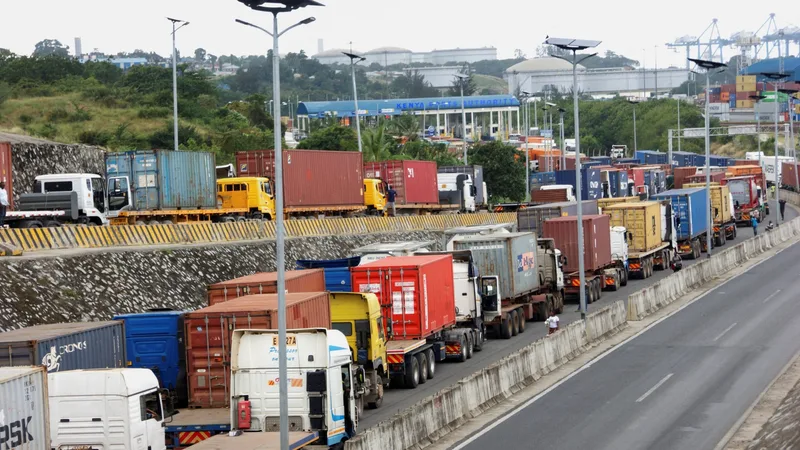
The milestone comes as Kenyan policymakers push to pivot the country away from its historical role as a transit node for raw commodities toward domestic industrial value addition.
“This project will help transform Kenya from an agricultural economy into a production and export-oriented economy,” President Ruto said during the signing ceremony. “We must move away from exporting raw and minimally processed commodities.”
Highlighting the state’s obligation to provide matching utility and transport connections to ensure the hub’s global competitiveness, President Ruto added: “The tripartite agreement between DP World, County Government of Mombasa, and GulfCap demonstrates what is possible when government creates the right environment for business. Government will support this industrial ambition with the infrastructure required to make it competitive. Our objective is to lower the cost of production so that goods made in Kenya can compete successfully in the region and the global market.”
President Ruto also underlined the importance of Kenyan entrepreneurs taking the lead in large-scale infrastructure and industrial projects. “We are looking for contractors who can take up jobs worth up to Sh20 billion to do our major projects,” President Ruto noted, pointing to local leadership in the venture. “There is space for Kenyan entrepreneurs like Mr Shahbal to build major construction companies and develop serious financial capabilities.”
Local maritime and economic observers in Mombasa view the collaborative model as a structural shift from traditional state-led or purely foreign-financed developments.
“Its proximity to the Port of Mombasa, the Standard Gauge Railway, and regional road networks affords a structural advantage that purely inland industrial parks struggle to replicate,” said Andrew Mwangura, former Secretary General of the Seafarers Union of Kenya. “DP World’s track record in running free zones and ports across Africa and beyond confers operational credibility, while local ownership and county involvement improve the prospects for political durability and community buy-in.”
The first phase of the development will span 40 hectares, with baseline civil engineering and site preparation works set to begin under strict timelines. President Ruto directed that the primary access road connecting the zone to Mombasa’s main trunk highway be completed within 120 days, alongside a six-month deadline for initial park readiness.
Over 60 local and international commercial enterprises have already formally registered interest in setting up operations within the hub.
“Our partnership with DP World represents a new chapter for industrial development in Mombasa,” said Suleiman Shahbal, founder of GulfCap Africa and a member of the East African Legislative Assembly, who described the deal as the realization of a project he has advocated for over fifteen years. “The Mombasa Industrial Park is designed to create an environment where infrastructure, logistics, and investment can come together to support business growth. Upon completion, the social-economic impact of the park will be huge. The multiplier effect of the project is expected to lead to the creation of over 20,000 jobs directly and indirectly, positively impacting on the livelihood of thousands of Kenyans.”
Regional business leaders also welcomed the development as a crucial catalyst for coastal employment and supply chain integration.
“We fully support investments of this magnitude because they have the potential to transform our local economy,” said Mustafa Jamal, a prominent business leader in Mombasa. “The SEZ will not only attract more investors but also create thousands of jobs, stimulate trade, and position Mombasa as a leading regional logistics and manufacturing hub.”
For local residents in the surrounding sub-county, the formal execution of the contract under presidential supervision offers tangible hope after years of static industrial planning.
“The formal signing under a presidential witness raises the political cost of failure,” said Francis Juma, a resident of Miritini near the project site. “It also positions Kenya more assertively in the regional competition.”
DP World, which posted first-half 2026 revenues of US$12.7 billion and operates flagship facilities including Dubai’s Jebel Ali Free Zone, confirmed that the Mombasa park forms a core anchor for its East African footprint.
“Kenya is a market of strategic importance to DP World and this agreement reflects our confidence in its long-term growth,” said Essa Kazim, Group Chairman of DP World. “Our investment in the Mombasa Industrial Park is about creating the infrastructure that enables trade, attracts new industries, and connects Kenyan businesses more efficiently with markets across Africa and the world.”
Mohammed Akoojee, CEO and Managing Director for Africa at DP World, emphasized the operational gains of placing processing facilities directly alongside port facilities.
“By bringing industrial capacity and logistics infrastructure closer together, we can help businesses access markets more efficiently while creating a platform to attract new investment and manufacturing to the country,” Akoojee said. “Our focus is on moving the development forward and building an ecosystem that supports businesses in Kenya while strengthening Mombasa’s role as a trade gateway.”
Tenants operating within the Mombasa Special Economic Zone will leverage duty-free access across Africa via the African Continental Free Trade Area (AfCFTA), as well as targeted international frameworks including the Kenya-EU Economic Partnership Agreement and Kenya’s Comprehensive Economic Partnership Agreement with the UAE.