Nairobi wants investors to help finance the roads, railways, power plants and water projects it can no longer comfortably fund through debt. The new infrastructure fund promises a 7% return. Making that promise credible will be the harder part.
By Our Reporter
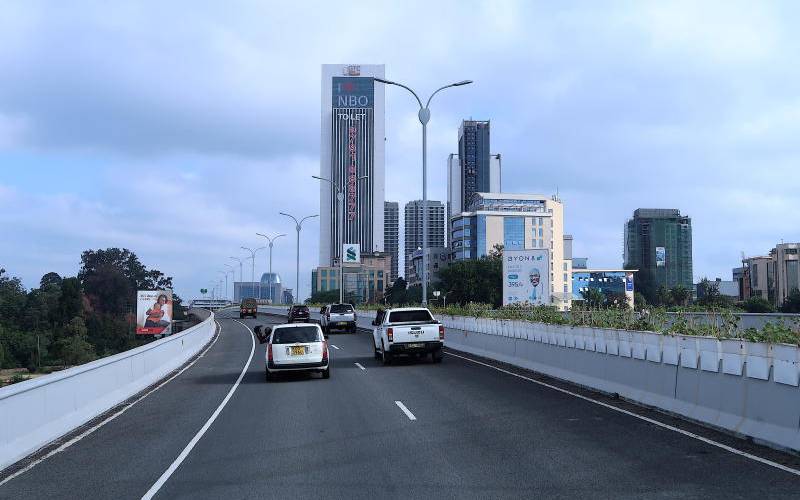
A road can be many things in Kenya: a public service, a political trophy, a route to market. The National Infrastructure Fund now wants it to be something else as well—a financial asset capable of earning at least 7% on the equity invested in it.
That is the striking feature of a new investment policy before Parliament. The National Infrastructure Fund (NIF), established by law in March, will require equity investments to meet a minimum expected return of 7%, according to the policy reported by Kenyans.co.ke. The document also proposes that no single project should account for more than 20% of the Fund’s assets and no sector more than 40%.
The distinction matters.
A government bond promises a coupon. An equity investment does not. The former is a contractual payment; the latter depends on whether the underlying project actually makes money. A 7% minimum return on equity therefore signals something more consequential than a target on a spreadsheet: Kenya wants its infrastructure vehicle to behave, at least partly, like an investment fund rather than another Treasury pocket.
That is the theory.
The roads, railways and dams will have to cooperate.
From borrowing to investing
The NIF is the centrepiece of President William Ruto’s attempt to change how Kenya pays for large infrastructure projects.
The ambition is considerable. The government says roughly KSh5trn ($40bn) will be required over the next decade for roads, rail, ports, airports, water infrastructure and energy. Ruto has repeatedly promised to mobilise that capital without adding unsustainable debt.
“We are firmly resolved to mobilise the resources without adding unsustainable debt to our balance sheet or placing an additional tax burden on our citizens,” he said in February when appealing to international investors to back the Fund.
The President’s formulation is politically attractive. It is also financially demanding.
Someone must ultimately provide the capital.
The Fund is intended to draw money from privatisation proceeds, public assets and other sources, then use that capital to attract institutional and private investors. The government’s own description is that it will “crowd in” private capital. The President has suggested that the vehicle could mobilise investment on a scale far beyond its initial public contribution.
That makes the 7% hurdle important.
Pension funds, insurers and other long-term investors will not be persuaded merely by the promise of a new road. They need a return commensurate with risk, inflation and the alternatives available to them.
The state is discovering what private investors already knew.
Infrastructure is expensive.
A road is not automatically an investment
The difficulty is that much of the infrastructure Kenya needs is commercially awkward.
A highway can reduce transport costs and raise productivity without generating enough toll revenue to produce a 7% equity return. A dam can transform agriculture while charging users too little to make the project commercially compelling. A railway can be economically useful even when its accounts remain stubbornly red.
This is the central conundrum of the NIF.
Economic return and financial return are not the same thing.
The new policy appears to recognise this distinction by allowing the Fund to use several investment structures, including equity, quasi-equity, debt instruments, project finance, special-purpose vehicles and other investment vehicles. It also proposes that projects have at least 60% debt capacity through non-recourse project debt, while the Fund itself would not borrow against its balance sheet.
That is a sensible architecture, on paper.
It also means the 7% threshold cannot be read in isolation.
A project might fail the equity test but generate large economic benefits. Another could clear the financial hurdle while doing little for the wider economy. Picking between the two is precisely where politics tends to wander into the investment committee.
Politicians, predictably, have opinions.
The KSh5trn question
Parliament has already treated the Fund as something rather larger than another state corporation.
When MPs passed the NIF Bill in March, Leader of the Majority Kimani Ichung’wah described it as potentially the most consequential legislation enacted by Parliament since independence. The Fund, he said, would help move Kenya towards a model in which infrastructure is financed without adding to public debt.
The rhetoric was grand.
The arithmetic is grander.
Kenya’s public debt has risen substantially over the past decade, leaving less room for the old model in which the government borrows to build and then borrows again to refinance. The attraction of the NIF is therefore obvious: if private capital can finance infrastructure that would otherwise sit on the sovereign balance sheet, the state gets roads and power without issuing quite so many bonds.
But the private investor does not disappear merely because the project has been moved into a fund.
The investor still wants paying.
Why 7% could matter
The proposed minimum return is close to, but not directly comparable with, the 6.5% coupon on Kenya’s seven-year infrastructure bond issued in 2023. The difference is important: the bond was government debt with a fixed coupon, whereas the NIF’s 7% figure is a minimum expected return on equity.
Equity takes the risk first.
If the road underperforms, shareholders absorb the disappointment before creditors do. A 7% equity threshold therefore does not mean investors are guaranteed 7%. It means projects that cannot plausibly generate that return should not ordinarily receive the Fund’s equity capital.
That could impose a useful discipline on infrastructure selection.
Kenya has spent years debating whether projects were chosen because they were economically necessary or because they were politically convenient. A commercial hurdle cannot settle that argument. It can, however, make the numbers harder to ignore.
A feasibility study that produces a poor return would no longer be an embarrassing appendix.
It could kill the project.
The NIF Act requires the Fund to undertake feasibility studies to determine commercial viability before investment. The law also requires its investment policy to specify expected rates of return, asset allocation, portfolio distribution and exposure limits.
That is considerably more investment discipline than the traditional public-works model.
Whether it survives contact with politics is another question.
The Fund needs private money. Quickly.
The government has made no secret of its intended investors.
Pension funds, collective investment schemes, sovereign wealth funds, development-finance institutions and private investors are all expected to participate. Ruto has specifically pitched the Fund to international investors and long-term pools of capital.
The challenge is that these investors have choices.
A Kenyan pension fund can buy government bonds. It can invest in listed companies. It can buy property. It can invest overseas, within the applicable rules. Asking it to put money into an infrastructure project means asking it to accept construction risk, regulatory risk, political risk and revenue risk.
Seven per cent may therefore be a floor, not an irresistible invitation.
Indeed, the Fund’s success will probably depend less on whether it can promise 7% than on whether investors believe the rules surrounding that 7% will survive a change of government, a delayed project or a politically inconvenient toll increase.
Capital is chary when governance is not.
The governance test
The NIF Act attempts to answer that concern with a two-tier structure: a Governing Council for policy direction and a Board responsible for implementation and investment decisions. The Governing Council is chaired by Treasury Cabinet Secretary John Mbadi and includes Central Bank governor Kamau Thugge and private-sector figures including KCB Group chief executive Paul Russo and former Afreximbank president Benedict Oramah.
Professionalism is clearly part of the pitch.
So is independence.
The Institute of Public Finance, while welcoming the attempt to find alternatives to debt financing, has warned about gaps in the legislation, including the lack of a sufficiently precise definition of “national infrastructure”. It argues that ambiguity could leave room for discretionary investment in projects of questionable economic value.
That is the sort of objection investors will understand.
A fund cannot be commercially managed if the definition of a commercial project changes whenever political priorities do.
The bigger wager
The NIF is therefore making two bets at once.
The first is that Kenya can find enough productive infrastructure projects to absorb trillions of shillings.
The second is that investors will trust the government to let those investments be governed commercially.
The first is not trivial. Kenya’s infrastructure needs are enormous, particularly in transport, energy, water and irrigation. The government plans to dual 2,500km of highways, pave another 28,000km of roads and expand installed electricity capacity towards 10,000MW.
The second is harder.
Infrastructure investors are accustomed to political risk. They price it. But they do not like discovering after committing capital that a commercially necessary tariff increase has become politically impossible, or that a carefully negotiated concession has acquired a new interpretation.
Kenya’s history offers enough examples to make investors cautious.
The Fund’s greatest achievement, therefore, would not be raising KSh5trn.
It would be convincing investors that the money will be invested because the numbers work.
That would represent a genuine change in Kenya’s infrastructure culture: from build first, finance later to finance first, build what works.
The 7% hurdle is a small sentence in a large policy document.
It may prove to be the most important one.