Regional trade is expanding, connecting producers and consumers across borders. But the benefits depend on who can afford to trade, where goods move and how governments manage competition.
By Our Staff Writer
East Africa has spent years building a larger market out of eight national economies. The promise is straightforward: fewer barriers should make it easier for businesses to sell across borders, consumers should gain access to cheaper goods and firms should become more competitive by serving a bigger customer base.
The East African Community (EAC), comprising Burundi, the Democratic Republic of Congo, Kenya, Rwanda, Somalia, South Sudan, Tanzania and Uganda, has made regional integration a central economic ambition. Its Common Market framework envisages the freer movement of goods, services, capital and people. But a larger market does not automatically produce a more inclusive economy. The ability to exploit regional opportunities depends on access to finance, reliable transport, production capacity and the cost of complying with regulations.
The EAC Common Market Protocol sets an ambitious objective: “to ensure that the benefits of the Common Market are equitably distributed among the Partner States”. That commitment, contained in Article 4 of the protocol, establishes a test that extends beyond the volume of goods crossing borders. The question is whether regional integration creates opportunities across the economy, or primarily rewards those already equipped to exploit it.
Big firms have an advantage
Cross-border trade rewards scale. A manufacturer supplying several countries can spread the costs of certification, distribution, warehousing and regulatory compliance across a larger volume of sales. It may also negotiate better freight rates, secure trade finance more easily and maintain relationships with customs agents and distributors in several markets.
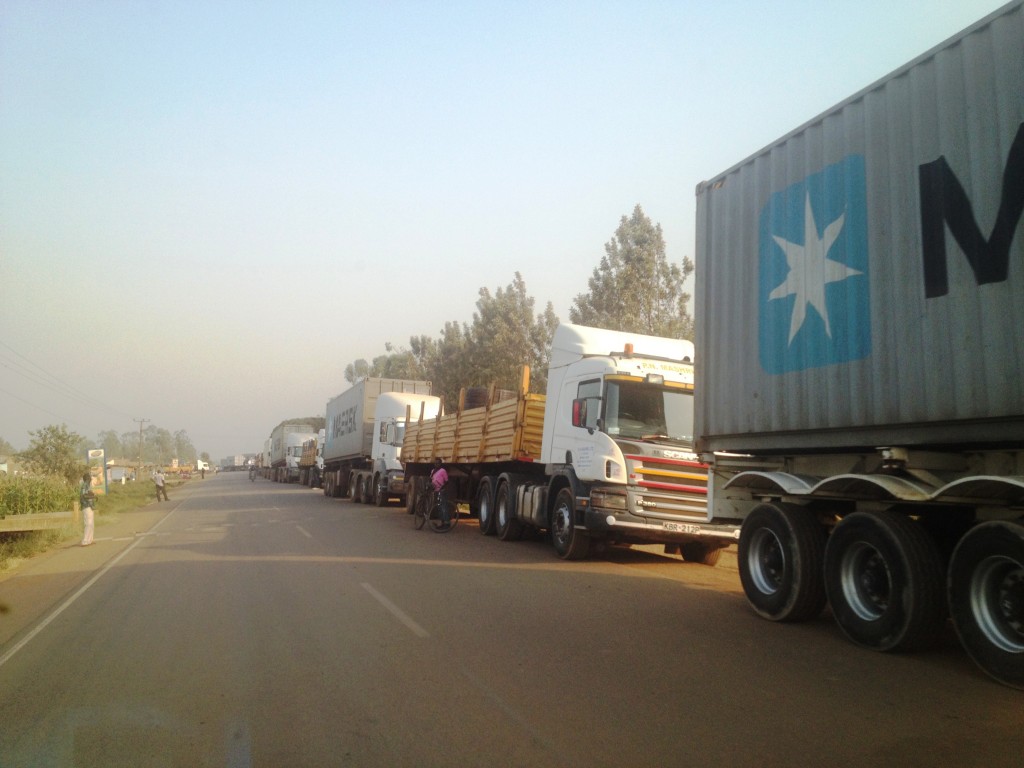
A small producer faces a different calculation. The same documentation requirements and border delays represent a much larger proportion of its operating costs. A lorry carrying a large consignment may absorb an additional day in transit more easily than a trader transporting a modest quantity of perishable produce.
This is one reason why formalising regional trade, though necessary, does not guarantee equal access to it.
Large manufacturers and established agribusinesses are well placed to exploit differences in production costs and consumer demand across the region. Smaller enterprises may struggle to meet minimum order sizes, finance inventory or absorb the expense of entering an unfamiliar market. Even when tariffs fall, these constraints remain.
Firm-level data would be needed to establish precisely how much formal intra-EAC trade is controlled by the largest exporters. Without such evidence, it would be premature to assign a specific share to dominant corporations. The economic mechanism, however, is clear: businesses with greater financial and logistical capacity are better placed to absorb the costs of crossing borders.
The geography of commerce
Trade also creates winners on the map.
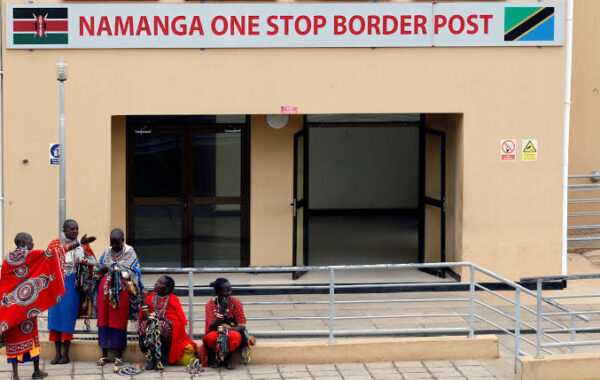
Busia and Malaba, on the Kenya-Uganda border, Namanga, between Kenya and Tanzania, and Rusumo, on the Rwanda-Tanzania border, illustrate the importance of gateways connecting national markets. Border infrastructure, freight services, warehousing and customs facilities can turn such locations into important centres of commerce.
One-stop border posts, which bring agencies from neighbouring countries into shared facilities, are intended to reduce duplication and speed up the movement of goods. TradeMark Africa, which has supported the development of such facilities, describes the underlying economic problem plainly: “The cost of this access is a component of the cost of the goods.” Its account of border infrastructure also identifies congestion and delays as contributors to high transport costs.
The implication is important. Faster border clearance can reduce the cost of moving goods, benefiting businesses and consumers. Yet the distribution of those benefits depends on which places and enterprises can connect to the improved infrastructure.
A farmer located far from a major road may still face expensive transport, limited storage and weak bargaining power. A small town bypassed by an improved highway may lose passing trade even as freight moves faster through the region.
Infrastructure can therefore concentrate economic activity as well as spread it. The outcome depends on feeder roads, local production, access to markets and the extent to which investment creates opportunities beyond the main transport routes.
Consumers gain, producers adjust
Regional trade can produce substantial benefits for consumers. When one country has a food surplus and another faces a shortfall, cross-border commerce can help move maize, beans and other staples to where they are needed. Greater competition can also widen the choice of manufactured goods and put pressure on prices.
For food-importing households, these benefits can be particularly important. Restricting trade to protect domestic producers may raise prices for consumers without necessarily improving the productivity of the industries being protected.
But competition has consequences for producers. A manufacturer operating with expensive electricity, costly credit or unreliable transport may struggle against a regional rival with lower production costs. A farmer facing cheap imports during the harvest season may see prices fall before recovering the cost of inputs.
These pressures should not automatically be treated as evidence that integration has failed. Competition can encourage firms to become more efficient, specialise and invest. Consumers should not be expected to pay permanently higher prices simply to shelter inefficient producers.
The harder question is how governments manage the transition. Workers and viable businesses need opportunities to adapt, while persistent disadvantages such as unreliable infrastructure, expensive finance and inconsistent regulation need to be addressed.
Without such measures, the benefits of cheaper goods may coexist with concentrated losses among particular industries, workers and farming communities. Aggregate gains can obscure these costs, even when the gains to consumers exceed the losses suffered by producers.
The traders who fall between the rules
The gap between formal and informal commerce is especially revealing.
Small-scale cross-border traders, many of them women, supply markets with agricultural produce, textiles and household goods. Their transactions may be modest individually but collectively sustain livelihoods and connect rural producers to consumers across national boundaries.
The World Bank’s diagnostic study, Enhancing Access to Finance for EAC Women Cross-Border Traders, highlights the importance of this activity. Drawing on research into women’s trading practices, it reports that 81% of women traders covered by the cited Informal Cross-Border Trade Database relied on cross-border trade as their primary source of income.
That figure is not a measure of all women traders in East Africa, but it illustrates what is at stake when access to formal markets is difficult.
Simplified Trade Regimes are intended to make eligible small consignments easier to move, often through reduced documentation and preferential treatment for qualifying goods. Their effectiveness, however, depends on clear procedures and consistent implementation at border posts.
Where requirements are poorly communicated, officials apply rules inconsistently or traders encounter unexpected charges, the costs of compliance can become prohibitive. Perishable goods are particularly vulnerable to delays.
The result is a contradiction: governments encourage formal trade while some of the smallest participants struggle to use the official system.
Improving access does not require abandoning customs controls or product standards. It requires making the rules understandable, publishing applicable fees, providing accessible complaints mechanisms and ensuring that simplified procedures work in practice, including at smaller crossing points.
These are not merely administrative improvements. They determine whether regional integration remains the preserve of established businesses or becomes a practical opportunity for smaller traders.
Integration needs a second act
East African governments have good reasons to pursue a larger regional market. But tariff reductions cannot compensate for every weakness in the domestic economy. Nor can regional agreements, by themselves, guarantee predictable access to neighbouring markets.
The EAC Treaty recognises the problem of uneven outcomes. Article 77 provides for partner states to take measures to address imbalances arising from the customs union and common market. The principle matters, but the existence of a treaty provision does not establish that an effective, adequately funded adjustment system is operating.
Governments also resort to import restrictions, export controls and other unilateral measures when domestic political or commercial pressures intensify. Such interventions can undermine confidence in regional rules, particularly when businesses cannot anticipate whether goods will be allowed across a border next week.
The answer is not to abandon integration. It is to make its rules more credible and its opportunities more accessible.
That means reducing non-tariff barriers, improving transport links beyond major corridors, widening access to trade finance and enforcing simplified customs procedures consistently. It also means collecting better data on which firms enter new markets, where employment is created and which communities bear adjustment costs.
The test of integration is not simply whether more goods cross East Africa’s borders. It is whether the resulting market enables more businesses to compete, more workers to find productive employment and more consumers to benefit from competition.
A bigger market creates an opportunity, not a guarantee. Unless East Africa tackles the barriers that prevent smaller firms and less-connected communities from participating, regional trade may continue to expand without spreading its rewards as widely as its architects intended.