The formal integration architecture is advanced. The commercial reality is much messier
By Kirimi Mbogo
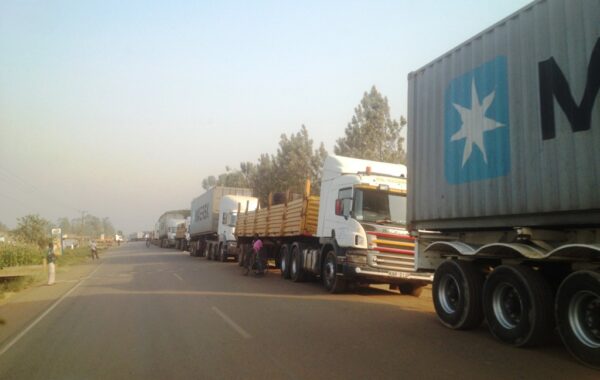
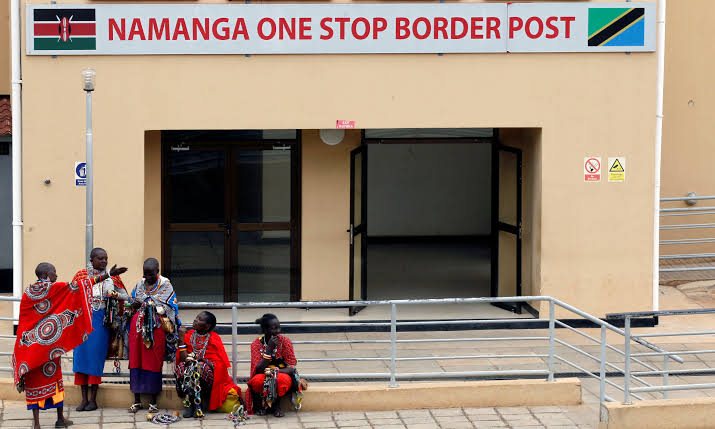
A consignment of Kenyan milk powder sat at the Namanga border post for six days in June, held up by a Tanzanian standards inspector who wanted paperwork the Common Market Protocol technically does not require. The truck driver, interviewed by a Kenyan trade publication, called it routine. That single word does more damage to the East African Community’s founding promise than any tariff ever could.
On paper, the region abolished internal tariffs in 2010. Goods produced within the bloc’s eight member states are meant to cross borders as freely as they would within a single country; a Single Customs Territory exists precisely to make that fiction a reality. And yet intra-EAC trade, the share of total trade that member states conduct with each other rather than with the outside world, has stagnated for two decades around 15 per cent. The bloc’s own target, set for 2030, is 40 per cent. At current trajectories that gap looks less like a shortfall than a structural feature.
Ahmed Farah, executive director of the East African Business Council, put the mismatch bluntly at a Nairobi roundtable this month: the region, he said, is “not just a neighbouring market; it is Kenya’s next growth frontier.” A frontier, notably, is territory not yet settled. Intra-regional trade stood at $19.7 billion in 2025, against a combined regional economy of roughly $400 billion and external trade of $137 billion. East Africans, in short, trade far more readily with Rotterdam and Guangzhou than with each other.
The sclerosis has a name, several in fact: non-tariff barriers, a bureaucratic euphemism covering everything from duplicated phytosanitary inspections to rules-of-origin disputes to permits that expire the moment they are issued. More than 200 such barriers have been logged and resolved since 2007; new ones surface annually, often faster than the old ones are cleared (governments, characteristically, blame each other’s agencies rather than their own). John Lual Akol Akol, chairman of the same business council, noted in February that intra-EAC trade “remains below 15 per cent of total EAC trade,” a figure he called significantly short of the bloc’s ambitions. He did not sound surprised.
Consider the anatomy of a single barrier. Uganda periodically bans Kenyan poultry products citing disease outbreaks that Kenyan officials dispute; Tanzania has, at various points, required additional certification for goods already certified under the EAC’s own standards body; Rwanda’s border agents have been known to interpret rules of origin, the provisions determining whether a good qualifies as regionally made, with an idiosyncrasy that would embarrass a customs lawyer. None of this is illegal, precisely. It is merely corrosive, the trade equivalent of death by a thousand stamps.
The Community set itself a deadline: 30 June 2026, to eliminate remaining non-tariff barriers, agreed at the March summit in Arusha. That deadline has now passed with the barriers, evidently, still standing. Regional summits have set and missed integration deadlines before; the pattern is sufficiently well established that trade economists now discount EAC target dates the way currency traders discount a central bank’s inflation forecast; that is, politely, and from a safe distance.
There is a currency dimension too, though it rarely gets top billing. The bloc has discussed monetary union since 2013, aiming, at various points, for a common currency by dates that have quietly slid rightward each time they approached. Divergent inflation rates, fiscal positions and central bank independence across Kenya, Tanzania, Uganda, Rwanda and Burundi make convergence look, charitably, distant. A common currency without a common fiscal framework is redolent of the euro zone’s original design flaw, and the EAC has shown no particular alacrity to learn from it.
None of which means the integration project has failed outright. Infrastructure has genuinely improved: the Standard Gauge Railway now links Mombasa to the interior, road corridors connecting Kenya, Uganda and Rwanda have shortened transit times, and the Single Customs Territory has, in specific corridors, cut clearance periods from days to hours. Intra-regional trade actually grew 28 per cent in 2025, a figure business leaders cite with evident relief. The trouble is that growth in absolute dollars has not translated into growth as a share of total trade, because external trade with China, the Gulf and Europe has simply grown faster still. Kenya’s exports to the rest of the world dwarf its exports to Uganda and Tanzania combined, and the ratio is not obviously shifting.
Foreign investors have noticed the disconnect, whatever the summit communiqués claim. East Africa attracted roughly $14.6 billion in foreign direct investment last year, about 21 per cent of the continent’s total, a healthy figure until one asks where that capital is being deployed. Overwhelmingly, it goes toward serving national markets or export corridors to the rest of the world, not toward the cross-border value chains that would make Kenyan manufacturers reliant on Ugandan inputs, or Tanzanian processors dependent on Rwandan raw materials. John Mwendwa of the Kenya Investment Authority has argued that investors are chary of anything less than genuine predictability, and a region that renegotiates its own rules mid-quarter offers little of that.
What makes the EAC’s failure instructive, rather than merely local, is that it is not a failure of design. The protocols are, by the standards of African regional blocs, unusually sophisticated; the Customs Union and Common Market agreements read like documents drafted by people who had genuinely studied the European precedent. The failure sits downstream, in the gap between what capitals sign in Arusha and what customs officers enforce at Namanga, Busia and Rusumo. Protocols do not clear trucks. Officials do.
Whether the region closes that gap before 2030, or simply revises the target once more, the way it has revised monetary union deadlines and NTB elimination dates before, is the question hanging over every EAC summit communiqué. The milk powder, for what it’s worth, eventually crossed into Tanzania. It took a phone call from someone senior enough to matter, which is precisely the kind of informal fix that a genuine single market is not supposed to require.