The country’s development partners have committed Sh2.48trn. Only 48.92% has been disbursed.
By Our Staff Writer
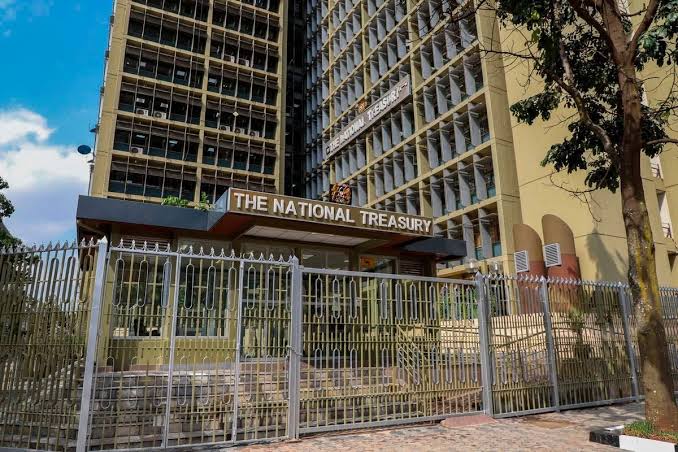
That gap—between money promised and money actually delivered—is one reason the National Treasury is building a new system to track the country’s development financing. The Development Partners Management Information System, or DPMIS, is expected to be launched before the end of 2026. It will consolidate information on external development resources in one place.
The ambition is rather larger than another government database.
The Treasury says DPMIS will show “who is supporting what, where resources are being directed, what has been committed and what has actually been disbursed”.
The distinction between committed and disbursed is the useful bit.
A pledge is not cash. A signed financing agreement is not a completed project. And a project appearing in a government plan does not mean that the money attached to it has arrived—or been spent.
Kenya’s existing Kenya Development Partner Funding and Accountability Platform records Sh2.48trn in commitments, including development-partner commitments and counterpart funding. It lists 91 active partners, 313 projects in the approved portfolio and activity across all 47 counties.
Yet only 48.92% of those commitments have been utilised, according to the platform.
That is a sizeable difference.
For a government under fiscal pressure, knowing the difference matters. External financing affects not only the development budget but the amount the Treasury needs to raise domestically when foreign funds arrive late or fail to materialise.
DPMIS is intended to make that information less scattered.
Treasury Principal Secretary Chris Kiptoo chaired a meeting of heads of departments on August 13th at which officials reviewed progress towards developing and operationalising the system. He directed officials to give priority to the “quality, timeliness, completeness and coverage” of data captured by DPMIS and called for stronger mechanisms for reporting, validating and coordinating development-partner information.
This is bureaucratic language. It conceals a fairly important problem.
A database is only as useful as the information put into it.
If ministries report late, if development partners maintain separate records, or if commitments are confused with actual disbursements, the Treasury will merely have digitised its uncertainty. The spreadsheet becomes a dashboard. The confusion remains.
The government appears to understand this.
The Treasury’s own description of the project is unusually explicit about what it wants from the data:
“It is about turning development finance data into actionable intelligence, so that better information supports better coordination, better decisions and, ultimately, better development outcomes for Kenyans.”
“Actionable intelligence” is an ambitious phrase for a public-finance system. It implies that DPMIS is not intended simply to tell officials how much money donors have promised. It should help them decide what to do with that information.
That could expose duplication.
The Treasury says the system should help identify areas where different development partners are supporting similar programmes, reducing overlap and improving coordination.
Development agencies do not always arrive with identical project titles, even when they are financing remarkably similar things. Two programmes can operate in the same county, address the same sector and report to different institutions without anyone having a complete picture of the overlap.
A central system might provide one.
It might also reveal something less flattering: money that has been committed but is moving slowly.
That matters because Kenya’s development financing is not a trivial adjunct to the national budget. The Parliamentary Budget Office has previously highlighted the country’s considerable reliance on development-partner financing. When external disbursements are delayed, the Treasury can be forced to find alternative financing—often domestically.
The cost of poor information can therefore appear somewhere else entirely, in the government’s borrowing programme.
There is a second benefit. Accountability.
Once the Treasury can distinguish commitments from disbursements and map resources against counties and projects, it becomes harder to hide behind the size of a pledge. A development partner can announce a large programme; the government can record it. But someone should still be able to answer the rather less glamorous question: how much has actually arrived?
DPMIS is supposed to make that answer easier.
The system already has a substantial information base to build on. The existing platform shows that all 47 counties are represented, with 229 mapped locations. It records 313 projects and 91 active development partners.
The challenge is moving from inventory to intelligence.
That requires institutional discipline. Ministries must report accurately. Development partners must provide current information. Treasury officials must validate it. Someone must reconcile conflicting numbers—and, eventually, someone must act when the numbers reveal duplication, delay or poor utilisation.
The software cannot do that last bit.
No government database can.
The planned launch before the end of 2026 is therefore the easy milestone. The harder one will come afterwards, when officials discover that a project has been funded twice, a commitment has not been disbursed, or a programme is consuming resources without producing much.
The Treasury will then have the information.
What it does with it will be the more interesting test.
For now, Kenya is building a ledger for money that comes from elsewhere.
The ambition is to turn that ledger into something more consequential: a way of knowing not merely who promised what, but where the money went.