An in-depth exploration of the economic anatomy, tourism impacts, and fragile sustainability models driving music, film, food, and literary festivals across the region
By Our Staff Writer
In the dense, green forests of Itanda Falls along the banks of the River Nile in Jinja, thousands of festival-goers dance through non-stop electronic and traditional beats. Across the water in Stone Town, Zanzibar, tourists flood ancient stone alleyways while live taarab and afro-fusion echo from the Old Fort. Further inland, in Nairobi and Kampala, pop-up food yards, literary galas, and film markets draw thousands of suburban youth and global cultural tourists.
East Africa’s festival scene has quietly localised and evolved from artistic displays into a high-stakes, multi-million-dollar industry. The modern gathering ecosystem—spanning electronic, live heritage music, street gastronomy, film, and literature—now serves as a primary engine for intra-regional tourism and local employment. Yet behind the vibrant marquees lies a complex web of financial pressures, shifting corporate sponsorship mandates, unpredictable government policy, and severe cash-flow bottlenecks that test the survival of even the most established cultural institutions.
Macro-impact and revenue creation
To understand the economic scale of the festival circuit, consider the massive financial ripple generated by Uganda’s flagship electronic showcase, the Nyege Nyege Festival. A comprehensive economic impact study published on the festival reveals that the four-day event generates nearly $2 million (UGX 6.62 billion) for the Ugandan economy, driving hospitality venues in Jinja to a 130 per cent revenue jump while room prices surge by over 200 per cent to match peak demand. Highlighting this transformative surge on local commerce, Nyege Nyege co-founder Derek Debru observes:
“The festival evolves into an extraordinary economic driver, bringing together over twenty thousand people from across the globe and generating massive revenue for local hotels, food vendors, transport operators, and artisans who line the routes leading into the festival grounds.”
Crucially, this micro-level trickle-down effect directly favours small-scale informal entrepreneurs, with roadside eateries, street-food vendors, and local boda-boda operators recording income spikes exceeding 400 per cent as temporary event employment swells by 14 per cent.
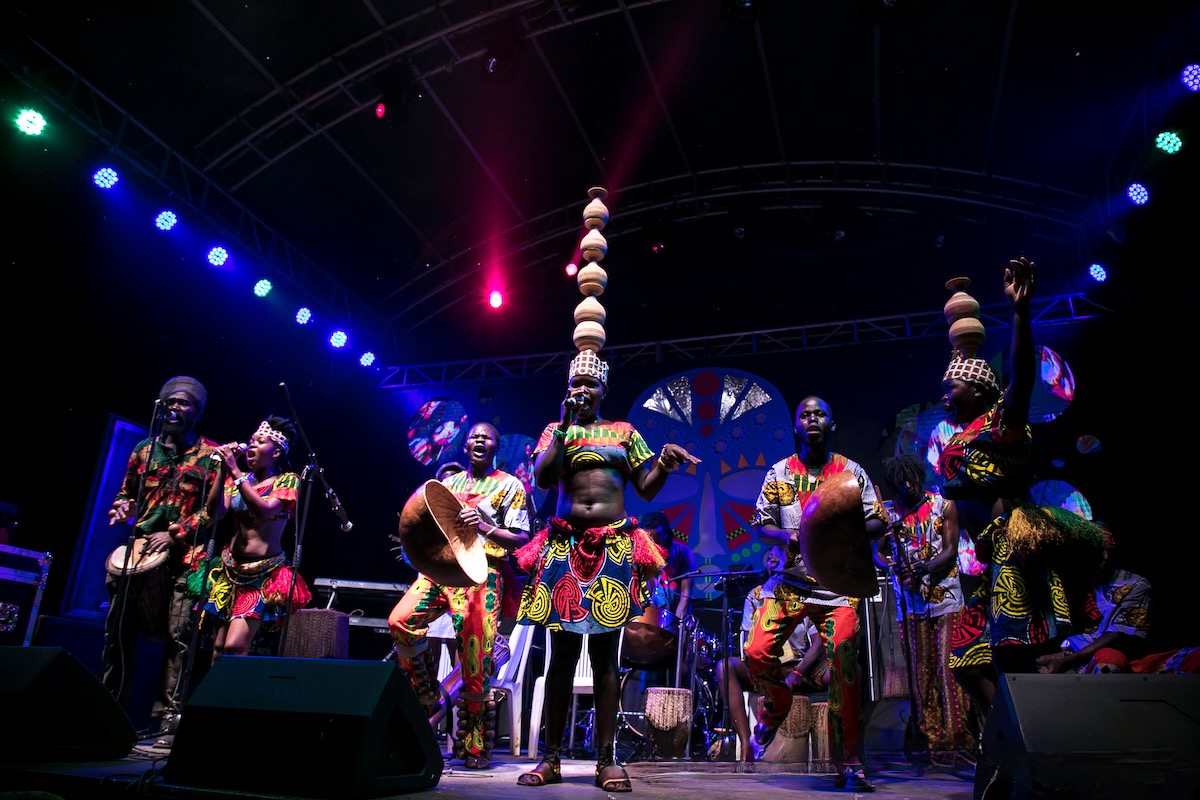
Over on the island of Zanzibar, the Sauti za Busara festival demonstrates how cultural music can single-handedly reshape an off-peak tourist calendar. Held annually every February, the four-day live African music festival acts as a vital bridge across the island’s low tourism season, routinely filling flights and ferries across the Zanzibar Channel. Addressing the core mission and financial realism of such gatherings, Sauti za Busara founder and director Yusuf Mahmoud notes:
“A festival of this size has significant production costs, and we are determined to keep prices affordable for local audiences. Sauti za Busara, I think, is highly acclaimed because it keeps the focus and stays consistent in showcasing African music, 100 per cent live. For local artists, the festival becomes an important stepping stone often leading to other international bookings and opportunities.”
This economic footprint spreads across Stone Town’s hospitality sector, where hotel occupancy approaches 100 per cent in mid-February, delivering much-needed cash flow to guides, drivers, and spice farmers long before the traditional dry-season tourist rush begins. Emphasising how cultural gatherings provide vital economic insulation for local workers, Former Zanzibar Minister for Tourism and Heritage Lela Muhamed Abdulahi remarks:
“Sauti za Busara is not merely a celebration of African music, but a cornerstone of Zanzibar’s cultural tourism strategy that fills our hotels, sustains hundreds of livelihoods during the low season, and showcases our island’s rich heritage to the entire world.”
Yet this tourism-centric economic model faces friction from resident business owners who feel the local commercial return is one-sided. Noting the reluctance of surrounding vendors to reinvest into event logistics, Zanzibar tourism and business leader Haji Haji observes:
“In economical terms, we benefit. The event is a very major thing for the tourists. Many restaurants and many shops, they benefit, but they don’t contribute anything to support the festival financially.”
Corporate sponsorship shifts
For decades, East Africa’s festivals relied heavily on international cultural grants from European embassies, development agencies, and traditional telecom sponsorships. Today, that model undergoes a dramatic shift as foreign aid grants contract, forcing festival organisers to pivot toward commercial corporate partnerships, brand activations, and strategic bank sponsorships.
Telcos, fintech giants, beverage conglomerates, and banking institutions recognise the power of festivals as experiential marketing hubs. A clear example of this corporate pivot occurs when Equity Group Holdings announces a direct injection into regional youth culture and artistic growth. Speaking on the broader economic mandate driving their corporate involvement, Dr. James Mwangi, Group Managing Director and CEO of Equity Group Holdings, emphasises:
“Our commitment to supporting young talent and cultural heritage goes hand-in-hand with our mission to transform lives and empower communities. By investing in creative platforms, we are not only preserving our rich cultural tapestry but also opening economic pathways for the next generation of creative entrepreneurs.”
Sponsorship models move far past simple logos on stage backdrops, as brands now demand full experiential rights. Beverage companies pay premium rights fees to control all bar sales across festival grounds, turning events into high-volume retail hubs, while fintech firms utilise entrances to force digital wallet activations. Reframing how corporate entities view these cultural partnerships, East African Breweries Limited (EABL) Head of Marketing Christine Kariuki explains:
“We no longer view festival sponsorship as a passive branding exercise or a simple placement of banners; we see these live events as critical experiential platforms where consumers physically engage with our brands, driving direct commercial velocity and creating unforgettable cultural connections.”
However, over-reliance on commercial sponsors creates a fragile revenue structure, as sudden shifts in corporate ad spending or marketing leadership can leave organisers with massive deficits months before showtime. Examining how the wider African media landscape is redefining this engagement, PwC Africa Senior Entertainment Industry Leader Charles Stuart notes:
“What we see now is not just recovery, but reinvention where live experiences are amplified by digital connectivity, streaming, and mobile commercial integrations.”
Niche monetisation models
Beyond high-decibel music events, alternative formats—such as food, film, and literary gatherings—develop unique monetisation frameworks tailored to urban middle-class consumption.
Gastronomy and lifestyle galas
Events like Nairobi Restaurant Week and the Koroga Festival in Kenya build a commercial bridge between culinary art, live performance, and retail sales. By packaging food pop-ups alongside high-tier live music, Koroga turns the traditional outdoor concert into a family-friendly artisanal market. Reflecting on the commercial synergy between lifestyle brands and creative events, Capital Group Director Kageni Wilson points out:
“The ambition behind Koroga is always to build an inclusive lifestyle brand that bridges the gap between top-tier African music talent, culinary culture, and corporate sponsorships, creating a sustained economic platform where vendors and corporate partners directly transact with thousands of festival-goers.”
Literary and ideas festivals
The StoryMoja Festival in Kenya pioneers the commercialisation of the regional mind-economy, bringing together publishers, authors, and students. By embedding educational institutions directly into its ticketing model—charging flat school entry packages alongside adult masterclasses—the festival builds a predictable revenue stream independent of corporate sponsorships. Contextualising the broader vision behind monetising literature, StoryMoja founder Muthoni Garland states:
“We set out to challenge the myth that Africans do not read or support literary arts, proving that when you curate vibrant, accessible cultural spaces, audiences gladly invest their money, and corporate entities see the tangible value in backing the creative mind-economy.”
Film markets and creative labs
The Zanzibar International Film Festival (ZIFF) and Uganda’s Pearl International Film Festival operate on a hybrid model that blends public screenings with business-to-business (B2B) content distribution markets. Here, the primary economic engine extends past ticket booths into physical distribution deals. Detailing the dual role of film festivals as cultural displays and commercial hubs, Former ZIFF Festival Director Martin Mhando observes:
“A film festival in East Africa cannot exist purely as an art showcase; it must function as a working marketplace where filmmakers meet international distributors, seal co-production deals, and generate real economic mobility for the creative screen industry.”
The viability paradox
Despite generating millions of dollars in economic activity for host towns, festival organisers across Kenya, Uganda, Tanzania, and Rwanda fight an uphill battle to remain financially viable year after year. They operate inside a structural paradox: world-class festival production requires importing heavy staging, sound systems, LED screens, and international talent at global market rates, but ticket prices must be pegged to regional purchasing power.
When a festival imports a high-tier headliner or specialised staging gear, costs settle in hard foreign currency, yet the ticket prices sold to local university students or resident workers must remain accessible. In many East African events, ticket sales cover as little as 30 to 40 per cent of overall production overhead, leaving organisers dependent on corporate sponsorship, vendor fees, merchandise, and government subsidies. Highlighting the extreme financial stakes involved in producing large-scale live shows, Kenyan event producer and founder of the Blankets & Wine festival Muthoni Drummer Queen reveals:
“The economics of producing a high-caliber live festival in East Africa are brutal because your infrastructure costs, staging equipment, and artist fees operate at international dollar-denominated benchmarks, yet you are charging a ticket price that respects local economic realities. You spend every cycle walking a tightrope between creative excellence and total financial ruin.”
This fragile economic balancing act is further complicated by shifting regulatory hurdles, unexpected security permits, noise ordinance fines, changing venue tax structures, and sudden municipal levies that frequently wipe out small profit margins. Addressing these operational frictions, Trace Africa Digital Manager and creative strategist evaluates venue shortcomings:
“We can build up East Africa’s rich festival culture, but to best leverage our diversity as East Africans, we first need to realise the power we hold as a people and fix basic logistical bottlenecks. You travel by bus for hours only to find basic venue infrastructure lagging behind. When the venue experience, vendor setups, and municipal coordination match the high level of artistic talent on stage, the festival economy truly unlocks its full commercial potential.”
Building a sustainable future
To break the cycle of financial instability, festival directors across the East African Community begin to rethink their long-term operating strategies across three primary avenues.
First, organisers in Kampala, Nairobi, Kigali, and Stone Town explore coordinated circuit routing and resource sharing. By booking international and regional artists along a shared multi-city dates calendar, festivals split flight, visa, and production costs, drastically reducing individual operational overhead.
Second, addressing the lack of permanent, purpose-built outdoor venues remains critical. Without dedicated spaces, organisers spend up to 50 per cent of their budget on temporary infrastructure like generators, portable toilets, fencing, and staging. Municipal investments in dedicated green-field event parks equipped with built-in power grids and sanitation facilities immediately lower production barriers.
Finally, public-private cultural infrastructure funds offer a pathway to long-term stability. Rather than viewing festivals as noisy temporary weekend gatherings, regional governments slowly recognise them as major national tourism drivers. Integrating cultural events into official national tourism board budgets, offering tax exemptions on imported audio equipment, and streamlining event permitting gives festival operators the security required to plan years in advance.
Summarising the imperative for governments to treat festivals as serious national investments, Ugandan Minister of State for Tourism, Wildlife and Antiquities Martin Mugarra Bahinduka affirms:
“Festivals are no longer just weekend entertainment for youth; they are massive economic drivers that fill our hotels, promote our national identity, and create thousands of jobs across the tourism value chain. Government must continue to align policy, security, and infrastructure support to ensure these creative gatherings can thrive sustainably.”
East Africa’s festivals prove their ability to mobilise young populations, fill hotel beds, generate immediate informal employment, and project regional soft power to the world. Turning these dynamic gatherings into long-term financial anchors requires shifting the mindset: moving from treating events as one-off weekend parties to backing them as serious, permanent infrastructure inside the region’s broader economic portfolio.