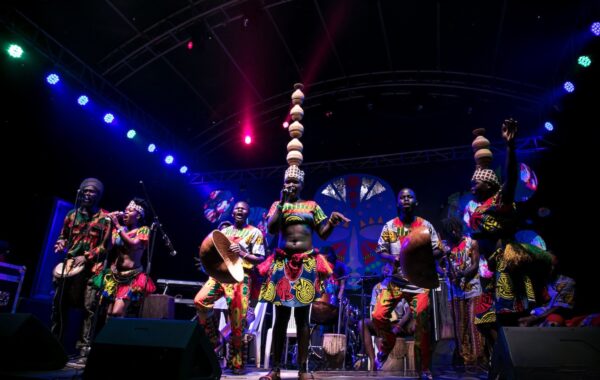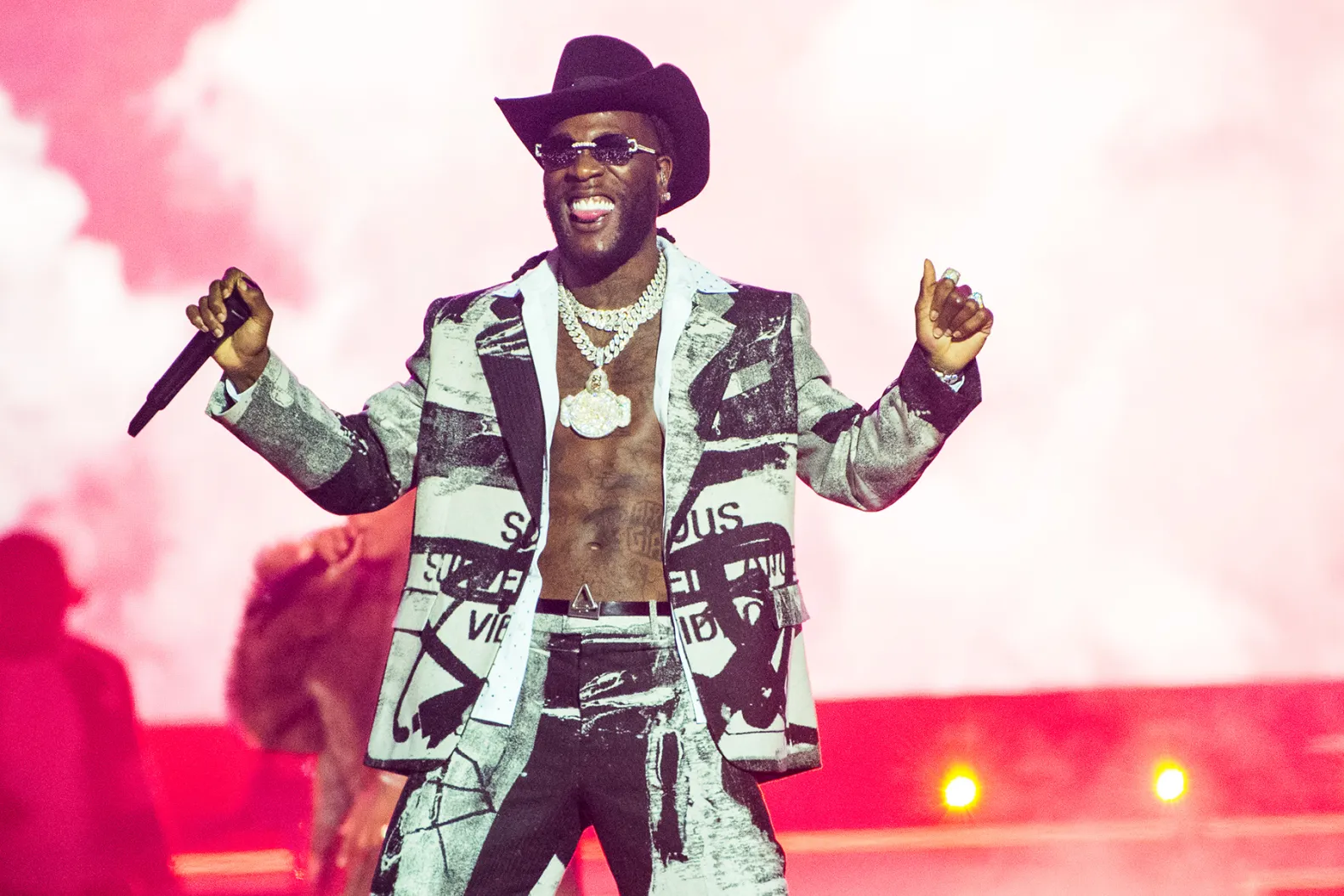
Africa’s musical breakthrough was never simply about exporting a genre. The bigger prize is building an industry that can export artists, intellectual property, live experiences and culture on its own terms.
By Our Staff Writer
For decades, African musicians were told to cross over.
The phrase said more than its users intended. It implied that the world had a centre and Africa had an edge, that an African artist became internationally important only after passing through London, New York or Los Angeles. Afrobeats has made that hierarchy harder to defend.
Now comes the more difficult question: what happens after the breakthrough?
The answer is unlikely to be another African genre simply conquering the world. Afrobeats itself is already too broad a category, drawing from Nigerian pop, Ghanaian highlife, hip-hop, R&B and Caribbean rhythms. Its greatest achievement may therefore be less the creation of a global sound than the opening of a global market for African sounds.
That market is growing. Recorded-music revenue in sub-Saharan Africa rose by 15.2% in 2025 to $120m, according to the International Federation of the Phonographic Industry. Globally, recorded music generated $31.7bn in 2025, with streaming accounting for nearly 70% of the total.
The figures are impressive. They are also revealing.
Africa remains a small music market by global standards. South Africa accounted for 78.1% of sub-Saharan Africa’s recorded-music revenue in 2025. Cultural influence is therefore running considerably ahead of the continent’s ability to monetise it.
That gap is where the next story lies.
The first export was a sound
Afrobeats did not arrive in the world as a corporate export strategy. It travelled through people.
Nigerians and Ghanaians carried songs with them. Diaspora communities turned clubs into informal distribution networks. DJs became cultural intermediaries. Then YouTube, TikTok, Spotify and other platforms removed much of the friction between a song made in Lagos and a listener in London, Paris or São Paulo.
The old gatekeepers became less important.
Rema’s “Calm Down” offered the emblematic example. Its remix with Selena Gomez became the first song by an African artist to surpass one billion Spotify streams, while the International Federation of the Phonographic Industry ranked it the world’s second-biggest-selling single of 2023.
The significance was not merely commercial. It demonstrated that an African song did not need to shed its identity before becoming internationally legible.
That distinction matters.
The first generation of African crossover relied heavily on collaboration with Western stars. The next generation can increasingly collaborate from a position of confidence rather than supplication.
Spotify’s Nigerian figures illustrate the shift. Since the service launched in Nigeria in 2021, listening has grown by more than 163% a year on average, while the number of Nigerian artists on the platform has risen by 158%. Afrobeats listening has increased by more than 5,000%.
And Afrobeats is no longer the only game in town.
Africa is beginning to sound less like one market
The next African music boom may come from the fragmentation of the very category that made the continent globally visible.
Amapiano has travelled from South African townships to clubs and playlists around the world. Nigerian indigenous-language music is finding new audiences. Ghanaian sounds continue to mutate. East African artists are drawing from gengetone, bongo flava, singeli, amapiano and local pop. Producers are mixing sounds that the old industry would have placed in separate rooms.
Spotify’s Nigerian data is revealing. Between 2021 and 2026, listening to amapiano in Nigeria increased by more than 10,000%, while gospel and praise grew by 5,499% and hip-hop and rap by 3,020%. Indigenous-language listening also surged.
Africa’s musical future may not be “Afrobeats 2.0”. It may be a constellation of regional sounds that become globally discoverable without first needing a common label.
This is how Latin American music became a commercial force. Reggaeton did not eliminate salsa, bachata, regional Mexican music or Brazilian pop. It created a pathway through which global listeners became more receptive to a wider musical ecosystem.
Africa is beginning to have a similar opportunity.
The real prize is not another hit
The music business is obsessed with songs because songs are easy to count.
Streams. Downloads. Chart positions. Monthly listeners.
But the more consequential opportunity lies elsewhere: intellectual property.
An African artist who owns recordings, publishing rights, merchandise, live rights and the commercial use of their image has built an enterprise. An artist who owns none of those things may simply have supplied a soundtrack to somebody else’s business.
That distinction will become more important as African music expands into film, television, advertising, gaming, fashion and tourism.
The global entertainment industry increasingly treats music as part of a wider intellectual-property ecosystem. A successful song can become a film placement, a fashion collaboration, a festival brand, a gaming asset or the soundtrack to a global advertising campaign.
Africa has the cultural raw material.
What it has lacked is enough industrial infrastructure to capture the value.
That means better publishing administration. Stronger collecting societies. More sophisticated managers and lawyers. Reliable royalty reporting. Proper neighbouring-rights systems. Better metadata. More local investment in studios, catalogues and artist development.
It is less glamorous than a sold-out stadium.
It may be worth more.
Live music could be the next frontier
Streaming made African music global. Live entertainment may make the industry richer.
PwC expects African entertainment and media markets to continue benefiting from expanding consumer spending, youthful audiences and digital adoption. Live events are particularly well placed to benefit as online attention increasingly translates into physical experiences.
That creates an intriguing possibility.
The African festival could become an export in its own right.
Not simply an event where Western artists headline and African acts provide local colour, but a destination built around African music, fashion, food, design and nightlife. Lagos has the audience. Johannesburg has the infrastructure. Nairobi has a growing regional role. Accra has diaspora appeal. Kigali has demonstrated how events can become part of a city’s international identity.
The opportunity is to connect them.
Imagine a touring African festival circuit moving from Lagos to Accra to Nairobi to Johannesburg, with artists, brands and audiences travelling across borders. The economic value would extend beyond tickets into hotels, airlines, restaurants, fashion and advertising.
Music would become infrastructure for a broader cultural economy.
Technology will make the map stranger
The next phase will also be shaped by technology.
Streaming has already changed the geography of discovery. Artificial intelligence will complicate it further.
AI can help producers create, translate and distribute music at unprecedented speed. It can also threaten performers whose voices, compositions or identities are replicated without permission. The global music industry is already wrestling with the copyright implications of generative AI.
For African artists, the stakes are unusually high.
The continent has historically lost value through weak copyright enforcement and informal distribution. If AI makes it easier to replicate voices and compositions while ownership records remain fragmented, Africa could repeat the old mistake at digital speed.
But the reverse is possible.
Young African producers are comfortable with digital collaboration, inexpensive production tools and social distribution. A generation that grew up with smartphones rather than record shops may be better positioned to exploit an internet-native music economy.
The question is whether institutions can move as quickly as the artists.
Women will reshape the next chapter
There is another correction to make.
The global narrative of African music has often been built around male stars. That is increasingly inadequate.
Tems, Tyla and Ayra Starr have demonstrated that female African artists can occupy the centre of global pop without becoming peripheral figures in somebody else’s story. Tems has become the first African female artist to surpass one billion Spotify streams for a single track.
This matters commercially as much as culturally.
A deeper bench of female stars expands the industry’s audience, partnerships and creative vocabulary. It also creates new opportunities in fashion, beauty, television and advertising, industries that increasingly overlap with music.
The next African music economy will be broader if its talent pool is.
The danger is becoming a genre rather than an industry
There is an uncomfortable possibility.
Afrobeats could become the African equivalent of a successful natural resource: enormously valuable, internationally fashionable and disproportionately exploited elsewhere.
The warning signs are familiar. Foreign labels acquire stakes in catalogues. Global platforms control discovery. International promoters capture a large share of touring economics. Artists sign contracts whose complexity exceeds their bargaining power. Streaming generates attention without necessarily producing enough income.
None of this makes globalisation a bad thing.
It means that popularity is not the same as power.
Africa’s music industry needs capital, but it also needs institutions capable of negotiating with capital. It needs global distribution, but it needs local ownership. It needs international collaborations, but it must avoid making collaboration synonymous with validation.
The ambition should not be to keep African music African.
That would be impossible and undesirable.
The ambition should be to ensure that Africans own enough of the machinery through which African culture becomes valuable.
The next sound may come from somewhere unexpected
This is perhaps the most exciting part.
Afrobeats succeeded partly because outsiders underestimated the audience. The next wave may emerge from places the industry is still underestimating.
It could come from Nairobi, Dar es Salaam or Kampala. It could emerge from Lusaka or Abidjan. It could be a hybrid of Congolese rumba and electronic music, a South African club sound, a Kenyan rap movement or a Nigerian indigenous-language scene that suddenly finds an audience in Mexico.
The geography of discovery is becoming too chaotic for executives to predict comfortably.
That is good for music.
Spotify’s experience in Nigeria offers a glimpse of the underlying demand. In 2025 alone, Nigerian users spent more than 1.4bn hours listening on the platform and created more than 25m playlists. The average listener was just 26.
That is not simply a music audience.
It is an emerging cultural economy.
And its tastes are being formed in real time.
What comes after global?
The phrase “global African music” may itself become obsolete.
A generation ago, African music had to travel to the world. Today the world can travel directly to it. The distinction is subtle but profound.
The next phase will therefore be less about convincing international listeners to consume African music and more about building an ecosystem capable of serving their appetite.
That means African-owned labels with international reach. African publishing companies with serious catalogues. African promoters capable of producing global tours. Festivals that attract international audiences. Streaming platforms that understand local markets. Banks and investors that recognise music catalogues as assets. Universities that train the lawyers, managers, engineers and executives the industry needs.
Above all, it means treating music not merely as culture, but as business.
Afrobeats has already proved that African creativity can travel.
The harder task is proving that the value created on that journey can stay closer to home.
The first African music revolution was about being heard. The next one will be about who owns the microphone.