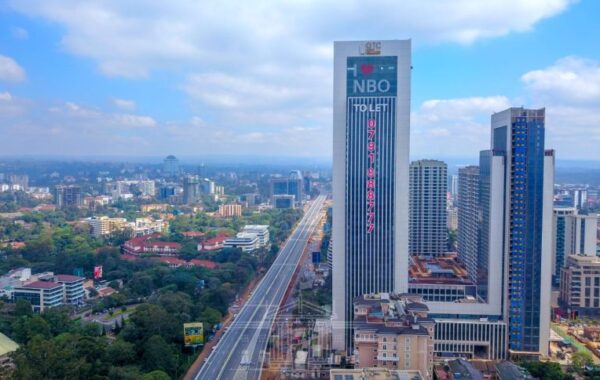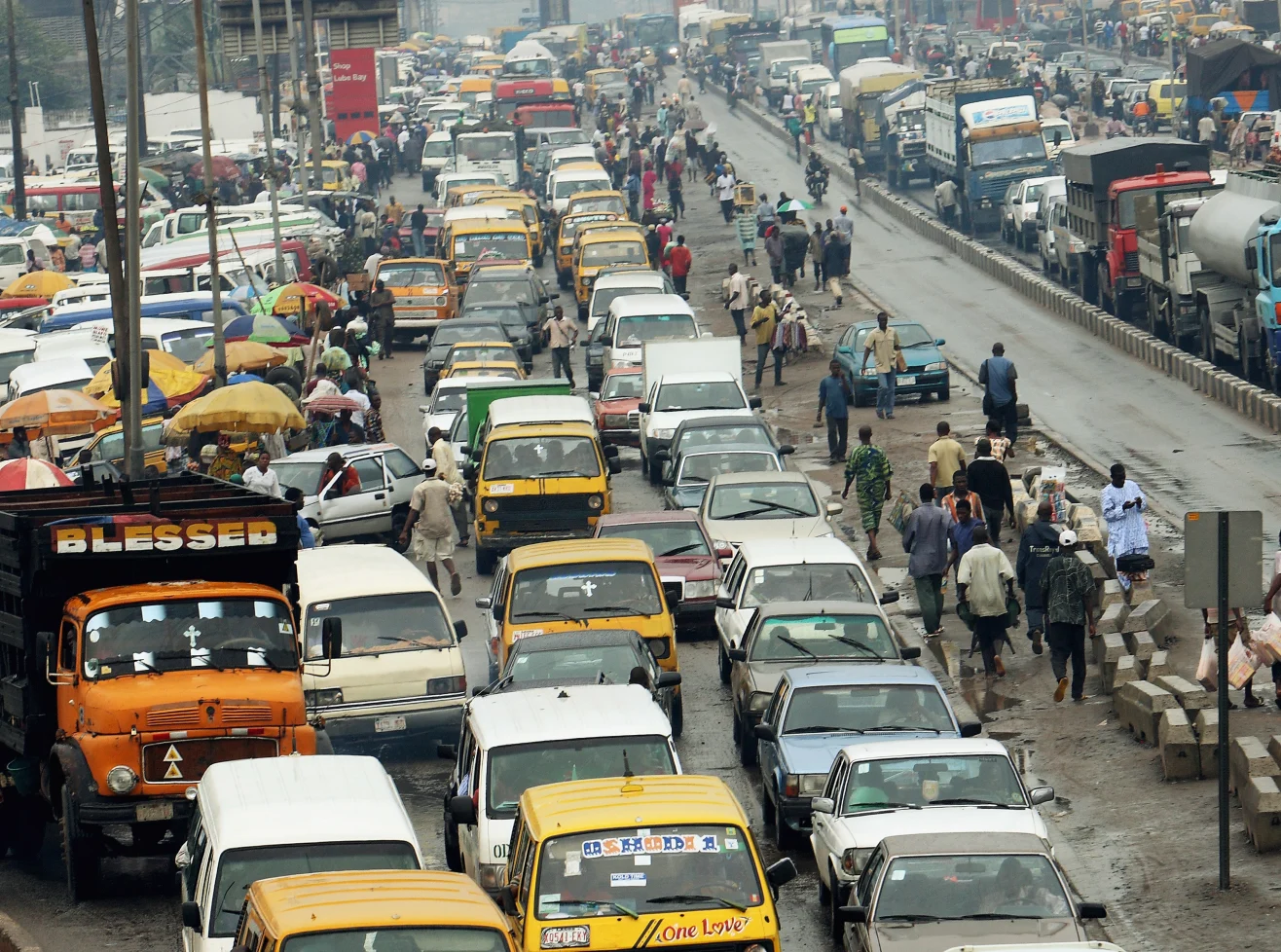
Poor spatial planning and broken municipal finance turn urbanisation into a tax on enterprise, forcing households and businesses to absorb billions in structural inefficiencies.
By Kirimi Mbogo
An urban worker in Nairobi or Lagos spends up to four hours navigating a fragmented grid of tarmac and dirt tracks, consuming a disproportionate share of daily disposable income simply to reach a job. Across the continent, urban centres defy standard economic theory. In a functional market economy, urbanisation lowers transaction costs, concentrates talent, and drives productivity through geographical density.
In Africa, urbanisation often achieves the opposite. Data compiled by the World Bank indicates that African cities are roughly 29% more expensive than cities in other developing regions with comparable income levels, while housing costs alone consume up to 55% more of a household budget than they do elsewhere.
This economic penalty stems directly from structural neglect. Municipal authorities react to population shifts through emergency improvisation rather than coherent spatial planning. When cities fail to plan for growth, households and businesses absorb the deficit through inflated operating expenses, lost productivity, and stagnant capital accumulation.
The anatomy of the urban premium
Economists traditionally view cities as engines of agglomeration, where businesses cluster to share infrastructure, labour pools, and ideas. Yet, this mechanism breaks down when transport networks fail to connect commercial hubs with residential zones.
Spatial economists point out that African cities are physically disconnected. Industrial areas, markets, and housing estates are separated by vast, unserviced tracts of land, forcing commuters onto inefficient, privately operated minibuses that lack scale.
As the World Bank noted in its flagship institutional analysis on the continent’s urban transition, “African cities are crowded… [and] fragmented, disconnected”, failing to generate the economic density required to lower transaction costs.
As lead author and urban economist Somik Lall has observed regarding the structural trap facing the region, “African cities are closed to the world… compared with other developing cities, cities in Africa produce few goods and services that can be traded internationally, largely because high urban costs erode corporate competitiveness”.
This spatial fragmentation manifests directly in corporate balance sheets. Manufacturing firms operating in East and West African urban hubs report higher logistics and warehousing expenses than their Asian or Latin American counterparts. Because freight must navigate congested arteries devoid of peripheral ring roads or efficient rail freight links, supply chains stall.
Consequently, firms must maintain larger working capital buffers, tying up cash in inventory and vehicle maintenance that could otherwise fund expansion or research.
The land market paralysis
At the core of the expensive city paradox lies dysfunctional land administration. Property rights across much of Sub-Saharan Africa remain encumbered by overlapping tenure systems, bureaucratic titling procedures, and opaque registry records.
When formal land transactions take years to clear, developers cannot acquire contiguous parcels large enough to construct high-density, mixed-use housing developments.
The resulting shortfall in formal housing pushes the urban working class into informal settlements. These settlements, while economically vibrant, lack foundational infrastructure such as drainage, grid electricity, and paved access roads.
When the rains arrive, economic activity halts as commercial districts flood, isolating enterprises from their supply chains.
Municipal governments compound this paralysis by relying heavily on unpredictable fiscal transfers from central treasuries rather than capturing land value to finance local infrastructure. Without local property taxes or municipal bond markets linked to capital improvements, cities lack the recurrent revenue required to maintain existing roads, let alone lay down trunk infrastructure ahead of private development.
Highlighting the local bottlenecks facing East African property markets, Nairobi-based infrastructure finance specialist Samuel Ochieng notes that investors “step back because land acquisition risks and uncoordinated zoning make it nearly impossible to underwrite long-term project risks. You cannot build scalable commercial ecosystems on legal quicksand.”
Weighing in on the regulatory friction affecting urban land administration in Kenya, Nairobi urban economist Dr. Amina Kioni explains: “When transport networks are fragmented and land markets remain opaque, the expected benefits of urban density evaporate. Instead of lowering costs through proximity, cities impose a spatial tax on every economic transaction.”
The human toll on labour and enterprise
The high cost of running an African city cascades down to the labour market. Because housing is expensive and distant from employment centres, workers demand higher nominal wages merely to cover basic transport and rent.
Employers find themselves trapped between paying wages that match the high cost of urban living and maintaining profit margins in markets where consumer purchasing power remains constrained.
This dynamic stunts enterprise growth. Rather than scaling up operations to capture regional markets, many small and medium-sized enterprises remain informal and sub-scale, insulating themselves from regulatory costs but forfeiting access to institutional finance and larger commercial contracts.
The institutional framework penalises formal compliance while failing to provide the public goods—such as secure tenure, reliable power, and efficient transit—that would make compliance worthwhile.
Breaking the low-development trap
Reversing these structural inefficiencies requires a fundamental shift in how African governments view urbanisation. Cities must transition from being treated as political liabilities or administrative burdens to being managed as core national balance sheets.
As Jamal Saghir, former World Bank Director for Sustainable Development in the Africa Region, emphasised during evaluations of urban growth patterns, “With rapid population inflows doubling urban spaces across a generation, Africa’s surging urbanisation demands vastly improved delivery of services and early infrastructure investments before sprawl locks in permanent inefficiencies.”
This transformation demands three specific interventions. First, governments must formalise land markets by streamlining property registries and clarifying tenure to unlock private capital for high-density residential and commercial construction. Second, authorities must prioritise upstream infrastructure investment, building trunk roads, mass transit corridors, and utility grids before residential or industrial sprawl occurs rather than retrofitting infrastructure at exponentially higher costs. Third, municipal fiscal autonomy must be expanded, empowering local authorities to raise capital through property rates and municipal bonds, aligning local revenue collection directly with urban maintenance and expansion.
Without these measures, Africa’s urban centres will continue to exact a heavy toll on enterprise and households, consuming wealth rather than generating it.
The continent’s demographic dividend depends entirely on whether its cities can evolve from expensive obstacles into efficient crucibles of productivity.
What reforms are most urgently needed to unlock municipal bond financing for East African cities?