
The new customer is less easily impressed
By Kirimi Mbogo
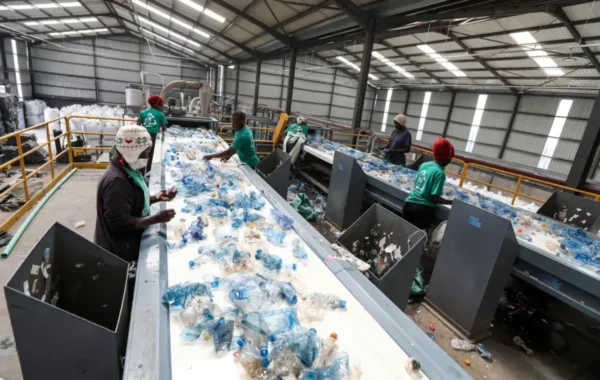
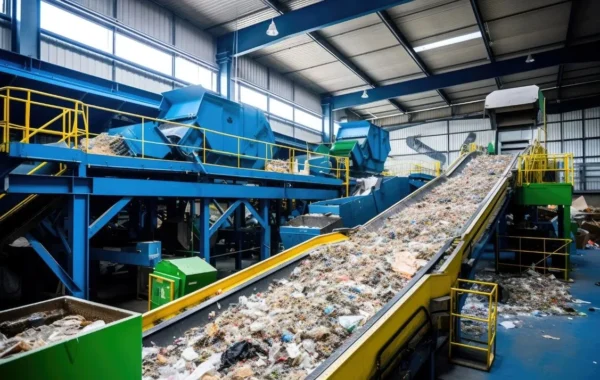
A Kenyan entrepreneur turning discarded paper, plastic and agricultural waste into construction tiles has found an old business lesson in a new place: rubbish can be a raw material.
Anna Chari’s company, Kavalian, grew from four employees to 30 in less than two years, according to the Kenya National Innovation Agency. Its tiles offer thermal insulation, water resistance and anti-slip properties. More tellingly, the company went from four customers in 2024 to 12, with contracts worth KSh480,000. “We started as a team of 4 with 30 now as at now,” Chari said, referring to the company’s employment growth.
The interesting thing is not the tiles.
It is the market behind them.
Environmental, social and governance, once the preserve of institutional investors and earnest annual reports, is migrating into products. Consumers are asking different questions; founders are building companies around different assumptions; investors are beginning to regard resource efficiency and social impact as commercial variables rather than charitable adornments.
Africa is late to this particular fashion. That may prove useful.
The continent can skip some of the more elaborate stages of corporate ESG theatre and concentrate on what customers actually buy.
A European consumer may choose a product because it has a lower carbon footprint. An African consumer is more likely to ask whether it lasts longer, costs less to operate, creates local jobs or solves an obvious problem. The environmental benefit is welcome. The price still matters.
This is not a contradiction.
It may be the continent’s advantage.
The strongest African sustainability businesses tend to sell economy before virtue. Solar home systems reduce the need for kerosene and unreliable grid power. Efficient irrigation reduces dependence on rainfall. Digital agricultural services can raise yields while reducing waste. Recycled construction materials compete with conventional inputs. Electric motorcycles promise lower running costs as well as lower emissions.
The pitch is not “save the planet”.
It is “this works better”.
That is a considerably stronger proposition.
Kenya’s start-up ecosystem is already producing companies in this mould. Equator Africa Fund, backed by the International Finance Corporation, has invested in businesses including SunCulture, which provides solar-powered irrigation; Roam, an electric-mobility company; Apollo Agriculture; Ibisa, which offers climate-risk insurance; and Downforce Technologies, which measures soil carbon.
The range is instructive. ESG innovation is not a single industry. It is an argument about how industries should operate.
Agriculture is one battlefield. Energy is another. So are transport, construction, waste and financial services.
For founders, this creates an opportunity. African markets contain plenty of problems that richer economies have spent years treating as separate environmental issues. Here they often arrive bundled together: unreliable electricity, poor waste collection, food insecurity, expensive transport and weak access to finance.
The entrepreneur who can solve two at once has an unusually good business case.
There is also a generational element.
Africa’s population is the world’s youngest. Its cities are growing quickly. A new generation of consumers is more accustomed to demanding information about the companies selling to them, even if their definition of “ethical” is less doctrinaire than that of consumers in wealthier markets.
The danger for established brands is assuming that a young consumer is necessarily a wealthy one.
Most are not.
So the green premium has limits.
A sustainable product that costs twice as much will struggle to become mainstream in a market where households are still carefully rationing spending. The winning companies will therefore be those that remove the premium through better design, cheaper distribution or new financing models.
M-KOPA’s experience offers a glimpse of the logic. The Kenyan pay-as-you-go company has built its business around financing products such as solar systems and electric motorcycles for what it calls everyday earners. Its chief executive, Jesse Moore, has put the commercial proposition rather plainly: “If we’re not making people’s lives better, we’re going to be out of business in a minute.”
That is ESG without the acronym.
The same principle applies to manufacturing.
Kavalian’s recycled tiles are not interesting because they are virtuous. They are interesting if they can compete on performance and price. The environmental benefit becomes an additional advantage rather than the sole reason for purchase.
That distinction will matter as African companies seek capital.
Investors are becoming more demanding about whether ESG claims correspond to actual business performance. The IFC committed $1.9bn of its own financing in Africa in its 2024 financial year to climate mitigation and adaptation, including clean energy and green buildings. Sérgio Pimenta, its vice-president for Africa, said the institution was increasing support for “private sector solutions for sustainable development, especially in Africa’s most challenging markets”.
Capital is therefore available.
But not indiscriminately.
A founder who can demonstrate that sustainability lowers costs, improves resilience or opens a new market has a better proposition than one armed with a glossy ESG deck and little else. This is particularly true as climate-related businesses move from pilot projects to commercial scale.
Nijhad Jamal, managing partner of Equator, described the firm’s mandate as backing “technology-enabled, early-stage ventures that are accelerating an equitable climate transition in sub-Saharan Africa”.
The phrase “technology-enabled” is significant. The next generation of ESG businesses will not necessarily look like environmental companies. They may be software businesses, manufacturers, logistics firms or financial platforms whose environmental and social advantages are built into the economics.
That is where African founders have an opening.
They can design sustainability into the product from the start, rather than retrofit it after the company has become large and expensive to change. They can build for informal markets rather than attempt to squeeze those markets into models designed elsewhere. They can treat waste as an input, mobile money as infrastructure and small payments as a financing mechanism.
Established companies face a harder task.
They have assets to protect, supply chains to unwind and customers who may not care about ESG terminology. Their incentive is often to disclose more rather than change more. Regulators and investors will have to become less impressed by the former.
Ethiopia offers an early example of the regulatory direction. When the IFC launched an ESG programme there, Madalo Minofu, its country manager, said: “Sustainability is critical for companies, their customers, surrounding communities, broader stakeholders, and the environment.” She added that strong ESG practices and regulation were important to building stronger businesses and creating jobs.
The important word is “companies”.
Not charities.
African business is entering a phase in which sustainability will increasingly be judged by whether it makes a company more resilient, its products more useful and its customers better served.
That changes the role of consumers, too. They need not become climate scientists. They can simply reward products that waste less, last longer, cost less to run or create value closer to home. Enough purchasing decisions of that sort and corporate strategy begins to move.
The founders already understand this.
Oliver Sissey, who founded Maragrow Kenya to turn biodegradable waste into agricultural inputs, recalls the moment his business idea crystallised: “I saw value in what others were throwing away.”
There is a useful corporate philosophy in that sentence.
Africa’s ESG opportunity may not be to imitate the green consumerism of richer countries. It may be to build a different version of it, one in which environmental efficiency and economic necessity are so closely joined that separating them becomes rather difficult.
The consumer will still ask the price.
Quite right.
The founder should have an answer.