Kenya’s economy grew by 4.6% in 2025, but 87.2% of new jobs were created in the informal sector. The challenge is to turn economic expansion into more productive work, better earnings and greater security for workers.
By The Ledger Africa Editorial Desk
Kenya’s economy expanded by 4.6% in 2025, down from 4.7% in 2024 and 5.7% in 2023, according to the Kenya National Bureau of Statistics (KNBS). Accommodation and food services grew by 15.6%, construction by 6.8% and financial and insurance activities by 6.5%. Yet strong performance in individual industries has not resolved a persistent weakness: the economy struggles to create enough secure, productive jobs.
The survey recorded 822,100 new jobs in 2025, excluding small-scale agriculture and pastoral activities. Of these, 716,800 were in the informal sector. Total recorded employment rose from 20.8m to 21.6m, while informal employment reached 18.1m.
These figures expose the difference between creating work and creating jobs that offer reliable earnings, social protection and opportunities for advancement. Kenya’s challenge is not simply to grow faster. It is to make growth translate into better livelihoods.
Growth without jobs
The industries driving economic expansion do not all employ workers at the same rate. Banks can increase transactions through digital platforms without expanding their workforces proportionately. Telecommunications companies can serve more customers through existing networks, while logistics businesses use technology to move goods more efficiently.
Such investment can lower costs and improve productivity. But rising output does not necessarily produce a comparable increase in employment, particularly when businesses rely on automation or highly specialised skills.
Agriculture presents a different problem. It remains central to Kenya’s economy and supports millions of livelihoods, yet farmers face weather risks, expensive inputs and weaknesses in storage and distribution. Many producers struggle to capture the value added further along the supply chain.
Manufacturing and agro-processing could help bridge the gap. They create opportunities in production, maintenance, packaging, transport and distribution. Their expansion, however, depends on reliable power, affordable finance, predictable regulation and access to markets.
The issue is not whether Kenya should favour labour over technology. It is whether investment creates opportunities across the economy rather than concentrating its benefits among a relatively small group of businesses and workers.
Where the money goes
Capital allocation helps explain why growth and employment can diverge. Investment in digital services and infrastructure can raise productivity, but its wider benefits depend on whether domestic firms can supply goods and services, acquire new skills and participate in expanding markets.
Large infrastructure projects may contribute to GDP while generating fewer local jobs than expected if they depend heavily on imported equipment and specialised contractors. Transparent procurement, competitive subcontracting and timely payment can help Kenyan firms capture more of the economic benefits.
Agriculture offers similar opportunities. Investment in cold storage, food processing and distribution can reduce waste, create jobs beyond the farm and allow producers to retain a larger share of the final selling price.
The objective should be to attract capital that builds productive capacity. Investment is more transformative when it helps domestic businesses grow, supports local supply chains and creates work that pays more over time.
The informal economy trap
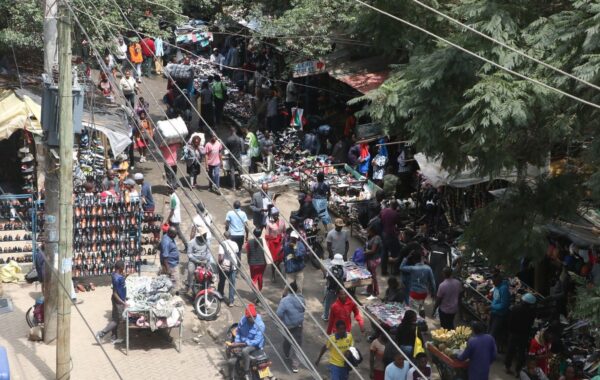
Informal employment provides essential livelihoods, from small retail businesses to transport services and artisan trades. But many workers operate without predictable earnings, paid leave or adequate social protection. Small enterprises may also lack the credit and equipment needed to expand.
The World Bank has identified the underlying problem in its assessment of Kenya’s economy: “Weak productivity growth, a narrow export base, and insufficient formal job creation have left most workers in low-productivity informal activities.”
The consequences extend beyond individual households. Businesses that struggle to grow employ fewer people, invest less in skills and contribute less to the formal tax base. Workers, meanwhile, may spend years in activities that provide an income without offering a realistic path to greater financial security.
Formalisation alone will not fix this. Registering a business does little if it cannot obtain credit, attract customers or invest in better equipment. The priority should be to make formalisation worthwhile by improving access to finance, markets and social protection while keeping compliance requirements proportionate to a business’s size.
The cost of hiring
Employers recruit when expected demand justifies the cost and risk of expanding. Expensive borrowing, unpredictable costs and complicated compliance requirements can discourage smaller firms from taking on permanent staff.
Large companies can absorb administrative costs more easily than small manufacturers or food processors. A viable business may nevertheless struggle to finance machinery, premises or working capital, leaving it unable to increase production and employment.
Taxation and regulation remain necessary to fund public services and protect workers. The challenge is to make rules predictable and proportionate without weakening legitimate protections.
Competition matters, too. In November 2025, Qimiao Fan, the World Bank’s division director for Kenya, Rwanda, Somalia and Uganda, said: “Economic growth momentum could be further sustained by addressing key barriers to competition, which would also lead to more and better paying jobs, and lower prices to consumers.”
The argument is that better competition can encourage investment, improve efficiency and allow more firms to enter and expand. For employment, the crucial test is whether these gains translate into additional jobs and stronger real earnings.
Building an economy that employs
Manufacturing, agro-processing and export-oriented businesses offer routes to broader employment. Food processing, textiles and construction materials can create jobs across supply chains, while stronger agricultural value chains can connect rural producers to higher-value markets.
Special Economic Zones can contribute, but their success should not be judged by investment commitments alone. Policymakers should examine how many lasting jobs they create, how much they buy from local suppliers and whether workers gain skills that improve their future prospects.
Credit guarantees may help viable small businesses that lack sufficient collateral. Technical training designed with employers can prepare workers for jobs in production, machinery maintenance and logistics. Both approaches need clear targets and independent evaluation to establish whether they produce lasting results.
Kenya should also measure the quality of employment, not just the number of people recorded as working. Formal job creation, inflation-adjusted wages, productivity and access to social protection offer a more revealing picture of whether growth is improving livelihoods.
Growth dividend
The latest figures do not show an economy without growth or job creation. They show an economy in which most new employment remains informal, even as output expands.
The distinction matters. A growing economy can generate more work without giving workers the security and earnings needed to improve their living standards. Nor does a rising nominal wage bill necessarily mean every worker is better off: inflation and differences in pay can erode or obscure individual gains.
Kenya’s next test is to build an economy in which more businesses become productive enough to expand, more workers move into secure employment and wages rise sustainably. GDP growth remains important, but its value ultimately depends on whether it creates better opportunities for the people who sustain it.
Make the headline match the evidenceClarify the stagnant pay argument