When old weather records fail to predict future storms, insurers must either radically alter how they price risk, restrict capital, or leave high-exposure markets entirely to the elements.
By Our Staff Writer
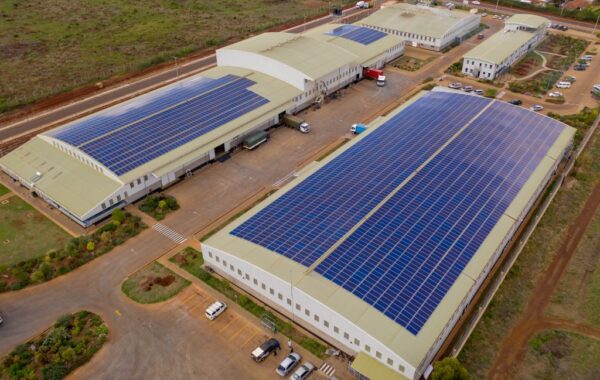
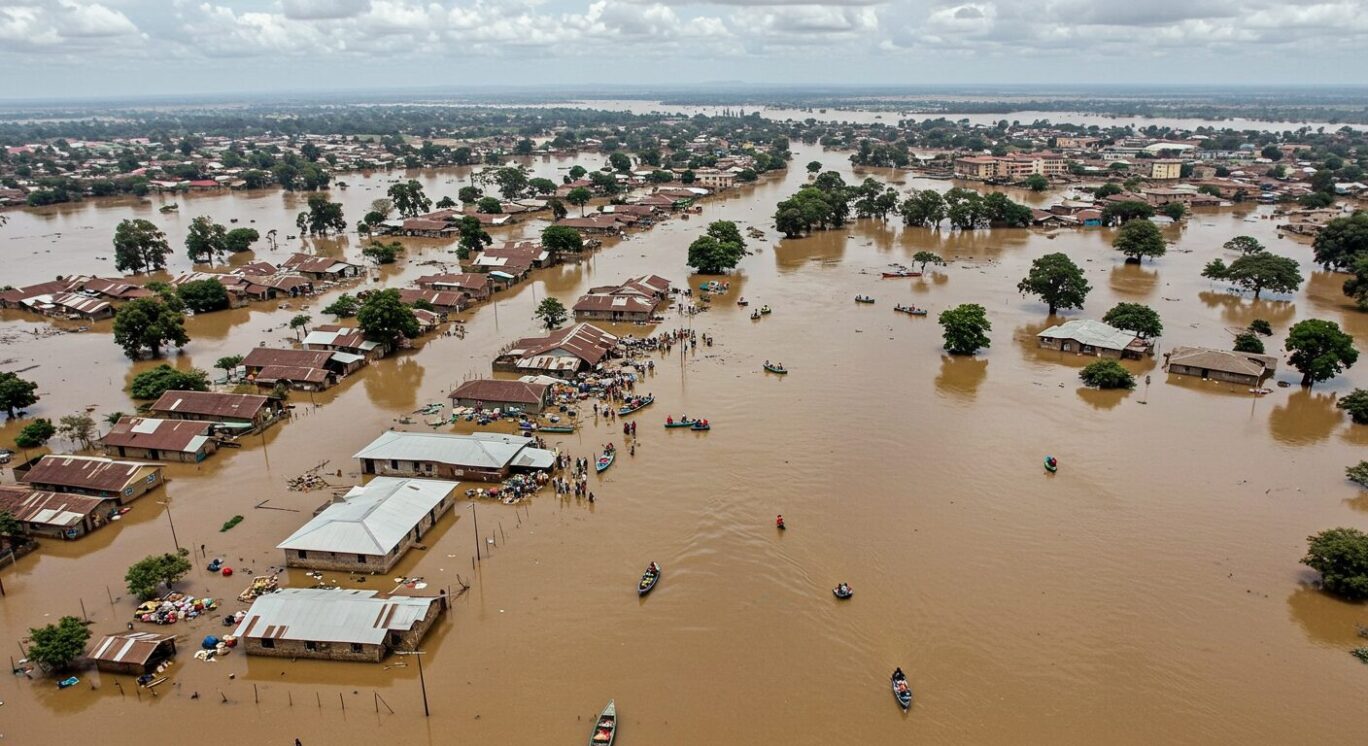
When unexpected downpours inundated commercial warehouses in Nairobi’s industrial area, damaging high-value inventory and disrupting supply lines, corporate risk managers turned immediately to their policy documents. Yet in offices across the capital’s financial district, senior risk officers were coming to a far more unsettling realisation: the underwriting formulas used to price weather risk are no longer reliable.
Insurance relies on a foundational rule: historical frequency predicts future loss. By analysing decades of meteorological records, underwriters estimate event probabilities, calculate premium rates, and set aside cash reserves.
That baseline anchor is giving way. Across Kenya and the wider East African Community, severe dry spells, violent hailstorms in agricultural zones, and localized urban flash flooding have become regular operational hazards. Because historical weather baselines no longer serve as an accurate guide, pricing commercial policies is turning into an expensive exercise in uncertainty.
Pressure on underwriting margins
The impact on regional underwriters is direct. When unpredictable localised storms hit multiple sectors at once, claims surge simultaneously across motor, property, agricultural, and transit lines.
Addressing the core challenge facing local underwriting, Tom Gichuhi, Executive Director of the Association of Kenya Insurers (AKI), frames the issue clearly: “The last two years have taught us that paradigms cannot hold sway anymore, they have to bow to the daily dynamics in all aspects of our livelihoods… The ideals in the insurance industry have to undergo a rethink. It is no longer business as usual.”
As global professional services firm PwC noted in an assessment on the region’s Africa’s climate exposure, standard underwriting tools are falling short: “Past weather patterns may no longer be a reliable guide to future risk… For Kenya, where agriculture, logistics, real estate, energy and financial services are deeply connected to weather-sensitive infrastructure and supply chains, climate risk is no longer a peripheral sustainability issue. It is a board-level business risk.”
In agriculture, the margin for error is particularly thin. Rapid shifts between severe dry spells and sudden heavy rainfall erode crop yields, triggering frequent payouts that squeeze underwriters’ reserves.
The reinsurance squeeze
Primary insurers in Kenya do not bear these catastrophe exposures alone. They transfer high-level tail risk to regional and international reinsurers, such as Kenya Re, Continental Re, and global syndicates. However, reinsurers manage capital across international portfolios, and their response to escalating global weather losses has been immediate: higher rates, stricter terms, and reduced capacity.
Thomas Blunck, member of the Board of Management at global reinsurer Munich Re, highlights how international capacity is adjusting to escalating loss trends: “Climate change is showing its claws… Accordingly, Munich Re is expanding and adapting its risk models to address these developments. At its core, insurance puts a price tag on the risks.”
Emphasising the necessity for local markets to respond, Dorothy Maseke, Group Manager for Risk and Compliance at ICEA LION Group, notes: “We need to prepare for a low carbon economy—it is not an option—it is necessary. We need to integrate ESG factors into strategy and culture… Only then can we become more resilient to the transition risks.”
To shield their capital, primary underwriters in East Africa must either absorb more risk locally or pass double-digit rate increases directly to enterprise clients. For local underwriters operating near minimum capital requirements, paying elevated reinsurance rates cuts sharply into profitability.
Underinsurance and the credit crunch
The wider economic danger for the region is that businesses stop buying insurance altogether. Insurance penetration in Kenya remains low, hovering near 2.3 percent of economic output. As policy prices rise to reflect severe weather exposures, coverage uptake risks falling further.
When commercial entities forgo coverage, the impact shifts to the banking sector. Commercial banks across Kenya, Uganda, and Tanzania require fire, peril, and comprehensive collateral insurance before issuing project finance, commercial mortgages, or operational loans.
Highlighting the systemic stakes, Phyllis Wakiaga, former CEO of the Kenya Association of Manufacturers (KAM), underscores: “Manufacturers need insurance products that will cover not only their assets and protect them against losses, but will also allow them to control costs.”
When property or agricultural assets in vulnerable flood basins or drought-prone zones become uninsurable at workable rates, credit availability contracts. The resulting capital pinch slows private sector expansion across key economic zones.
Testing parametric solutions
To keep coverage functional, the financial sector is turning toward structural alternatives. The Insurance Regulatory Authority (IRA) has backed the development of parametric and index-based risk products, which pay out automatically when pre-agreed indices—such as satellite soil moisture data or rainfall gauge levels—cross specific thresholds.
International legal firm Clyde & Co pointed out that building financial resilience requires direct institutional action: “Governments and intergovernmental organisations have identified the need to address climate resilience. The onus is increasingly being put on organisations and industries, such as insurers, that have the necessary risk management expertise and global influence, to pioneer economic solutions.”
Yet parametric models carry basis risk—the mismatch that occurs when an enterprise suffers physical damage, but local remote sensors fail to hit the exact contractual trigger required for a payment. In those cases, policyholders are left to absorb losses out of pocket despite paying premiums on time.
What lies ahead
To respond to persistent weather shocks, regional reinsurers are taking direct steps to measure their exposures. Kenya Re has moved to systematically map its geographical exposures to regional flood and extreme weather risks to refine its underwriting parameters.
Smaller insurers with thin capital margins will likely face consolidation or acquisition as rising reinsurance prices eat into operating income. Simultaneously, national governments, regional trade blocs, and development finance institutions will need to build joint catastrophe funds to absorb tail-risk exposures that private underwriters can no longer carry alone.
Without a clear shift in how risk is priced and shared, climate volatility threatens to erode the financial safety nets that enable East African enterprises to secure credit, invest, and grow.
The Ledger Insight
The core threat to regional commerce is not just physical property damage from sudden storms; it is the breakdown of historical data as an accurate tool for financial planning. When past weather records stop predicting future events, standard coverage fails. Maintaining functioning risk transfer across the region requires spatial risk mapping, realistic parametric triggers, and shared public-private catastrophe funds. Without these adjustments, the financial foundations supporting regional investment will continue to strain.