The patient-capital problem
By Kirimi Mbogo
In 2025 African climate-tech companies raised $1.18bn, a 57% increase from the previous year, according to TechCabal Insights. Yet the number of deals fell for a third consecutive year. Energy and water alone absorbed 76% of the money. The apparent boom, in other words, was rather narrower than the headline suggested.
That is not necessarily bad news.
It may mean the market is growing up.
For years African climate technology was sold to investors as a moral proposition: back solar, electric mobility, clean cooking or climate-smart agriculture and help save the planet. Investors, being investors, eventually asked the less sentimental question. How does it make money?
The answer is increasingly clear. Africa’s climate problem is also a large collection of commercial problems: unreliable electricity, expensive logistics, weak agricultural productivity, water scarcity, waste, insurance gaps and cities that are getting hotter before they get richer.
The businesses solving those problems may become valuable. But they are rarely software companies with negligible capital requirements and rapid routes to profitability.
That is the rub.
Sulaiman Amin, managing director of Abu Dhabi-based Catalyst, put the difficulty succinctly when discussing climate technology in the Middle East: “Investments in hardware are usually very cap-ex heavy and need manufacturing cost, which is another risk to traditional venture capital.” He added: “You can’t just have a software service and expect [to fix] climate change.”
Africa has the same problem, with fewer spare dollars.
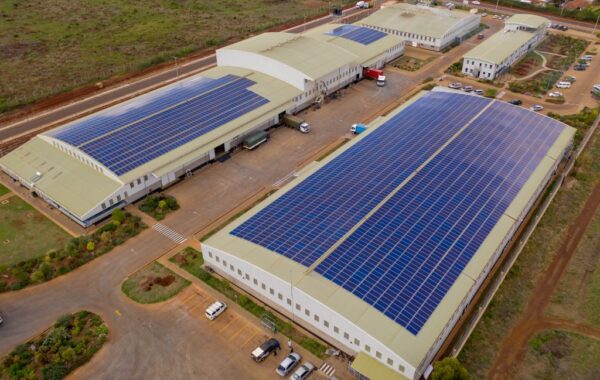
A solar mini-grid requires equipment. An electric-mobility company needs vehicles, charging infrastructure and maintenance networks. A climate-smart agricultural venture may need sensors, field technicians and years of data. Carbon-removal technologies require laboratories, engineers and industrial infrastructure. These are not businesses that can be conjured into existence with a laptop and a clever pitch deck.
Traditional venture capital is not especially fond of such inconveniences.
The financing gap is therefore not simply a shortage of money. It is a mismatch between the kind of capital available and the kind of businesses Africa needs to build.
FSD Africa says Africa receives just 0.6% of global equity funding for start-ups, with only about a third of that going to climate-tech businesses. Its experience with Holocene, a South African early-stage climate fund, illustrates the problem: promising companies struggle to secure the capital required to move beyond the prototype stage.
The answer, increasingly, is catalytic capital.
In March the African Development Bank approved €7.5m for the Breega Africa Seed I Fund, including €5m in equity and a €2.5m junior tranche. Climate technology is among the sectors the fund will back, alongside fintech, agritech, healthtech and logistics.
The structure matters. Junior capital can absorb some of the risk that commercial investors would rather avoid, making it easier for private money to follow.
FSD Africa has made much the same argument. Its experience with early-stage climate ventures, it says, has shown the importance of “patient, risk-tolerant capital” that can demonstrate viability where commercial investors see too much risk.
That is a less glamorous proposition than announcing a billion-dollar green fund.
It may also be more useful.
Consider the climate-tech companies themselves. In Kenya, Amini is using artificial intelligence and satellite imagery to tackle the shortage of climate data. In Tanzania, Mazao Hub is among the ventures backed by Catalyst Fund. Keep It Cool, another Kenyan company, is developing cold-chain solutions. In Senegal, Tolbi uses AI and satellite data to provide smallholder farmers with information on crops and weather.
These are not speculative applications of technology looking for a problem.
The problems are already there.
Tolbi’s co-founder Mouhamadou Lamine Kebe captured the financing logic neatly: “Without accurate data, there’s no visibility, and without visibility, there’s no investment.”
The same could be said of climate-tech finance itself. Without credible projects, there is no pipeline. Without a pipeline, institutional investors stay away. Without institutional investors, early-stage companies struggle to reach commercial scale.
A vicious circle.
Breaking it requires more than venture capital. Governments have to do some of the unromantic work: standards, procurement, infrastructure, regulation and reliable demand. Development financiers can take first-loss positions. Commercial banks can lend once technologies have established a track record. Corporates can become customers rather than merely sponsors of innovation conferences.
The Middle East’s experience offers a useful parallel, even if its pockets are deeper. Abu Dhabi’s ADNOC allocated $23bn to decarbonisation and lower-carbon projects, helping finance technologies such as 44.01’s carbon-mineralisation project. The UAE also created Hub71+ ClimateTech, offering selected companies capital, mentorship and access to manufacturing facilities.
Africa cannot replicate Abu Dhabi’s chequebook. It can borrow the principle.
Capital alone does not build an industry.
Skills matter too. Michael Salvador, co-founder of Saudi solar company Mirai Solar, complained of the difficulty of finding people with the right technical background. “We hire people with other backgrounds,” he said, “but we have to put a lot of effort into training and into education.”
Africa’s skills deficit is hardly news. But climate technology exposes a particular version of it. An engineer who can design software is useful. An engineer who can also commission a battery system in a remote town, train technicians and understand local regulation is rather more useful.
This is why the climate-tech opportunity should not be reduced to start-up funding.
It is an industrial-policy question.
Africa has abundant renewable resources, rapidly expanding cities and large unmet demand for electricity, transport, cooling, food and financial protection. That combination creates a potentially formidable market for climate technologies. It also creates an opportunity to build manufacturing and technical expertise around them rather than importing every panel, battery and component.
That opportunity is already attracting serious institutional money.
In December 2024 the African Development Bank committed $10m through its Sustainable Energy Fund for Africa to the Persistent Africa Climate Venture Builder Fund, with the stated aim of unlocking $70m for climate-focused ventures. The fund targets solar, energy efficiency, electric mobility, agricultural technology and circular-economy businesses.
In July 2026 Catalyst Fund announced a second close that took total commitments to $30m, backed by institutions including IFC, FASA, Shell Foundation, Trafigura Foundation and others. It invests from pre-seed to Series A in African businesses working on climate resilience.
The money is beginning to arrive.
The harder question is whether it will stay long enough.
Climate technology is not fintech with a green logo. Prototypes take time. Hardware fails. Manufacturing costs fall slowly. Regulation can lag the technology. Customers may be unable to pay. A business can be commercially sound and still require years before the numbers look respectable.
That is precisely why the investment thesis needs to mature.
Africa does not require climate capital that merely chases the next fashionable category. It needs capital willing to endure the awkward middle: after the grant, before the bank loan; after the prototype, before mass production; after the first customers, before scale.
That is where fortunes, and perhaps some of Africa’s most useful companies, will be made.
The continent’s climate-tech market is no longer waiting for a grand green revolution. It is building one venture, one financing structure and one stubborn engineering problem at a time.
The investors who understand that may find the best opportunities are not the ones with the most impressive pitch decks.
They are the ones that take longer to explain.