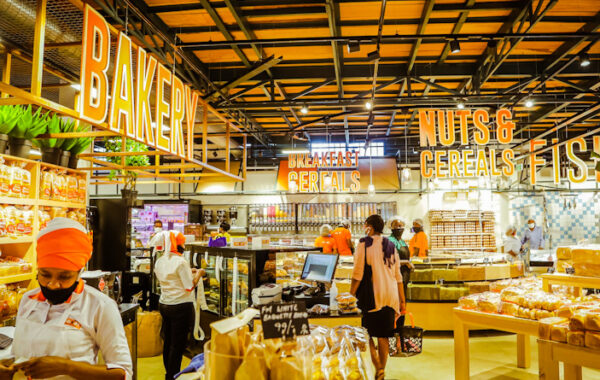

Western and Asian conglomerates are dismantling their standardised global operating blueprints across Sub-Saharan Africa. From sachet-led micro-pack engineering to culturally embedded formulations and informal supply network integration, global capital is learning that capturing the continent’s two-trillion-dollar market requires trading uniform scale for deep local relevance.
By Our Staff Writer
When PepsiCo completed its acquisition of South African food manufacturer Pioneer Foods for approximately KSh220 billion (US$1.7 billion), chief executive Ramon Laguarta framed the transaction clearly: “Pioneer Foods forms a foundational part of our growth strategy in Sub-Saharan Africa by adding scale, broader distribution capabilities and deep local market expertise.” Foreign conglomerates are abandoning the practice of shipping uniform global stock-keeping units to African port cities, choosing instead to acquire, adapt, and build local brands that align directly with regional palates, daily cash-flow constraints, and informal distribution channels.
The uniform global template has encountered a structural wall across Sub-Saharan Africa. Historically, foreign firms treated African economies as secondary outlets for excess Western production, offering premium-priced imports that restricted market penetration to high-income urban enclaves.
That operational structure has broken down under three pressures. First, demographic shifts have brought the continent’s median age to nineteen, creating an urbanising base where spending power resides in low-to-middle income households. Second, regional competitors, such as Promasidor with its Cowbell milk powder, Bakhresa Group with its Azam line, and Tolaram Group with Indomie, captured dominant market share by solving local affordability and distribution hurdles. Third, brand research demonstrates that while consumers retain high awareness of global names, actual wallet share flows to products tailored to daily domestic routines.
Re-engineering supply chains
The core economic driver behind the Africanisation of global enterprise is margin optimisation through volume velocity rather than high unit margins. In Western markets, consumer goods firms maximise profitability through larger pack sizes and premium unit pricing. In contrast, African consumer markets operate within daily-wage earning cycles, where profitability depends on achieving rapid turnover across micro-unit sales.
To maintain unit profitability on a product priced at KSh15 or KSh30 (US$0.12 to US$0.24), global supply chains require complete structural overhaul. Importing finished goods exposes income statements to currency devaluations, foreign exchange shortages, and punitive import duties. Localising input sourcing, processing, and light manufacturing creates a structural operational hedge against foreign exchange volatility while lowering unit freight costs.
Local tastes
Product formulation and packaging architecture have become the primary battlegrounds for consumer adoption across food, beverage, personal care, and technology sectors.
Food conglomerates have systematically re-engineered core product lines. Nestlé fortifies Maggi seasoning cubes with iron and iodine to address regional micronutrient deficits while tailoring spice profiles to local dishes. In quick-service dining, Yum! Brands’ KFC introduces Ugali and Sukuma Wiki in Kenya, Jollof Rice in Nigeria, and Phutu in South Africa alongside its fried chicken. Domino’s Pizza, operated in West Africa by Eat’N’Go, introduces Suya Pizza and Jollof Rice. Eat’N’Go chief executive Patrick McMichael notes: “To succeed in Africa, you cannot just export an American concept wholesale. You must understand the local palate and build supply chains that source locally to keep pricing competitive.”
Parallel to menu adaptation is the expansion of the sachet economy. Personal care manufacturers including Unilever, L’Oréal, and PZ Cussons convert discretionary products like Omo detergent, Matrix shampoos, and Imperial Leather soaps into single-use micro-packs. Unilever former chief executive Alan Jope highlights this strategy, stating: “Serving lower-income consumers in emerging markets requires us to rethink packaging and price points fundamentally. Small, affordable unit sizes allow families with daily cash budgets to access high-quality global brands.” In South Africa, Danone introduces smaller, lower-priced yoghurt formats under its NutriDay line specifically to penetrate township spaza shops.
Beverage giants are pursuing similar paths. Diageo develops Senator Keg in Kenya and Orijin in Nigeria. Senator Keg, brewed from locally sourced sorghum rather than imported barley, benefits from targeted tax concessions, allowing East African Breweries Limited (EABL) to offer an affordable, safe alternative to illicit brews. EABL managing director Jane Karuku observes: “Senator Keg is a masterclass in commercial localisation. By sourcing sorghum from tens of thousands of local smallholder farmers, we create a sustainable ecosystem that delivers value to consumers, farmer communities, and shareholders alike.” Heineken follows a comparable strategy in Ethiopia and Rwanda, investing heavily in domestic cassava and barley supply chains.
Route-to-market strategies have undergone a similar transformation. Upwards of eighty percent of retail trade flows through informal channels. Coca-Cola and Distell (now part of Heineken) invest directly in micro-distribution centres operated by local entrepreneurs, providing pushcarts, solar-powered refrigeration units, and local credit facilities to navigate dense urban settlements.
Digital conversion
The scope of brand Africanisation extends beyond physical goods into digital and financial architecture. The most prominent example remains Vodafone’s joint launch of the M-Pesa mobile money platform alongside Safaricom in Kenya. Recognising that physical banking networks could not cost-effectively serve the broader population, the joint venture converts cellular airtime networks into a digital financial system. Safaricom former chief executive Michael Joseph reflects: “M-Pesa succeeds because it is designed specifically to solve an African problem, namely the cost and risk of sending money home to families in rural areas. It is not a product developed in London and imposed on Nairobi.”
Ride-hailing and tech platforms have encountered identical realities. Uber abandoned its card-only global payment model, integrating cash payments and partnering with local electric motorcycle taxi operators (boda-bodas) in Nairobi, Kampala, and Lagos. Uber head of West Africa Tope Akinwumi states: “Flexibility is critical in African markets. Adapting our payment gateways to accept cash and mobile money, alongside introducing two-wheeler options, is essential to making ride-hailing accessible to millions.” Similarly, Spotify tailored its payment gateways to accept M-Pesa and MTN Mobile Money while curating hyper-local playlists around Amapiano, Afrobeats, and Gengetone to drive subscriber growth.
In corporate communications regarding regional marketing evolution, James Quincey, Chief Executive Officer of The Coca-Cola Company, explains that global strategy now depends on localised execution: “Our updated marketing model operates through linked occasions and passion points to drive deeper consumer engagement and reach communities in distinct local contexts.”
The emerging continental outlook
As implementation of the African Continental Free Trade Area (AfCFTA) progresses, multinational brand adaptation evolves along three trajectories.
First, global conglomerates bypass slow organic product development in favour of direct cross-border acquisitions of domestic brands, following the template set by PepsiCo with Pioneer Foods and Kellogg’s strategic partnership with Tolaram Group in West Africa.
Second, as foreign capital masters domestic product design, commercial debate centres on local sourcing compliance and economic value retention within national borders. Regulators across West and East Africa tighten local content rules for multinational manufacturers.
Third, route-to-market optimisation shifts from country-level customisation to neighbourhood-level micro-targeting, powered by transaction data from digitised informal merchant networks like Wasoko and TradeDepot.
The overarching lesson for global corporate boards is clear: global scale provides no guarantee of market share in Africa without deep local adaptation. Foreign multinationals secure long-term market leadership only when they restructure their balance sheets, manufacturing footprints, and supply chains to deliver genuinely localised value.