
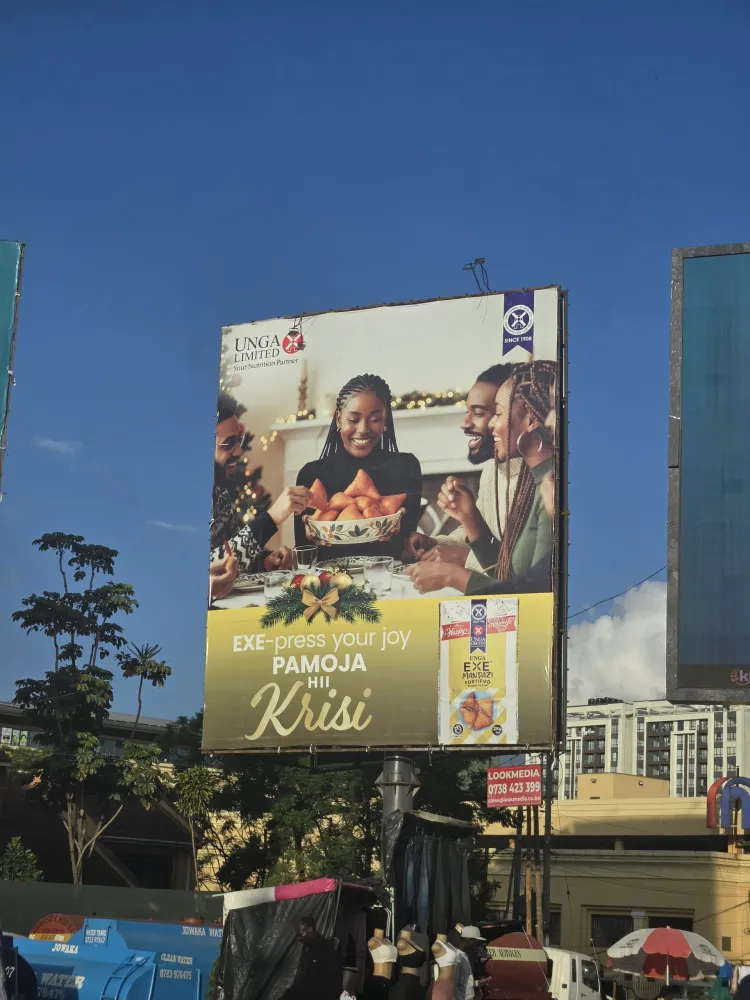
As mobile commerce collapses traditional sales funnels and digital platforms reward cultural proximity, stiff corporate jargon is rapidly yielding to street-level vernacular across East Africa’s largest economy, transforming how brands build trust, capture attention, and accelerate transactions.
By Kirimi Mbogo
Kenyan enterprises are silently overhauling their brand identities, abandoning dry corporate jargon for conversational Swahili, urban Sheng, and hyper-local storytelling. Driven by conversational commerce, micro-influencer dynamics, and an increasingly discerning youth demographic, this shift is transforming linguistic authenticity from a creative choice into a core driver of commercial performance.
Corporate voice drops the suit
When Safaricom, Equity Bank, or Absa Bank Kenya communicate with their millions of account holders today, the tone looks fundamentally different from the austere corporate pronouncements of a decade ago. Formal press releases and stiff broadcast copy have given way to dynamic, conversational updates delivered directly via WhatsApp, X, and TikTok, rich in urban slang, humor, and localized idiomatic expressions.
Across Kenya’s enterprise landscape, brands are deliberately shedding traditional English framing in favor of humanized, culturally nuanced communication. What initially appeared to be a creative experiment on social media has matured into a calculated commercial strategy designed to drive customer engagement, shorten sales cycles, and protect market share in an increasingly competitive digital marketplace.
Addressing this structural transformation in corporate communication, former Safaricom Chief Executive Michael Joseph recalls the critical inflection point when the telecommunications operator shifted away from distant corporate framing toward mass-market alignment:
“The best ideas don’t always follow the expected path… [Our focus was] the strategic decision to target the mass market, specifically Matatu users, and the introduction of ‘per second billing’—a pricing model inspired by how Kenyans purchase fuel in small increments”.
Street-level authority
For decades, Kenyan corporate communications operated under a legacy model inherited from post-colonial media institutions and multinational advertising agencies. Standard Queen’s English was viewed as the non-negotiable benchmark for institutional authority, financial probity, and executive credibility.
However, the rapid democratization of digital media, combined with a demographic landscape where over 70% of the population is under the age of 35, disrupted this consensus. The emergence of Sheng—a dynamic fluid blend of Kiswahili, English, and local languages—shifted from a marginalized urban youth code into the dominant linguistic currency of Kenya’s commercial hubs.
Analyzing this shift in commercial language choice, sociolinguist Dr Mungai Mutonya documents how non-standard linguistic forms moved into mainstream corporate strategy:
“Sheng has caught the attention of producers of print and electronic media, especially in advertisements… using non-standard Kiswahili forms in advertisements helps to associate the products with desirable traits of novelty, change, urban sophistication and youthfulness”.
Dr Mungai Mutonya further notes:
“Significant shifts in language use and tone of Kiswahili print advertisements in Kenya began with the advent of competitive advertising… What may have pushed the marketers to incorporate non-standard language forms could be market rivalries, influenced by current social and linguistic trends. Today, Sheng… is the preferred vocabulary of persuasion by marketers and advertisers, effectively allowing marketers to expand their horizons and to reach new consumers”.
Former Safaricom Chief Executive Peter Arina highlights how product naming evolved to reflect everyday micro-transactions:
“Before M-PESA, there was Bamba 50… one of the products that helped shape the company’s [growth]”.
What began as informal dialogue in matatus and neighborhood kiosks has migrated directly into bank boardrooms, telecommunications campaigns, and fintech applications.
Conversational copy in action
Safaricom served as an early enterprise pioneer in adopting Sheng to lower product adoption barriers. During the rollout of its airtime denomination tiers, the telco introduced “Bamba Kumi” (Get/Take 10) and “Bamba Ubambike”, anchoring product mechanics directly in everyday youth colloquialisms. Rather than advertising a “KSh10 recharge card”, the company packaged the transaction as an accessible cultural phrase. More recently, Safaricom’s digital customer service persona, Zuri, and its mobile-first marketing campaigns routinely employ conversational Swahili and Sheng to explain complex bundle allocations, loan repayments via Fuliza, and rewards structures.
Equity Bank historically built its market entry on financial inclusion for lower-income tiers. In its youth-focused campaigns—such as the Young Achievers Account and its “Fanikisha” credit drives—Equity abandoned formal financial terminology in favor of aspirational, conversational language. By framing savings and credit through everyday relational narratives rather than abstract interest rates, the bank successfully demystified formal banking for millions of first-time account holders.
Unilever’s Geisha brand (“Subira ya Mwanafunzi”) and East African Breweries Limited (EABL) have similarly overhauled their promotional strategies. Guinness Kenya’s marketing campaigns, notably its “Matchday” activations, frequently utilize local football terminology, urban banter, and localized proverbs to build social currency around product consumption. Similarly, Cadbury Bournvita and local tea brands like Kericho Gold have replaced stiff product specifications with conversational, home-centered storytelling in Kiswahili that emphasizes everyday emotional warmth over corporate features.
Fast-growing financial technology platforms like M-KOPA and buy-now-pay-later (BNPL) services use conversational WhatsApp prompts written in natural Swahili (“Lipa Mdogo Mdogo”) to ensure micro-entrepreneurs understand payment terms without feeling intimidated by complex lending clauses. By framing micro-loans in the language of everyday shopkeepers, these platforms maintain significantly higher repayment compliance rates.
How tone drives revenue
The commercial imperative behind humanized brand voice is grounded in conversion mechanics. In traditional marketing models, customer acquisition followed a linear multi-step funnel: banner advert to landing page, lead form to corporate follow-up call. In Kenya’s mobile-first market, this traditional friction suppresses conversion.
The structural evolution in buying behavior has collapsed the sales pipeline:
| Funnel dimension | Traditional corporate funnel | Modern conversational funnel |
|---|---|---|
| Primary entry point | Billboards, print inserts, static website banners | Short-form cultural video (TikTok/Reels), X posts |
| Messaging tone | Formal English, institutional corporate jargon | Conversational Sheng, urban Swahili, localized humor |
| Customer journey | Multi-step redirect (Ad → Website → Form Fill) | Direct 1-to-1 conversation (Ad → WhatsApp / DM) |
| Transaction trigger | Delayed sales rep phone call or email quote | Instant M-PESA payment prompt within chat stream |
| Conversion cycle | Days to weeks | Minutes to hours |
| Primary barrier | Friction, cognitive fatigue, institutional distance | Low friction, high relatability, peer-to-peer trust |
When brands replace passive corporate copy with localized, conversational prompts, the psychological barrier to transaction drops significantly.
Evaluating the social evolution of Sheng as an authentic identity marker rather than informal slang, narrative researcher Pin Popping Paps observes:
“Learning Sheng is not only about mastering vocabulary but also engaging with an important aspect of Kenyan identity. It offers insight into urban life, humor, resilience, and creativity. Sheng reflects how language adapts to social realities, especially among young people who use it as a form of self-expression and cultural belonging”.
Reallocating capital
Behind the shift toward conversational brand messaging lies a structural reallocation of enterprise marketing budgets.
First, capital is steadily migrating to direct channels. Marketing spend is shifting away from traditional static billboards and formal print inserts toward conversational commerce infrastructure, notably automated WhatsApp channels integrated directly with M-PESA payment APIs.
Second, enterprise budgets are moving away from macro to micro-influencers. High-profile celebrity endorsers are yielding ground to micro-creators embedded in specific local communities who command high conversion rates because their voice, vernacular, and cadence mirror authentic peer-to-peer conversations.
Third, corporate risk is being redistributed in customer service. Operational exposure is shifting from public relations mishaps to private messaging breakdowns, where misinterpreting cultural context or employing overly rigid, robotic automated responses on WhatsApp or social media directly results in immediate cart abandonment and churn.
Examining the broader societal adoption of hybrid language across enterprise and state institutions, author Enock Maregesi observes:
“Business people for instance will speak Sheng – a mixture of Swahili and English – because that’s what people want to hear”.
Balancing the linguistic tiers
Kenya’s adoption of conversational, culturally specific marketing reflects broader global shifts toward conversational AI and social commerce, but with distinct regional characteristics.
Unlike Western markets where brand humanization primarily involves cheeky Twitter banter or humorous email marketing, the Kenyan phenomenon is fundamentally multilingual and multi-tiered. Brands must effortlessly balance standard English for institutional disclosures, standard Kiswahili for national reach, and hyper-local Sheng or regional dialects for daily transactional engagement.
In the institutional and regulatory segment, enterprises maintain clear, authoritative English across investor relations, compliance filings, and earnings calls, utilizing integrated announcements and financial press releases.
In national campaigns targeted at broad public reach, companies pivot to inclusive Kiswahili and accessible English across mainstream television broadcast, radio, and outdoor billboards to establish trust.
In the transactional and youth-oriented market segment, brands adopt Sheng, conversational Swahili, and localized humor across WhatsApp business channels, TikTok Reels, and X (formerly Twitter) to drive direct sales, community loyalty, and rapid customer conversion.
Firms that attempt to apply a single, homogenized corporate voice across all three tiers risk alienating younger demographics while failing to drive transactional velocity.
Industry stakeholders in focus
Consumers and micro-entrepreneurs benefit from reduced friction, plain-language financial terms, and customer support that meets them on familiar digital channels using relatable terms.
Legacy marketing and PR agencies face structural pressure to adapt. Traditional agency setups built around formal press releases and rigid brand guidelines are being forced to hire younger copywriters, community managers, and cultural strategists capable of producing real-time content.
Enterprises and financial institutions face the ongoing challenge of balancing brand governance with cultural agility. Allowing customer care teams or digital marketers to speak casually requires new compliance frameworks to ensure tone shifts do not compromise regulatory requirements or risk customer trust.
Watching the linguistic horizon
As linguistic agility becomes standard practice across Nairobi’s corporate headquarters, the baseline for consumer engagement is shifting. Generative customer support agents are already being stress-tested on localized syntax, moving past clunky translations to process fluid mixes of Swahili and urban slang natively inside chat interfaces. At the same time, financial watchdogs and regulatory bodies are beginning to scrutinize how persuasive street-level messaging interacts with statutory lending disclosures, forcing legal teams to find legal phrasing that retains a human pulse. Beyond the urban centers, brands are quietly testing regional vernaculars, from Kikuyu to Dholuo, to tap into agricultural trade corridors where generic national campaigns fail to resonate.
The fundamental lesson for business leaders is straightforward: in a crowded digital economy, executive jargon builds distance, whereas authentic human language builds equity.
Key takeaway for decision-makers
The Ledger Angle: A humanised brand voice is not merely a social media tactic; it is an economic strategy. By lowering friction, reducing cognitive load, and embedding products within local cultural identity, conversational marketing directly accelerates transaction velocity in mobile-first markets.