
High production costs and squeezed domestic margins are forcing Kenya’s top industrial firms to pivot across borders, turning former trade friction points into cross-border revenue engines.
By Muturi Githae
For decades, operating out of Kenya’s primary industrial hubs of Nairobi, Thika, Athi River, and Mombasa offered a dependable arrangement. A domestic consumer base exceeding 55 million provided sufficient volume to sustain fast-moving consumer goods processing, structural steel rolling, and heavy building material output.
That setup is no longer sufficient. Official statistics show manufacturing’s contribution to national economic output hovering around 7.1 percent, down from historical highs above 10 percent. The cause is not a collapse in technical capability, but a direct squeeze on domestic operating conditions. Power tariffs averaging KSh22 (US$0.17) per kilowatt-hour after variable surcharges, multiple tax layers, persistent exchange-rate volatility, and high financing costs have compressed profit margins for purely domestic producers.
At the same time, the expansion of the East African Community to encompass more than 300 million consumers, alongside the expanding reach of the African Continental Free Trade Area, has shifted regional economic geography. The accessible market footprint across East and Central Africa has expanded dramatically.
| Strategic Dimension | Domestic Supplier Profile | Regional Champion Profile |
| Market Exposure | Single-market focus tied to Kenya | Multi-hub footprint across EAC and Central Africa |
| Commercial Status | Price-taker status in local trade | Regional price setter through scale |
| Foreign Exchange Strategy | Unhedged KSh exposure on imported inputs | Revenue hedging via multi-currency cash flows |
| Capital Intensity | Low capital expenditure in local assembly | High capital investment in upstream assets |
| Logistics Integration | Outsourced domestic road transport | Integrated cross-border supply chains |
A sharp divide now separates local price-takers from forward-thinking industrial players. The manufacturers succeeding in this environment are moving away from simple export-by-road setups. They are committing capital to regional processing assets, integrating multi-country supply chains, and building operational footprints in Entebbe, Dodoma, Kigali, and Kinshasa.
The upstream crusade in consumer goods
In fast-moving consumer goods, where margins are narrow and consumer price sensitivity is high, simple cross-border trade of packaged goods carries significant currency and logistics risk. The regional leaders in this segment are winning by capturing the underlying source of raw inputs.
Bidco Africa has demonstrated how backward integration alters cross-border business models. Rather than importing refined crude palm oil from Southeast Asia into its Thika plant while facing volatile foreign exchange rates, the group expanded upstream. Through 13 manufacturing plants across Kenya, Uganda, and Tanzania, Bidco has secured direct control over key supply lines.
“Our strategy has always been about building an integrated regional footprint that insulates operations from single-market shocks while serving consumer needs at scale,” notes Vimal Shah, Chairman of Bidco Africa.
This approach delivers two distinct advantages. Sourcing raw inputs within the regional economic bloc bypasses the 35 percent Common External Tariff imposed on third-country imports. Furthermore, operating across multiple currencies, generating top-line earnings in Ugandan Shillings, Tanzanian Shillings, and US Dollars, creates a natural hedge against single-currency shocks in Kenya.
Brookside Dairy, backed by institutional investment including a 40 percent holding by French dairy leader Danone, has followed a parallel strategy in cold-chain processing. By acquiring processing infrastructure in Uganda and establishing distribution lines into eastern Democratic Republic of Congo and Rwanda, Brookside leverages lower raw milk production costs in Uganda to support higher-value processed dairy distribution across Central Africa.
Cementing control over foundational commodities
Heavy manufacturing operates under strict logistics constraints. For low-value-to-weight commodities such as structural steel and cement, freight costs quickly dictate market boundaries. Historically, regional cement grinding plants depended heavily on imported clinker from Southeast Asia and the Middle East, leaving balance sheets exposed to international shipping disruptions and foreign currency depreciation.
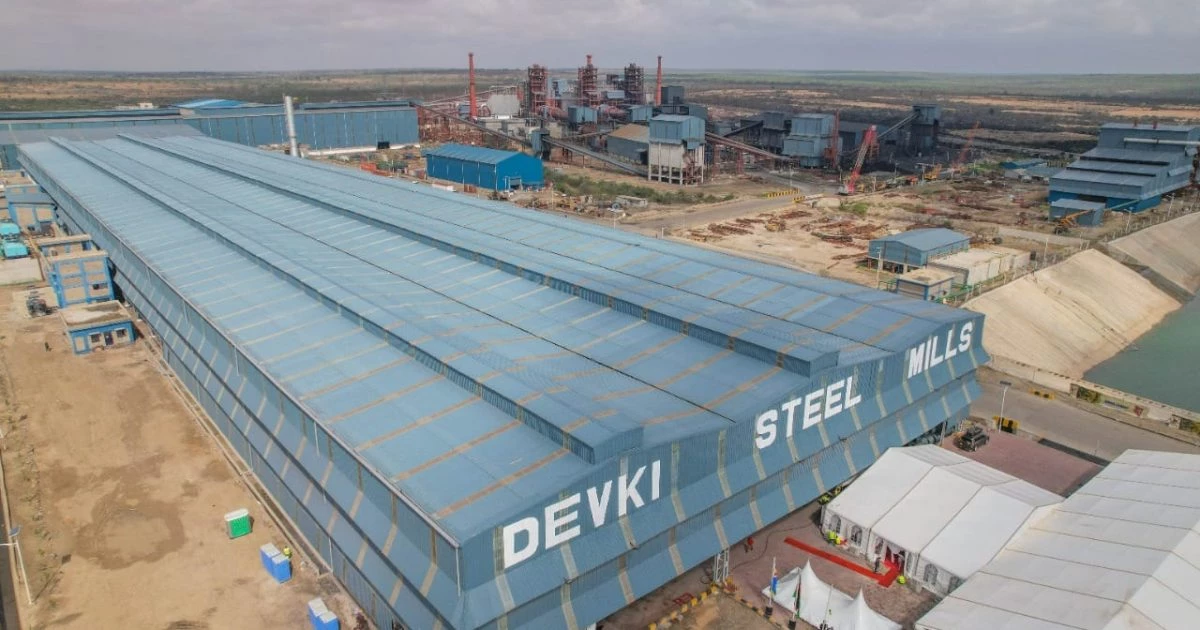
The Devki Group altered this cost environment by targeting intermediate raw material inputs. Through a KSh45 billion (US$345 million) investment in its Cemtech clinker plant in West Pokot, the group eliminated reliance on external clinker imports. The facility produces over 6,000 metric tons of clinker daily, supplying both domestic processing lines and grinding units across East Africa.
“Kenya has the capacity to be fully self-sufficient in raw material inputs for key infrastructure sectors,” says Narendra Raval, Chairman of Devki Group. “By manufacturing clinker locally at scale, we eliminate dependence on costly foreign imports and create a cost baseline that allows regional exports to remain competitive.”
By producing intermediate clinker domestically and shipping it via rail networks, Devki supplies both finished product and raw clinker to grinders in Uganda, Rwanda, and South Sudan at prices non-integrated competitors struggle to match.
This regional consolidation has also triggered major cross-border M&A transactions. The acquisition of a controlling stake in Bamburi Cement PLC by Tanzania’s Amsons Group in a deal valued at KSh23.6 billion (US$180 million) underscores how capital is reorganizing regional assets into single multi-market platforms.
“The region presents unmatched growth potential for construction materials, and combining infrastructure across borders allows us to optimize supply chains from production through to distribution,” notes Geoffrey Ndugwa, Chief Executive Officer of Bamburi Cement.
Bottling gases and hollow freight: Technical plays in niche markets
In specialized manufacturing and industrial inputs, regional leadership is driven by technical barriers to entry and direct integration with multinational corporate supply networks rather than raw volume.
Carbacid Investments controls pure natural carbon dioxide reserves extracted from processing wells in the Rift Valley. Because beverage producers, commercial breweries, and industrial refrigeration firms across East Africa require food-grade carbon dioxide, Carbacid holds an essential position in the regional supply chain. Its physical capital base includes specialized heavy pressurized tankers transporting liquid carbon dioxide across land borders into Uganda, Rwanda, Burundi, and eastern DRC.
“Our objective is to efficiently manufacture and market high-purity carbon dioxide throughout the region to support industrial growth while securing technical viability across borders,” states Dennis Awori, Chairman of Carbacid Investments.
Flame Tree Group takes a decentralized approach to polymer and synthetic packaging manufacturing. Shipping hollow plastic water tanks or large containers across land borders means paying freight rates to transport air. Flame Tree addresses this by deploying lightweight manufacturing hubs directly in target markets including Rwanda, Ethiopia, and Mozambique, using central management and product design out of Nairobi to maintain uniform operational controls.
“Expanding our regional footprint reflects the resilience of our business model and enables our teams to capture demand in markets where local production capacity remains constrained,” says Heril Bangera, Chief Executive Officer of Flame Tree Group.
Dissecting the two tracks of Kenyan industry
| Strategy Indicator | Local Supplier Profile | Regional Champion Profile |
| Market Focus | Domestic retail & traditional wholesale | EAC, COMESA & AfCFTA trade corridors |
| Input Strategy | Imported raw materials (vulnerable to FX fluctuations) | Backward integrated / Regional input extraction |
| Capital Structure | KSh-denominated short-term bank debt | Multi-currency facilities & private equity backing |
| Logistics Networks | Third-party domestic transport operators | Owned distribution fleets & cross-border freight routes |
| Margin Defense | Vulnerable to domestic power & tax hikes | Scale economies & multi-market revenue hedging |
Custom halts, illiquid ledgers, and long transit corridors
The shift toward regional manufacturing is not without significant risk. Industrial players executing cross-border strategies face persistent operational headwinds across multiple frontiers.
Non-tariff barriers remain a constant operational threat. Despite zero-tariff agreements under the EAC Common Market Protocol, trade frictions occur regularly. Unannounced customs halts, rules-of-origin disputes, and overlapping standards checks periodically paralyze trade flows at key border points such as Busia, Malaba, and Namanga.
Foreign exchange lock-ups present a severe challenge to cash flow management. Expanding market coverage into countries such as South Sudan or eastern DRC exposes companies to severe hard-currency illiquidity. Growing sales volumes in local currencies offer little advantage if profits cannot be converted or repatriated to service hard-currency capital expenditure loans.
Infrastructure and transit bottlenecks also eat into capital efficiency. While the Northern Corridor road upgrades and the Standard Gauge Railway have improved freight velocity between Mombasa and Kampala, transit times into deep inland destinations like Kinshasa or Juba remain lengthy, adding up to 30 percent to the final land-delivered product cost.
The emerging markers of cross-border resilience
The emergence of Kenya’s next industrial leaders will not be determined by local market dominance or legacy brand presence. It will belong to companies that master raw material control, cross-border corporate holdings, and multi-currency balance sheet management.
Decision-makers monitoring this sector should evaluate three specific operational metrics to separate future regional champions from home-bound suppliers.
The primary factor is the speed of backward integration across supply chains. Mid-tier agro-processors and consumer goods firms that fail to secure upstream raw material supplies will face ongoing margin compression as imported inputs become more expensive.
The second metric is the execution of targeted cross-border mergers and acquisitions. Well-capitalized industrial groups will increasingly acquire existing production assets and local processing infrastructure in neighboring markets rather than undertaking slow greenfield expansions from scratch.
Finally, geographic revenue composition will serve as the ultimate balance sheet test. The clear industrial winners over the coming decade will be firms that derive over 40 percent of their top-line revenue from outside Kenya, granting them a permanent buffer against domestic economic cycles and single-currency shocks.