East Africa remains one of the world’s most important laboratories for digital finance as its mobile-money superpower rewires commercial enterprise.
By The Ledger Africa Editorial Team
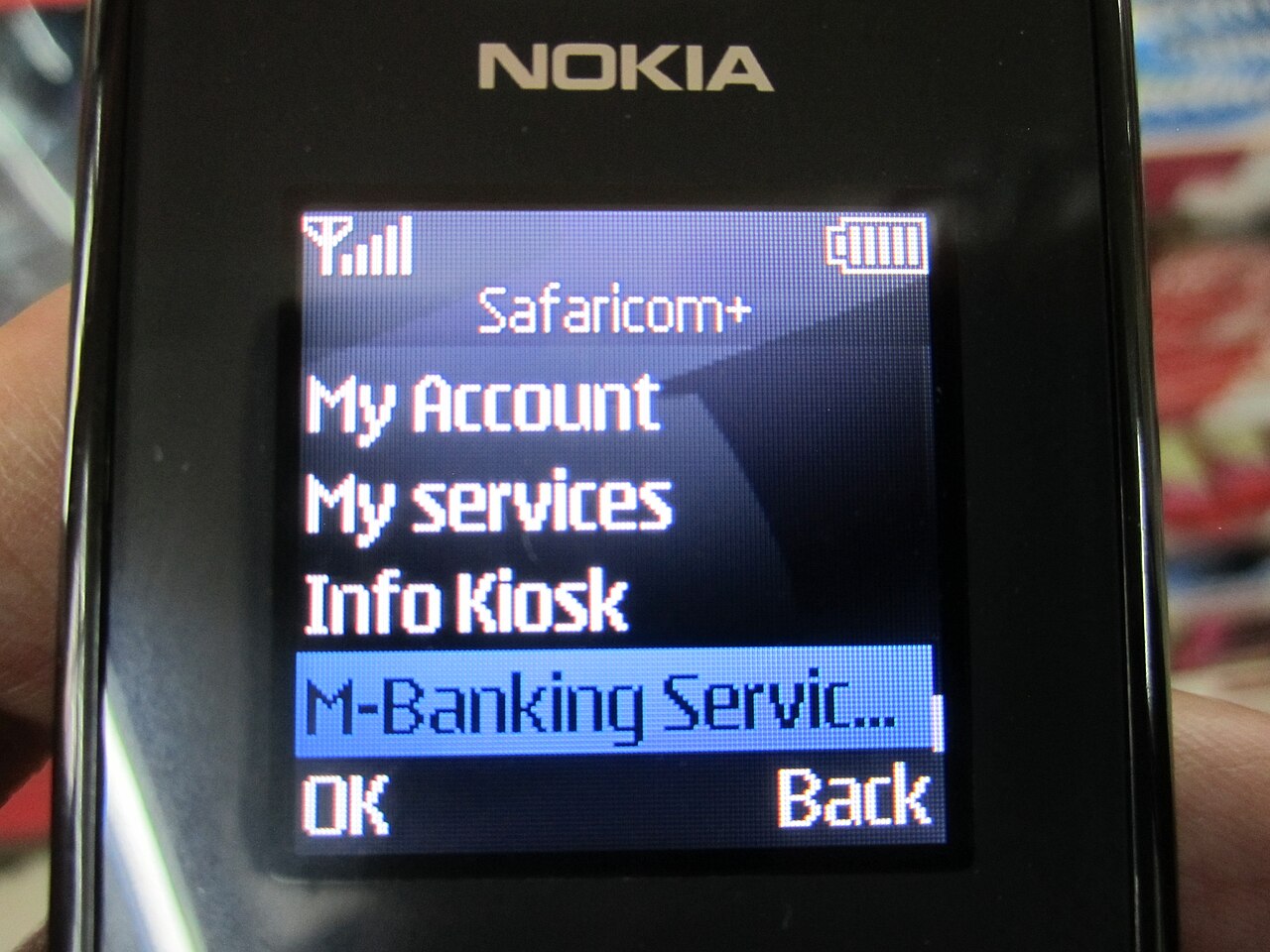
When Safaricom launched M-Pesa in 2007, it was widely framed as a peer-to-peer remittance mechanism for the unbanked, operating as a digital replacement for sending cash via bus drivers. Nearly two decades later, East Africa’s mobile-money ecosystem has outgrown its origin story.
What began as a store-of-value workaround has evolved into a full-stack, interoperable economic operating system. Today, the region serves as a global testing ground for instant payment rails, programmatic working-capital credit, cross-border settlement, and embedded merchant liquidity.
As global financial institutions struggle with legacy rails and high transaction friction, East Africa’s digital finance laboratory offers a blueprint for the future of commercial velocity.
From peer-to-peer to commercial core
Data from the Communications Authority of Kenya shows mobile money subscriptions in the country reached 53.4 million, alongside a dramatic shift in usage patterns. Simple consumer transfers no longer dominate network volumes. Instead, ecosystem expansion is driven by business-to-business payments, merchant acquisition, automated tax remittances, and micro-loan underwriting.
This transition is visible across the East African Community. According to the State of Inclusive Instant Payment Systems report, instant payment systems across Africa processed over US$2 trillion (KSh258 trillion) in volume, with East Africa leading in velocity and merchant density.
Mobile money has effectively shifted from a consumer convenience to an enterprise necessity. Micro, small, and medium enterprises now use digital wallets as primary operating accounts, settlement ledgers, and credit scorecards.
Capital velocity and merchant settlement
To understand why East Africa remains a key laboratory for financial innovation, one must look at the mechanics of working capital velocity.
In traditional cash-reliant or card-dominated economies, merchant settlement cycles range from 24 to 72 hours, with interchange fees eating into micro-business margins. By contrast, East Africa’s mobile payments provide real-time, irrevocably settled liquidity at a fraction of the operational cost.
“Inclusive instant payments are transforming how Africans connect economically,” says Dr Mactar Seck, Chief of Section for Innovation and Technology at the United Nations Economic Commission for Africa. “For digital payments to reach everyone, inclusion must be intentional, giving policymakers and business leaders the confirmation they need to design ecosystems that serve marginalized parts of Africa’s communities, including informal sectors and small enterprises.”
The economic surplus created by this settlement speed is substantial. For a fast-moving consumer goods distributor in Nairobi or Kampala, receiving real-time funds via merchant APIs allows working capital to turn over multiple times per week rather than per month.
Payment infrastructure comparison
| Feature Dimension | Legacy Banking and Card Networks | East African Mobile Money Rails |
| Settlement Speed | T+1 to T+3 business days | Real-time and instant clearing |
| Merchant Cost | 1.5% to 3.5% interchange fees | Sliding scale and flat-tier caps |
| Underwriting Data | Audited financial statements | Real-time digital ledger flow |
| Cross-Border FX | 5.0% to 9.0% total transaction drag | 1.7% to 3.5% corridor-linked fees |
Credit disintermediation and margin dynamics
The most significant financial shift in East Africa is the unbundling of traditional commercial banking balance sheets.
The underlying underwriting chain flows from wholesale capital provided by commercial banks and specialized liquidity funds, through mobile network operators and payment service providers managing distribution and APIs, into algorithmic evaluation engines that assess wallet velocity and airtime top-up frequency. This culminates in automated overdraft facilities, such as Safaricom’s Fuliza or MTN’s MoMo overdrafts, which release capital directly into the transaction stream at the exact point of sale.
“Purpose-driven finance is key to our ongoing digital evolution,” notes Sitoyo Lopokoiyit, CEO of M-PESA Africa. “Interoperability and responsible lending are the critical drivers of transformative impact. Moving forward, partnerships will be key to expanding reach, enabling seamless cross-border transactions, and enhancing overall financial accessibility.”
The financial risk has moved from fixed-asset collateral to cash-flow volatility. While default rates on uncollateralized digital micro-loans can spike during economic downturns, high yield margins combined with instant recovery mechanisms keep returns attractive for underwriting banks. Meanwhile, non-bank fintechs and mobile operators capture fee income on the transaction layer without carrying full credit risk on their balance sheets.
The regional picture: Interoperability and cross-border FX
While single-country markets like Kenya are highly saturated, the next strategic frontier is cross-border East African Community integration.
Historically, trade between Kenya, Uganda, Tanzania, Rwanda, and the Democratic Republic of Congo suffered from currency conversion friction, correspondent banking charges, and delayed settlements.
The growth of regional instant payment systems and mobile-led cross-border corridors is altering trade economics. According to the GSMA, mobile-money-funded remittances across Sub-Saharan Africa average a cost profile of roughly 3.5% for a US$200 (KSh25,800) transfer, significantly below the global average of over 6%. In integrated monetary zones without complex FX friction, transaction costs drop to under 2%.
This cost reduction acts as a direct subsidy to cross-border traders, enabling micro-imports and informal trade networks to scale into formal regional supply chains.
What comes next: Regulatory scrutiny and sovereign pressures
As mobile money infrastructure matures into systemic national infrastructure, three distinct pressures will shape its next phase.
Regulators across East Africa are aggressively pressing for open payment architectures and lower transaction fees to protect consumers and reduce operating overhead for businesses. In response, platform operators are shifting focus toward monetizing software, merchant analytics, and wealth products rather than relying on transactional transfer margins.
Concurrently, governments view high-density digital transaction flows as an efficient vector for tax collection. The introduction of excise duties on digital transfers and direct point-of-sale tax integrations creates a delicate policy balance between expanding sovereign revenues and keeping micro-enterprises from reverting to cash transactions.
Finally, central banks across the region continue to evaluate Central Bank Digital Currencies and structured digital asset frameworks. The crucial test ahead lies in whether sovereign digital currencies will seamlessly integrate with existing telecom rails or actively compete against private market operators for retail settlement velocity.
The Ledger’s bottom line
East Africa’s digital finance ecosystem has moved past the era of simple consumer wallets. By turning real-time payment data into working capital and expanding digital rails across regional borders, the region has transformed its payment infrastructure into a core engine of enterprise growth.
For global financial institutions and regional executives, East Africa is no longer just a benchmark for financial inclusion, it is the blueprint for real-time commercial finance.