How East Africa’s largest lender is deploying capital, trade roadshows and foreign exchange liquidity to build Rwanda’s industrial export corridor
By Napoleon Mugenzi
KIGALI — In a high-ceilinged factory inside Kigali’s Special Economic Zone, row upon row of machinists bend over the steady hum of industrial stitching units. Seven years ago, Dikam Garment Factory did not exist in this planned industrial park; it was an informal outfit operating out of a residential house with ten employees. Today, it employs roughly 400 workers, indirectly supporting upwards of 2,000 family dependents across the capital.
“In Rwanda, most of the garments we use are mainly imported; 90% or beyond is imported,” says Gilbert Kamanzi, Chairperson of the Board at Dikam. “So making garments locally was a very big opportunity, because there are many government incentives to help manufacturers to produce locally.”
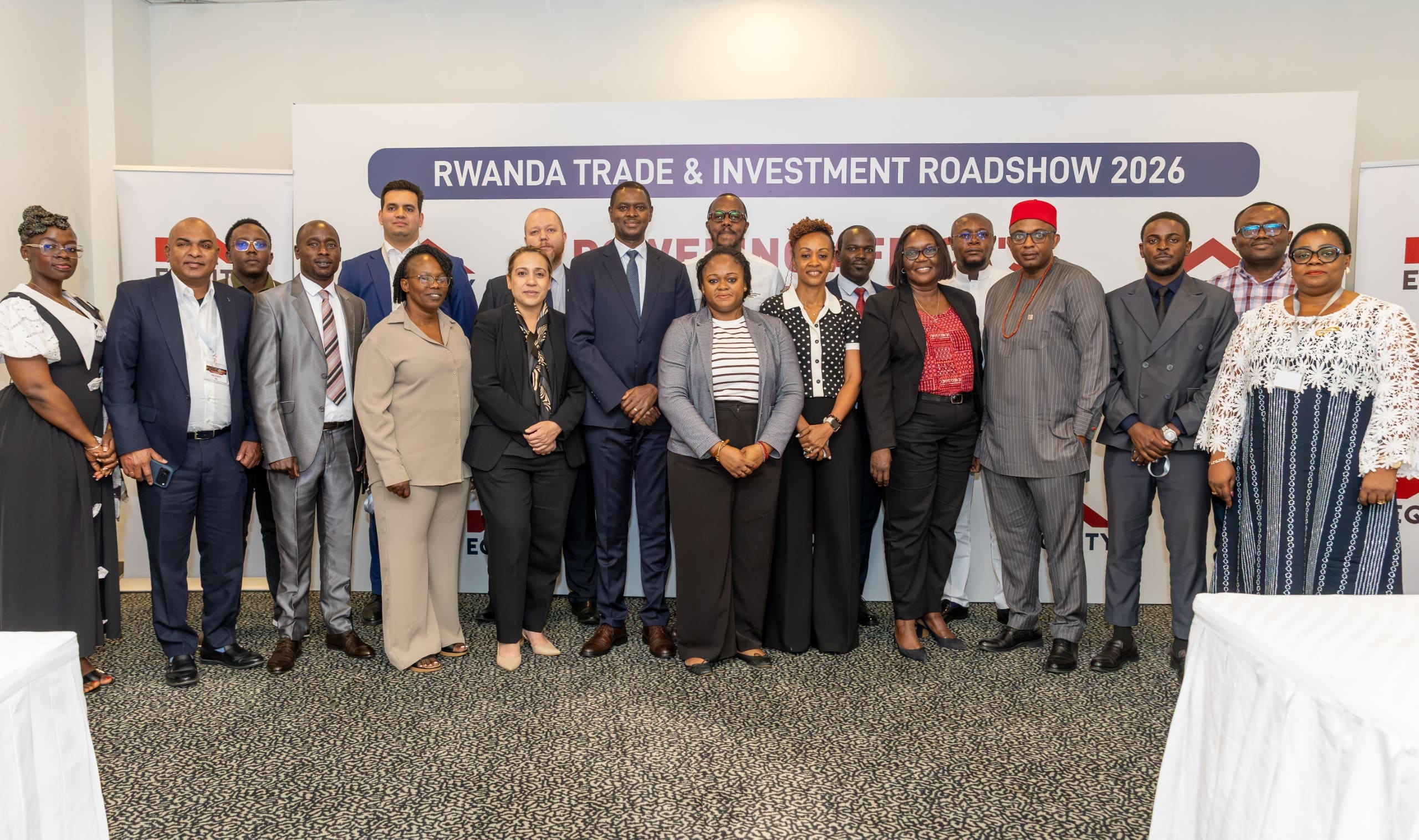
Kamanzi’s enterprise offers a clear view of the economic thesis underlying the 2026 Rwanda Trade and Investment Roadshow. Organised by Equity Group, the initiative brought regional investors, capital allocators, legal advisers, and trade specialists into the heart of Kigali’s manufacturing and technology infrastructure. Since 2021, Equity has executed 15 such trade missions, including recent legs in the Democratic Republic of Congo, Tanzania, and Uganda. The institutional goal is straightforward: bridge cross-border capital with local production capacity to drive regional co-industrialisation.
Investors and business representatives from 10 countries connected through Equity Group have been introduced to a range of investment opportunities in Rwanda, as the country seeks to attract new capital into priority sectors including agriculture, mining, real estate, tourism, housing, transport, and logistics. This engagement brought together international business leaders, financial-sector representatives, and Rwandan entrepreneurs to explore opportunities available in the country and identify areas where partnerships, financing, and market access could accelerate business growth.
Unlocking priority sectors through institutional facilitation
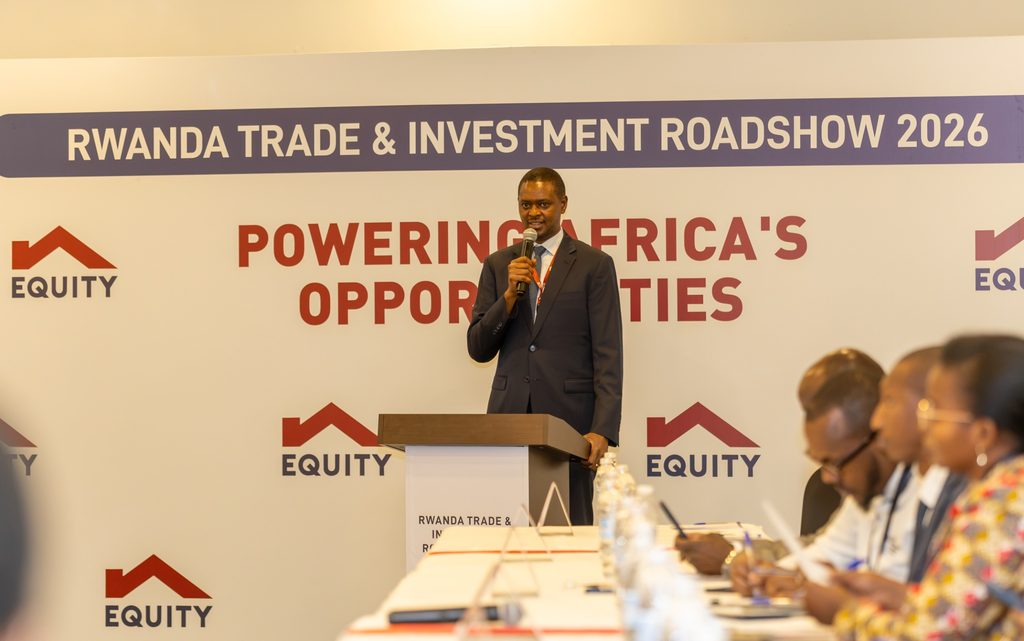
The Rwanda Development Board (RDB), the government agency responsible for facilitating investment, presented Rwanda as a regional and continental gateway for investors seeking to establish or expand businesses in Africa. An RDB representative noted that the institution operates as a “one-stop shop” for investors, providing information on investment sectors, incentives, permits, licences, and other requirements while supporting investors throughout their investment journey.
“We don’t just go to talk about attracting investors, but to ensure that those investors who are choosing to do business in Rwanda, they are accompanied in their journey to invest in Rwanda,” the representative said.
The official also highlighted Rwanda’s integration into the Common Market for Eastern and Southern Africa (COMESA), the East African Community (EAC), and the African Continental Free Trade Area (AfCFTA), noting that these frameworks provide investors with access to wider regional and continental markets. Rwanda is likewise seeking investment beyond Africa, engaging investors from Europe, the United States, and other international markets.
According to the presentation, the government has set a target of attracting US$4.6 billion in new investments over the next three years. Target areas include mining exploration and value addition, modern agriculture, real estate, tourism-related infrastructure, affordable housing, and transport and logistics. In agriculture, the government encourages technology adoption to drive productivity despite limited land availability, while real estate development responds to rising demand in tourism and commercial leisure facilities.
International capital meets local enterprise
International investors have signalled strong alignment with these strategic priorities. Rohana Kumara, representing Sri Lanka-based LOLC Group—which already operates in 10 African countries, including Rwanda—stated that his participation aimed to deepen financial inclusion and expand products in the agricultural sector.
“We have seen certain opportunities, especially in farm [agriculture],” Kumara said, adding that the engagement could help redesign the company’s approach based on local business needs.
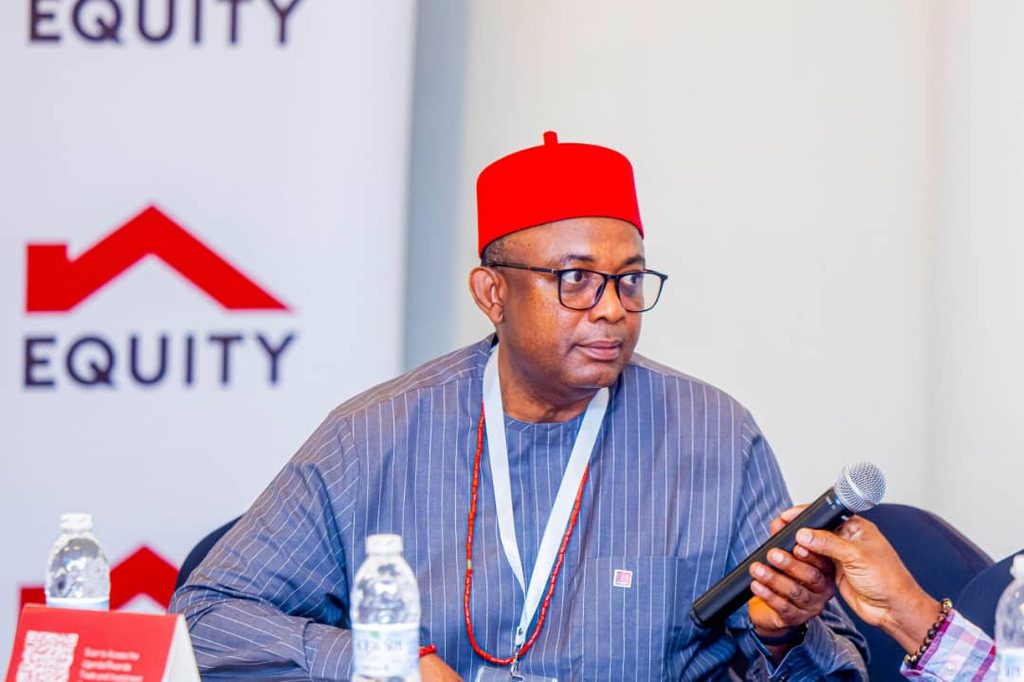
Further bridging the international divide, Kelechi Anyanwu, a lawyer and representative of ExcelPlus Investment Limited, observed that the investment forum demonstrated the undeniable value of bringing international investors together with Rwandan businesses. Anyangwu highlighted the vast potential within Rwanda’s coffee sector, noting how international exposure can scale local producers to global audiences.
“I introduced Rwanda coffee. They never knew anything about Rwanda coffee,” Anyanwu said, describing his experience in Florida and calling for financial institutions to explore more flexible financing approaches for entrepreneurs constrained by traditional collateral requirements.
Adding value at source: The coffee and agro-processing sectors
Further along the value chain, the dialogue emphasized shifting from raw commodity export to domestic value addition.
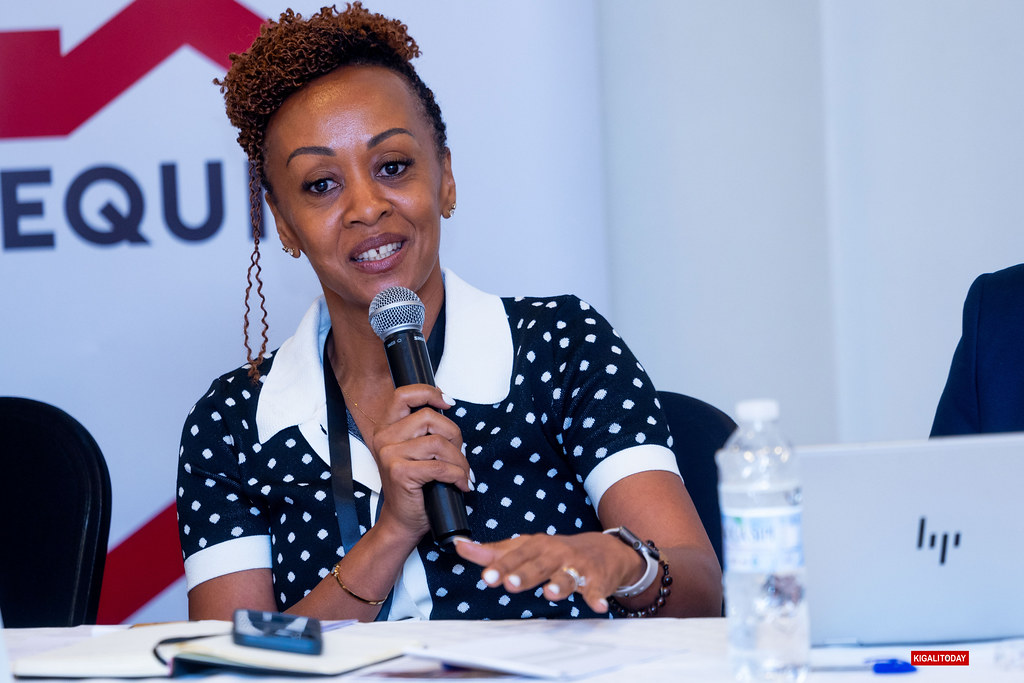
Michaella Kubwimana, co-owner and managing director of Kinunu Agroprocessing Coffee Processing and founder of Kawah Coffee, welcomed the engagement, highlighting the vital connection between local production and broader financial networks. Kinunu operates locally in Rwanda, while Kawah Coffee is registered in the United Kingdom. Kubwimana noted that the event opened avenues for partnerships, including potential collaboration with Equity’s programmes supporting women and initiatives through the Equity Foundation.
“Rwanda is known for extraordinarily good coffee, but we don’t produce enough,” Kubwimana said, pointing to production growth, innovation, and international market access as major opportunities. She also identified an opening for financial institutions to expand physical footprints outside Kigali, noting that her operations in Rutsiro District—employing about 150 people—lack a local Equity Bank branch.
“That’s an opportunity for Equity, I think. And that would be a win-win,” she remarked.
Green mobility and regional trade integration
Beyond agro-processing, Kigali’s industrial ambition is visible in green mobility. At electric motorcycle pioneer Ampersand, roadshow delegates inspected assembly lines and battery-swapping infrastructure engineered specifically for commercial two-wheeler operators to lower operating costs by roughly 50%. Lenders across the region are aligning with these clean energy transitions, targeting up to 30% of energy and agricultural lending toward green-certified operations by 2030.
For export-oriented firms operating in the industrial district, such as Landy Industries, foreign currency access remains a vital operational anchor. Managing Director Kevin Lio noted that Equity Bank’s reliable USD liquidity and competitive rates ensure continuous raw material imports despite regional foreign exchange constraints.
As Jules Seta, Export Development Advisor for Eastern and Southern Africa, observed during the roadshow, co-industrialisation across regional borders is rapidly moving from policy discussions into practical capital deployment. Legal advisers and investors from visiting markets, including Poland and neighbouring African states, similarly affirmed that Rwanda’s infrastructure and regulatory predictability make it a strategic gateway for wider East African expansion.
The message from Kigali’s industrial zone is clear: government incentives can lower the initial barrier to entry, but sustained industrial growth depends on liquidity, predictable foreign exchange access, and regional trade integration. When commercial banks partner with local enterprises to meet these structural needs, African manufacturing moves from an ambition on paper to an engine on the factory floor.