
As digital health platforms expand from municipal capitals to regional district hospitals, a high-stakes continental scramble is unlocking healthcare’s most sensitive new asset class.
By Our Staff Writer
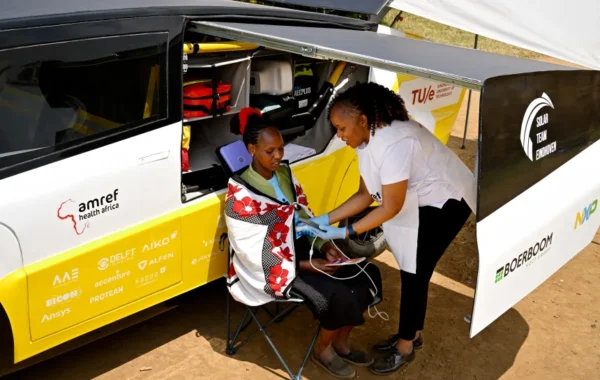
In a community clinic perched on the edge of Thika Town, a patient’s malaria treatment history, blood pressure readings, and anonymised genetic markers are quietly uploaded to a cloud server managed by an enterprise health records provider. Multiply that transaction by millions across facilities in towns like Huambo, Gulu, Mbarara, and Tamale, and a valuable asset class begins to shape up: African health data.
For years, venture capital chased African fintech for its immediate margins, rapid merchant onboarding, and unbanked addressable market. Today, a quieter, structurally deeper shift is underway. Healthtech ventures, diagnostics platforms, and genomic research initiatives are racing to digitise patient records across thousands of secondary and tertiary facilities. Behind the polished corporate rhetoric of universal health coverage and administrative efficiency lies a much harder commercial reality. Patient data is rapidly becoming healthcare’s most sensitive and potentially most lucrative commodity.
The rush is propelled by a convergence of severe necessity and opportunistic capital. Across the continent, health systems carry a heavy disease burden while grappling with chronic physician shortages. Many regions average roughly one doctor per 5,000 people, falling well below the World Health Organization’s recommended threshold.
Into this structural gap have stepped agile startups such as Nigeria-headquartered Helium Health and various diagnostic software developers, deploying modular electronic health records and screening tools. By converting paper-based clinics into digital nodes, these companies capture real-world evidence. Global pharmaceutical firms, contract research organisations, and digital health developers desperately need this clinical data to train algorithms, test medical devices, and design multi-centre clinical trials.
Yet this digital transformation immediately exposes acute regulatory and economic tensions. At least 39 African nations have enacted data protection laws, moving far beyond the outdated assumption that continental health data can be freely harvested without local consent or oversight. Statutes such as Kenya’s Data Protection Act, Nigeria’s Data Protection Act, and South Africa’s Protection of Personal Information Act classify health records as highly sensitive personal data. They impose strict conditions on cross-border transfers and mandate rigorous local oversight.
For multinational sponsors accustomed to seamless, frictionless data extraction, this patchwork of distinct regulatory environments creates severe operational friction. Compliance requires sophisticated, localised consent models, secure domestic storage infrastructure, and navigating vague, rapidly evolving rules regarding data localisation.
Dr Amede Nŋgói, a public health informatics researcher based in East Africa, notes that the risk extends far beyond administrative legal penalties.
“When patient records leave the continent to train algorithms in Boston or London, the economic value migrates right along with them,” he says. “The communities bearing the heaviest epidemiological burden risk becoming mere data donors, handing over valuable insights only to buy back the resulting therapeutics and diagnostics at steep global market prices.”
The commercial stakes are rising exponentially. Major global pharmaceutical companies spend billions of dollars annually acquiring real-world evidence to accelerate drug discovery and clinical development pipelines. Crucially, African populations possess unmatched genetic diversity—an asset essential for developing precision medicines that work across diverse human genotypes rather than narrow, homogenous populations. Platforms that successfully aggregate, clean, and commercialise this data sit on enormous long-term commercial upside.
Yet the infrastructure underpinning this emerging economy remains fragile. Unreliable municipal power grids, intermittent internet connectivity in secondary administrative zones, and chronically underfunded public health systems mean that digital health records often exist in fragmented siloes. Startups attempting to monetise data flows cannot simply deploy software; they must first shoulder the heavy capital expenditure of building basic digital plumbing in regions where paper registers still rule.
The economics of these ventures demand close scrutiny. Building electronic health record systems in under-resourced public hospitals rarely generates immediate software licensing revenue. Ministries of health often lack the procurement budgets to sustain enterprise software subscriptions.
Consequently, healthtech providers frequently pivot their business models toward data monetisation, partnering with pharmaceutical firms or research consortia. This creates an immediate commercial tension between the public imperative to expand healthcare access and the private incentive to aggregate profitable datasets. When a startup’s valuation relies on the depth of its data repository, the boundaries between patient care and commercial extraction can easily blur.
Financing models are evolving to reflect these realities. Venture capital investors are no longer funding open-ended software experiments. They demand clear pathways to monetisation, proprietary data moats, and scalable B2B or B2G contracts. At the same time, development finance institutions are stepping in with blended finance instruments, attempting to de-risk infrastructure investments in regions where commercial lenders fear to tread.
Regulatory bodies face an equally difficult balancing act. National data commissioners must enforce strict privacy standards without inadvertently strangling the very tech ecosystems required to modernise antiquated health systems. If compliance costs become prohibitive, early-stage healthtech startups will fold, leaving the field open only to deeply entrenched foreign multinationals with the balance sheets to absorb regulatory friction.
Ultimately, the race to build Africa’s health data economy will not be decided by software code alone. It will be determined by whether regulators can enforce genuine data sovereignty without stifling commercial innovation, and whether healthtech providers can turn fragmented clinical inputs into commercially viable intelligence without exploiting the patients whose bodies generate the underlying value.