The home is becoming an energy system
By Kirimi Mbogo
A refrigerator does not look like a power plant. Nor does a solar water heater, an induction cooker or a battery tucked against a wall. Yet together they are changing the economics of the African home.
Kenya is an instructive place to watch this happen. Nearly 90% of its electricity generation already comes from renewable sources, according to the International Energy Agency. Geothermal accounts for 47%, hydro for 21%, wind for 16% and solar for 4%.
The puzzle, then, is not simply how to produce cleaner electricity. It is how to make every unit of it work harder.
The Energy and Petroleum Regulatory Authority, Kenya’s energy regulator, puts the argument rather bluntly. “Energy efficiency is vital,” it says, because avoidable energy losses should be reduced and purchased energy directed towards productive use. The reward is not merely environmental. Efficient energy use, EPRA argues, allows consumers to save money for other goods and services.
This is where the latest household technology matters.
Solar panels are no longer the interesting bit. They are becoming infrastructure. The more consequential shift is towards the combination of generation, storage and efficient consumption: batteries that hold electricity, appliances that consume less of it, solar water heaters that displace electric heating and, eventually, vehicles that can return electricity to the house.
The technology is not arriving in Africa exactly as it does in California or Texas. It has better reasons to adapt.
In a Kenyan household, the refrigerator matters. So does hot water. So does the ability to keep a router, freezer or small business operating during an outage. In many African cities, air-conditioning is increasingly important too. Heating, the obsession of energy-efficiency markets in colder countries, is a rather less pressing concern.
Technology follows the bill.
Kenya’s new Energy (Solar Water Heating) Regulations, which took effect in July 2025, make the shift explicit. “All new premises shall have in their design a provision for solar water heating system,” the regulations state. The requirement covers homes as well as hotels, restaurants, health facilities and educational institutions.
That is no longer a lifestyle choice.
It is building policy.
The regulations also impose responsibilities on developers, owners, architects and engineers. A solar water-heating system must meet Kenyan standards; the installer must provide a design declaration and, once the work is completed, documentation including a completion certificate and warranties.
The significance lies partly in what the rules say about the direction of travel. Energy efficiency is moving out of the sustainability department and into the building code.
That is where it belongs.
A household does not consume electricity because it has a sustainability strategy. It consumes it because someone needs hot water, food needs refrigerating and a child has homework to finish. The cheaper those services become to provide, the less electricity the household needs to buy.
The financial arithmetic can be surprisingly prosaic.
An efficient refrigerator may cost more at the shop. A solar water heater certainly does. A battery can look extravagant beside an electricity bill paid in small increments. Yet the comparison should not be between the price of the equipment and the price of electricity today. It should be between the lifetime cost of the appliance and the cost of the energy it consumes.
This is where Africa’s financing problem becomes an energy problem.
Kenya’s experience with pay-as-you-go solar offers a clue. Early systems allowed rural households to acquire solar equipment through an initial deposit followed by daily payments, using mobile money. A GSMA case study described the model as making solar home systems “affordable for rural Kenyans”.
The principle matters more than the particular product.
Energy technology designed for wealthy consumers often assumes that the buyer can write a cheque. African households frequently cannot. What they can do is make a small payment repeatedly, provided the equipment begins delivering value immediately.
The same logic could transform efficient appliances.
A refrigerator sold through instalments, with the repayment calibrated to the electricity it saves, is a different proposition from a refrigerator displayed behind glass with a large price tag. So is a battery financed alongside solar panels. The technology is familiar. The financial engineering is less so.
There is another reason to care about storage.
Electricity reliability has a cost which does not appear on the electricity bill. A freezer loses stock. A salon loses customers. A workshop loses production. A home office loses connectivity. A clinic may have to rely on a generator.
For businesses and households alike, the backup generator is often an insurance policy disguised as an appliance.
Batteries offer another one.
Safaricom’s experience is instructive, even outside the household market. In its sustainability reporting, the company said the instability of grid electricity had encouraged it to develop solar systems using lithium-ion batteries and remote monitoring. It described the approach as part of its transition towards renewable sources.
The lesson is hardly confined to telecoms.
A battery does not care whether it is protecting a mobile base station, a supermarket freezer or a household router. Its economic value comes from allowing electricity to be stored and used when it is needed.
The next step is to make the home itself intelligent.
Smart meters can show households where electricity is going. Connected appliances can shift consumption. Solar systems can generate during daylight. Batteries can store surplus power. An electric vehicle, eventually, can become a mobile storage unit rather than simply another consumer of electricity.
That is the promise behind much of the technology now appearing in richer markets. The interesting question for Africa is not whether every device can be imported. It is which combinations make economic sense here.
Some will not.
A sophisticated heat pump designed principally for winter heating is unlikely to transform a Kenyan household. A solar water heater might. A $10,000 home battery will remain a curiosity if households cannot finance it. A modest battery sold with solar panels and paid for over several years could be rather more consequential.
The distinction is important because Africa needs more energy, not simply less.
Hundreds of millions of people still lack reliable electricity. Rising incomes will mean more refrigerators, more cooling, more digital equipment and more machinery. Telling households to consume less is therefore both politically awkward and economically wrong.
The objective should be different.
Consume better.
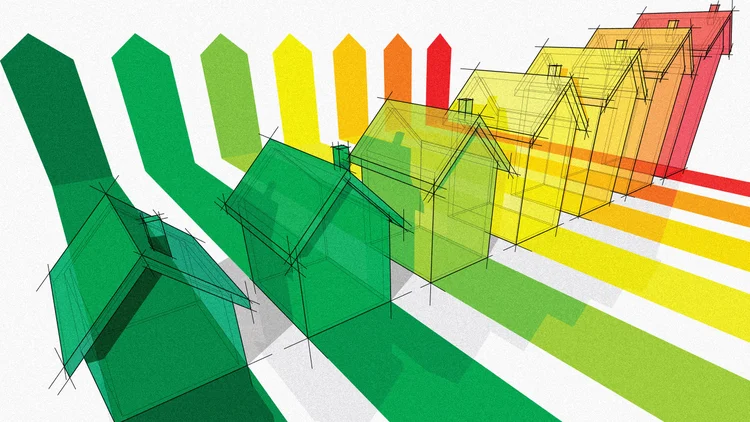
Kenya’s energy policy increasingly reflects that idea. EPRA says its mandate includes developing and enforcing energy-efficiency regulations, appliance standards and public-awareness programmes. Its appliance labelling regime is intended to help consumers distinguish more efficient products from less efficient ones. (EPRA)
That may sound dull. It is not.
Labels, standards and building rules determine which products manufacturers make and which products retailers sell. They alter markets quietly, without requiring consumers to become amateur energy economists.
The biggest opportunity may therefore lie not in the gadget itself but in the ecosystem around it: standards, financing, installation, maintenance and information.
A solar water heater that breaks and cannot be repaired is not efficient. An imported battery with no local servicing network is a stranded asset waiting to happen. An efficient appliance that costs twice as much as its inefficient rival may remain on the showroom floor.
Africa’s energy transition will be won in these unglamorous details.
The home of the future will not necessarily resemble a laboratory. It may look rather ordinary: solar on the roof, a battery in the corner, an efficient fridge, a solar heater and appliances that know when to draw power.
The cleverest technology may be the technology nobody notices.
A refrigerator that consumes less. A battery that keeps the lights on. Hot water produced by the sun. A household that pays less without having to think about why.
That is when energy efficiency stops being a climate slogan.
It becomes household economics.