By Kirimi Mbogo
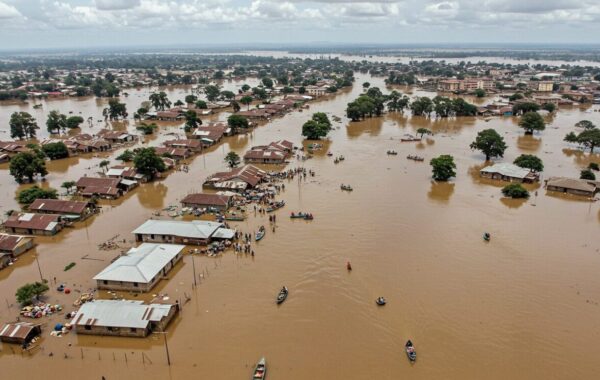
Nairobi has flooded three times badly enough to shut its flagship road in the past two years. Most recently, on the night of 6 March 2026, the Nairobi River burst its banks and swept through the capital; by early April the death toll across 30 counties stood at 112, with nearly 7,000 households damaged. The Motorists Association of Kenya, not an organisation prone to poetry, put the underlying complaint more bluntly than any minister dared: “Nairobi was once proudly known as the ‘City in the Sun.’ Today, it risks becoming a city overwhelmed by concrete, poor planning, and preventable flooding disasters.”
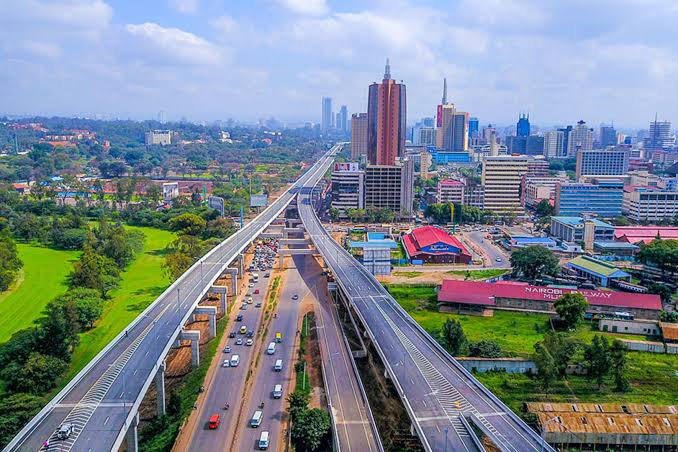
The Expressway itself — Kenya’s most photographed piece of infrastructure, financed and built by a Chinese contractor and operated on a 27-year toll concession — has become an unlikely emblem of the problem it was meant to solve. MAK’s grievance is not that Nairobi always flooded; it is that construction interfered with drainage channels along the Mombasa Road corridor, so water once absorbed or diverted now pools against the structure and overwhelms whatever remains. A year earlier, in April 2024, floods elsewhere in Kenya killed more than 300 people; weeks later a blocked railway culvert near Mai Mahiu failed catastrophically, killing at least 50 more and leaving 84 missing.
None of this is an argument against infrastructure. It is an argument against infrastructure built for a climate, and a public purse, that Kenya no longer has.
Start with the purse. Treasury Cabinet Secretary John Mbadi has, in the space of a single budget cycle, said the quiet part out loud more than once. Kenya’s tax take runs to roughly Ksh3.6 trillion a year, he told the Kenya PPP Symposium in June, “yet recurrent expenditure, salaries, county allocations, and statutory obligations consume amounts far beyond that.” Presenting the 2026/27 budget weeks earlier, he put a number on the shortfall this creates for infrastructure specifically: a financing gap of roughly $5 billion annually, about Sh650 billion, that borrowing and taxation alone can no longer close. His conclusion, delivered with the flatness of a man who has made the same case several times already, was that “the era of financing every road, power line and dam solely through government borrowing and taxation is over.”
What replaces it, in Treasury’s telling, is private capital coaxed in through public-private partnerships and a proposed National Infrastructure Fund — a vehicle Mbadi has since had to defend in the High Court against two separate legal challenges, and whose critics note has, at various points, existed more as a name in a Bill than as a functioning institution. Mbadi’s own description of its purpose is worth taking at face value: “This fund is to pump private sector investment into projects. Do not look at it like a donor somewhere to give money to a project.” Every proposal, he insists, will face feasibility and commercial testing before it gets near public money — which is either fiscal discipline or a convenient way of saying not yet, depending on which contractor you ask.
The demand side of the equation is moving at least as fast as the financing side is straining to catch up. Peak electricity demand hit a record 2,439 megawatts in December 2025, pushing a transmission network that Kenya Electricity Transmission Company says needs nearly 5,700 additional kilometres of line over the next two decades merely to keep pace. Kenya’s answer has been to hand the risk to someone else’s balance sheet: in December, KETRACO signed a $311 million agreement with Africa50 and India’s Power Grid Corporation to build two high-voltage lines through western and northern Kenya, fully financed and operated by the consortium, with “no public funds committed.” Africa50 called it, without excessive modesty, “a first-of-its-kind PPP model for transmission in Africa, aligning public and private capital to transform power transmission across the continent.”
Whether that model scales beyond a single showcase deal is the question the Treasury’s own numbers answer least convincingly. Fifty-one PPP projects worth roughly $13 billion now sit in the national pipeline; only ten are actually under construction. Muneer Ferozie, the World Bank’s regional PPP lead, put the distinction plainly at a Nairobi summit: “Kenya is at a critical juncture of its PPP journey. The goal now is not simply to do more PPPs, but to deliver better, more bankable projects at scale.” More projects and better projects are not the same ambition, and conflating them is precisely how a fifty-one-item pipeline produces ten roads.
Geothermal remains the one sector where bankability looks closer to solved than aspired to. The Quantum and Orpower22 plants, both structured as PPPs and both past the halfway mark of construction by mid-2025, suggest a modular financing model — smaller, phased, individually collateralisable — that suits a Treasury unable to guarantee everything at once. It is a far quieter kind of infrastructure story than a flooded expressway or a $5 trillion fund still fighting its own legal challenges, which is presumably why it makes fewer headlines.
What links the flooding and the financing is the same original sin: infrastructure planned around assumptions — stable rainfall, a Treasury able to borrow at will, demand that grows in a straight line — that Kenya can no longer make with a straight face. Patching the drainage under one expressway will not fix that. Getting the National Infrastructure Fund out of the courtroom and onto a construction site, on the other hand, might at least stop the next crisis from being self-inflicted.