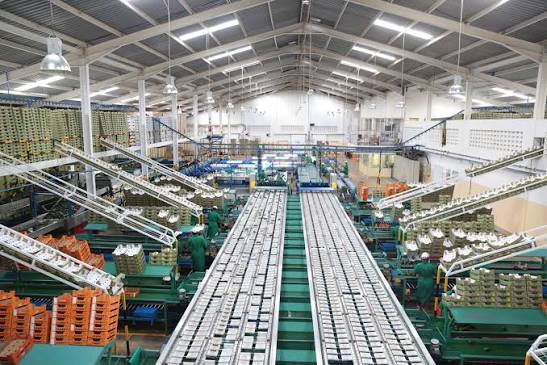
A machine now decides which macadamia nuts make the grade at Kakuzi’s processing plant. That may sound like a modest upgrade. It is not.
By Our Reporter
Kenya’s large farms have long relied on the familiar arithmetic of land, labour, weather and export prices. Kakuzi, one of the country’s biggest listed agricultural companies, is adding another variable: algorithms.
The company has created a dedicated digital agricultural transformation department to coordinate the adoption of technology across its farms and processing operations. Artificial intelligence, machine learning and data analytics are already being deployed; an AI-powered optical sorting system is being used at its macadamia processing plant to automate grading and improve consistency.
The timing is revealing.
Agriculture is becoming a less predictable business. Rainfall patterns are shifting, temperatures are harder to forecast and the economics of farming are being squeezed from several directions at once. A bad season is no longer merely a bad season. It can expose weaknesses in irrigation, crop selection, labour deployment, pest management and processing capacity all at once.
Technology cannot make the weather behave. It can, however, make a farm less helpless when it does not.
Chris Flowers, Kakuzi’s managing director, says the company’s technology programme is driven partly by the growing uncertainty of traditional climatic patterns. “It is essential that agriculture adapts and adopts new technology,” he said.
That sounds almost banal. It is also rather important.
For a diversified agricultural company, digitisation is less about putting an AI label on an old business than about squeezing more information out of every stage of production. Field-level agronomy produces data. Drones produce data. Processing lines produce data. Weather does too, although it has never been especially cooperative about providing it.
The challenge is turning those streams into decisions.
Kakuzi’s optical sorting system offers the least glamorous—and perhaps most commercially useful—example. Grading macadamia nuts manually is repetitive and vulnerable to inconsistency. An automated system can assess produce at speed and apply the same criteria repeatedly. Quality control becomes less dependent on individual judgement; processing becomes more measurable.
That matters in export agriculture, where quality is not an aesthetic preference but part of the price.
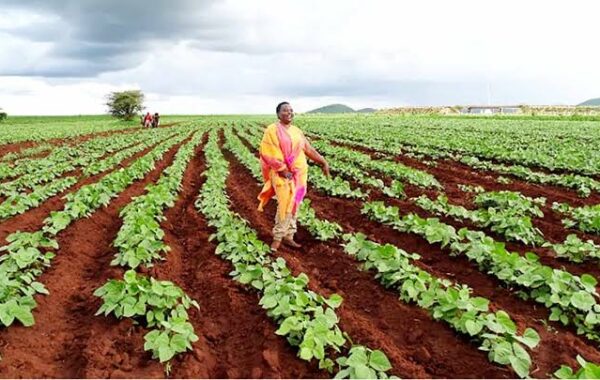
Kakuzi is also introducing other agricultural technologies in its fields and has upgraded its drone surveillance systems. The company grows avocados, blueberries, macadamia, tea and other crops, as well as keeping livestock and operating commercial forestry activities. Its headquarters and main operations are in Makuyu, Murang’a county, while its tea operations extend to Nandi Hills.
The breadth of that portfolio makes the experiment more interesting. A technology that works for macadamias may not work unchanged for avocados, tea or forestry. The agricultural transformation department therefore has a less glamorous job than announcing the arrival of AI: it must work out where digitisation actually produces a return.
That is where many corporate technology programmes come unstuck.
The temptation is to buy the machinery first and discover the business case later. Kakuzi appears to be taking a more systematic route, creating a unit specifically to coordinate the technology agenda across its operations. Whether that produces material gains in yields, waste reduction, labour productivity or margins will be the more consequential test.
Investors should care about that distinction.
Agriculture is an unusually unforgiving industry in which to confuse technological novelty with productivity. A drone is not a strategy. Nor is machine learning. The value lies in what happens after the data arrive.
Kakuzi’s bet is therefore bigger than the machinery now appearing on its farms and in its processing plants. It is a wager that a more data-intensive agricultural model can make a sprawling, climate-exposed business more controllable.
That may prove useful as Kenya seeks to expand high-value agricultural exports while reducing its dependence on imported food and inputs. The government has been placing particular emphasis on products such as avocados and macadamia as part of its push for greater agricultural self-sufficiency and agro-processing.
There is an irony here. Farming has always depended on reading the signs: clouds, soil, flowering, pests, seasons. The newest version simply adds sensors and software to the old craft.
The farmer still has to make the call. Increasingly, though, the machine will have something to say about it.