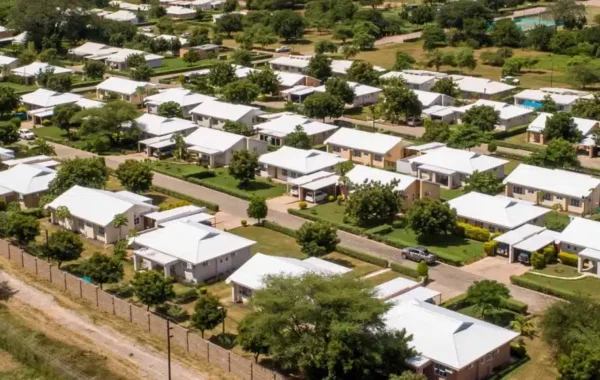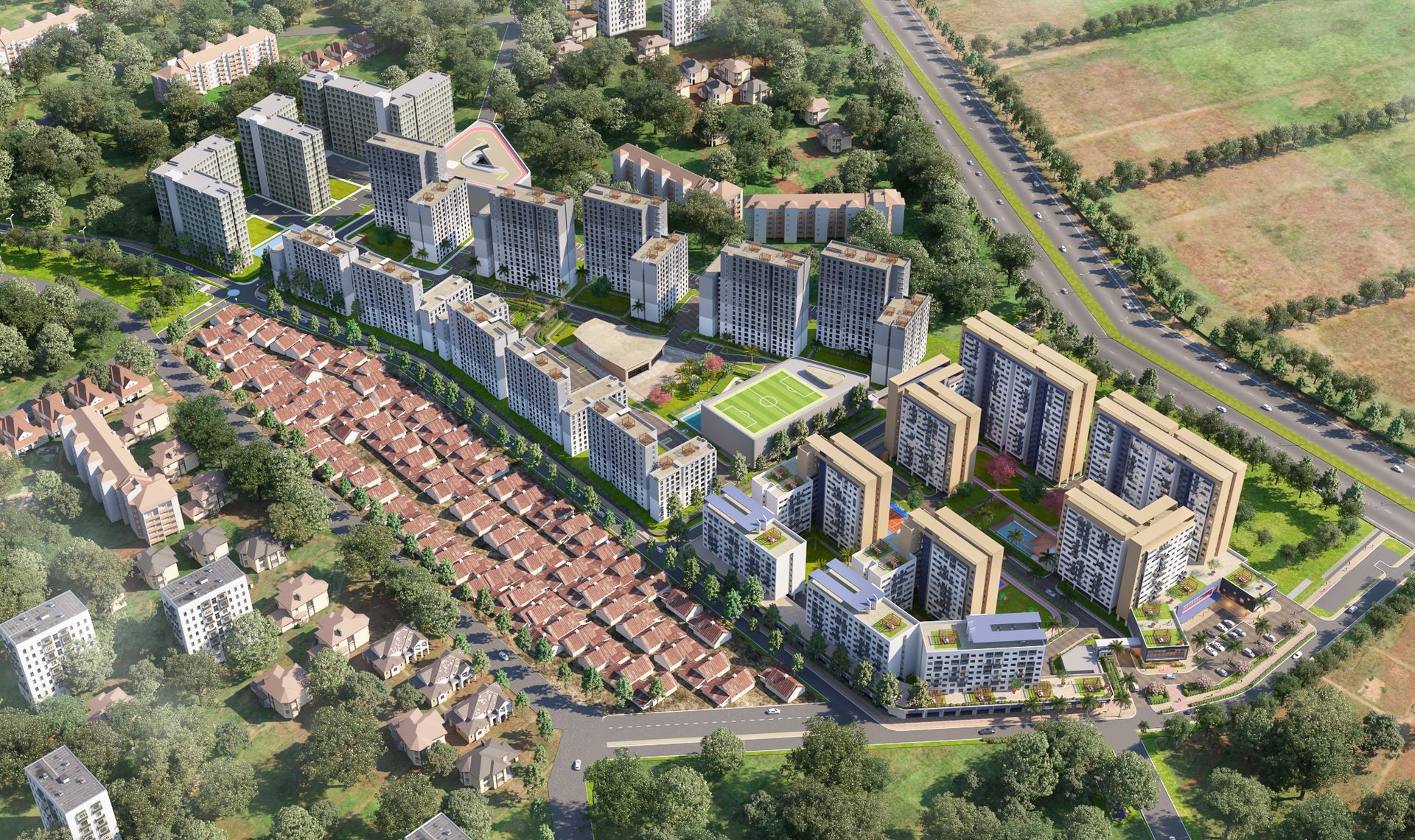
A housing conference in Naivasha will spend two days confronting an awkward fact: building houses is easier than finding Kenyans who can afford to buy them.
By Our Reporter
The fifth Kenya Affordable Housing Conference, organised by the Kenya Mortgage Refinance Company (KMRC), takes place on August 20th and 21st under the rather grand theme of “Scaling the Base: Unlocking Inclusive and Sustainable Housing Solutions”. The language is expansive. The problem is not.
Kenya has a shortage of homes. It also has a shortage of mortgages that ordinary earners can actually use.
Johnstone Oltetia, KMRC’s chief executive, says the housing debate is moving beyond the construction of units towards the financial barriers that keep millions from ownership. “This year’s theme speaks to both the scale of the challenge and the promise before us: to close the twin gaps that constrain access at scale,” he says.
Those twin gaps are familiar. There are too few affordable homes on the supply side; on the demand side, millions of Kenyans, particularly those with informal or irregular incomes, struggle to obtain the finance needed to buy them.
That distinction matters.
For a salaried worker with a predictable income, a mortgage is an expensive proposition. For an informal worker, micro-entrepreneur or member of a savings co-operative, the conventional mortgage can be something stranger: a financial product designed around an income pattern that does not exist.
A boda-boda operator may earn every day but not the same amount every day. A small trader may have substantial turnover without a payslip. A farmer’s income may arrive in bursts. The banking system, meanwhile, remains rather fond of regularity.
This creates the central conundrum. A household can possess the capacity to service housing debt over many years while failing the documentary test required to obtain it.
Kenya’s housing shortage is therefore not merely a problem of bricks and mortar. It is a problem of financial architecture.
The Naivasha conference is expected to bring together lenders, developers, pension funds, SACCOs, development-finance institutions, investors and government agencies. They will discuss blended finance, development finance and mortgage-liquidity facilities, alongside land administration, title regularisation and land governance.
These subjects lack the political theatre of a new housing estate. They may matter more.
A deeper mortgage market could allow lenders to originate longer-term loans while refinancing them through a more liquid financial system. In principle, that should broaden access and reduce some of the constraints on mortgage lending. In practice, the question is whether the benefit travels all the way down the income distribution.
That is where policy tends to become less elegant.
Government can subsidise construction. It can reform land administration. It can improve title registration and attempt to lower the cost of development. It cannot repeal the arithmetic of household income. Nor can it make a house affordable merely by attaching the word “affordable” to it.
Politicians, predictably, will prefer the ribbon-cutting.
The conference will also consider sustainable construction and artificial intelligence. Green buildings, resource efficiency and newer construction techniques may lower construction or operating costs. AI could improve design, procurement, project management and delivery.
But technology has limits. It can make a building cheaper to construct; it cannot manufacture a deposit.
There is a similar danger in sustainability. A climate-resilient home that is beyond the means of its intended occupants is an impressive object, but not necessarily an affordable one. The securitisation of environmental virtue, without corresponding affordability, would merely produce a greener version of the same exclusion.
Delegates from South Africa, Tanzania and India are expected to compare approaches to financing underserved households, while lessons from Japan and other housing markets will also be examined.
International comparisons can be useful. They can also be treacherous. Housing systems are products of particular land markets, financial institutions, demographics and political bargains. What works in Tokyo cannot simply be stapled on to Nairobi.
Better data should help. Participants are expected to examine findings from Kenya’s Residential Property Price Index alongside emerging trends in housing demand, affordability and investment.
That matters because Kenya’s housing debate has often been conducted through aggregates: the number of units required, the number under construction, the amount of financing available. Yet the decisive calculation is made at household level.
Can this particular family pay this particular monthly instalment for this particular house?
Everything else is commentary.
The conference will, unusually, also put homeowners’ experiences into the discussion. Their accounts are intended to illuminate the practical obstacles encountered between the aspiration to own a home and the reality of financing one.
That may be the most useful part of the exercise.
The inaugural Kenya Affordable Housing Awards will then recognise mortgage lenders for contributions to homeownership, sustainability, customer experience and innovation. Awards are harmless enough. The more consequential prize would be a housing-finance system in which informal earners cease to be treated as an awkward exception.
Kenya has spent years asking how to build more affordable homes.
The harder question is who can finance them.
Until that question has a satisfactory answer, the distance between a housing blueprint and a set of keys will remain rather longer than the brochures suggest.