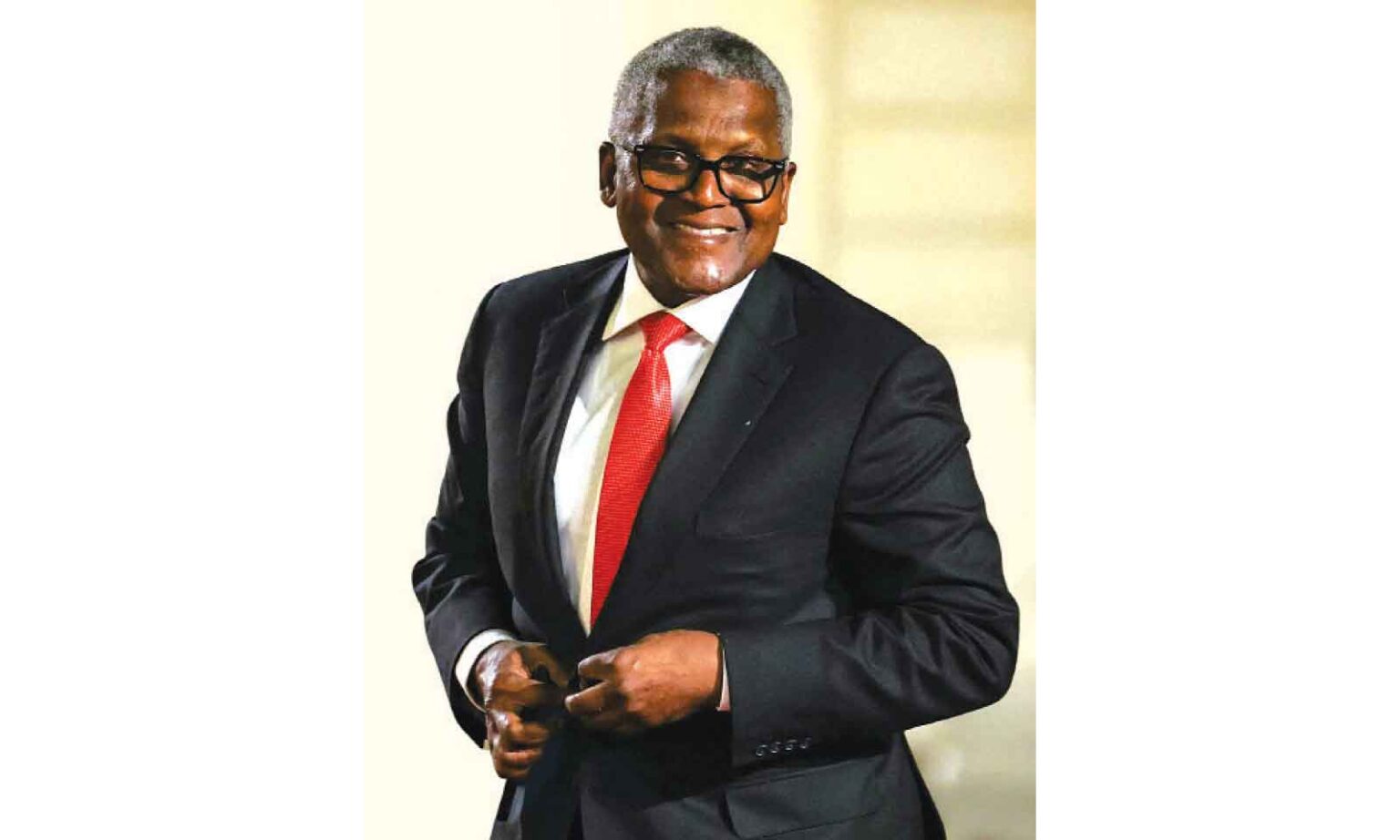
By bypassing public utility bottlenecks and financing a $20 billion refining complex, Africa’s richest industrialist has forced regional governments and commodity traders to adapt to private capital operating at state-level scale.
By The Ledger Africa Editorial Staff
When Aliko Dangote set out to construct a KSh 2.6 trillion (US$20 billion) petroleum processing complex on 30 million square metres of dredged swampland in Lekki in Nigeria, he was not merely confronting an engineering hurdle. He was stepping into a collision between private ambition and systemic regulatory inertia. Sub-Saharan Africa’s largest crude producer had spent decades trapped in a crippling structural paradox, exporting unrefined crude oil while paying billions of dollars annually to re-import finished fuel. For corporate leaders across the continent, Dangote’s trajectory offers a masterclass in how decision-makers operate within and ultimately reshape the institutional constraints of state policy, currency volatility, and entrenched vested interests.
Confronting state limits
Large-scale industrial leadership in emerging markets requires managing sovereign balance-sheet realities alongside private balance-sheet risk. Building the world’s largest single-train refinery required a capital layout larger than the annual capital budgets of several African states combined. Reflecting on the weight of executive accountability throughout the construction timeline, Dangote admits that “if I had seen the full plan and all the obstacles from the beginning, I probably wouldn’t have started.” Yet he maintains that “in whatever you do, tenacity of purpose is supreme,” viewing institutional friction not as an impasse but as a guide: “resistance is a signal; it tells you exactly where the structural gaps are and where the real market opportunity lies.”
Rather than waiting for state capacity to provide basic utilities, Dangote decided to construct private civil infrastructure. The group dredged 65 million cubic metres of sand, constructed a private deep-sea port with an 80-metre draft, built a 10-lane 100-kilometre transit highway, and installed a dedicated 1,500-megawatt captive power generation framework. Addressing business leaders at a pan-African leadership forum, Dangote noted that “we have already covered all that because we had to build our own port,” adding with wry hyperbole that “the only thing we did not do there is provide the air we breathe.” His experience underscores a stark commercial reality: “most African governments will not have the financial or administrative capacity to build a refinery of this size, and without private capital stepping up, the continent would be in deep trouble.”
Breaking trade dependency
The core conflict in African industrialisation has historically been the gap between raw commodity extraction and local value addition. Central banks across West and East Africa routinely spend vast portions of their foreign exchange reserves subsidising or settling offshore fuel imports. Dangote’s decision to pivot from trading to capital-intensive manufacturing disrupted long-standing commercial arrangements between global commodities trading desks and national petroleum authorities.
The rationale behind this pivot rests on a simple principle: “manufacture, don’t just trade.” Acknowledging that “there is money in manufacturing even though it is capital intensive,” Dangote explains that “to achieve a big breakthrough, I had to start manufacturing the same products I was previously trading on.” Central to his strategy is retaining economic value within the region, asserting that “Africa cannot continue exporting raw materials and importing value-added goods,” and that “our investment is designed to ensure that the economic value of our natural resources stays within the continent.”
This commitment extends to domestic capital retention across African financial systems. Expressing frustration with historical capital flight, Dangote observed that “we are taking our own money to foreign banks, strengthening their banks, and we don’t really keep our money on our own continent.” His mandate for the enterprise was explicit: “no, we must industrialise our continent; we want to lead and champion the industrialisation of Africa.” Rejecting the notion that external actors would drive regional growth, he argued that “nobody wants Africa to develop,” which is precisely why “we Africans will develop Africa, whether they like it or they don’t like it.” Crucially, he framed industrial capacity as a tool against economic stagnation, insisting that “we must stop exporting jobs and importing poverty,” noting that “once you start, it gets easier, but the more you don’t do anything, it becomes difficult.”
To realise this ambition, decision-makers must re-evaluate market scale under frameworks like the African Continental Free Trade Area (AfCFTA). Countering traditional risk perceptions, Dangote argues that “Africa’s risks are mainly perceived, not real,” even if “we in Africa are not really very good at telling our own story.” Shifted market dynamics are already visible: “things are changing; we are giving African countries first choice for our output.” He stresses that “this refinery was set up not to target distant offshore markets, but to target African markets and make the continent self-sufficient.” Ultimately, sustaining this momentum requires institutional confidence: “we must believe in our continent,” particularly as “African businesses, backed by local banks, can now fund big projects,” proving that “nothing is impossible if governments give the right support.”
THE LEDGER ANGLE
Dangote’s primary achievement is not merely industrial scale: it is institutional arbitrage. By building private utility infrastructure, his enterprise bypassed public administrative bottlenecks, proving that pan-African scale requires corporate leaders to build their own operational ecosystems rather than wait for state readiness.
Mobilising regional capital
As the refinery transitioned toward full capacity, the company shifted from early-stage ramp-up costs to a net profit of KSh 612.81 billion (US$4.725 billion) for the first nine months of 2026, with revenue climbing to KSh 2.92 trillion (US$22.48 billion). To expand continental equity ownership, the group structured an initial public offering (IPO) on the Nigerian Exchange alongside a targeted cross-listing on regional exchanges, following an institutional private placement that raised US$2.5 billion.
Addressing institutional and retail market participants, Dangote highlighted the economic rationale for broad capital participation, explaining that “the IPO is about making sure that we invite the public so that they can get part of the investment.” Confident in the asset’s trajectory, he noted that “most likely, people don’t even know what they are buying,” but projected that “by the end of this year, this is going to be the largest company in Africa, not just in Nigeria.” Positioning the equity offer as a generational opportunity, he urged investors to recognize that “you are buying a future where the company will be way ahead of a lot of sovereign-backed entities,” warning them: “don’t let the train leave you at the station.”
The appetite for the company’s equity was demonstrated during its institutional round. Reflecting on the US$2.5 billion raise, Dangote recalled that “the IPO target was set, and the private placement was $1 billion,” but “it was very encouraging working to meet the demand.” To filter for high-conviction capital, the group enforced strict transaction terms: “we even insisted that everybody should pay in hard currency; we refused to collect currencies other than dollars, and we had to allocate and reallocate because demand was so high.” Ultimately, securing US$2.5 billion provides the balance sheet strength required “to expand the business and take it to the next level across Africa,” offering shareholders a direct hedge against local currency depreciation, or as Dangote put it, “dollar dividends from refinery shares will pay your children’s school fees abroad.”
Expanding eastwards
Leadership decisions executed in Lagos are now extending into East African trade corridors, including planned processing and energy investments on the Kenyan coast at Lamu to supply the East African Community (EAC).
Outlining his regional strategy, Dangote affirmed his commitment to regional governments: “if we agree with all governments here about the refinery framework, we will lead and we will make sure the facility is built within four to five years.” He views baseline energy infrastructure as a catalyst for broader capital inflows, noting that “the refinery is like actually the gate; once you open up, you have the refinery, and you’ll be shocked at how many people will now come and invest in East Africa.” Beyond fuel, the group plans to address regional power deficits through captive generation: “we are talking to countries about power generation; we are generating a lot of energy, adding another 2,000 megawatts to reach 3,500 megawatts total capacity.” Specifically, “the Lamu project would generate about 1,000 megawatts from petroleum coke, or petcoke,” of which “about 500 MW could be sold directly to the government grid.” The primary objective remains local value addition, ensuring “the region can process its own minerals and energy locally before any export.”
Securing institutional legacy
For an enterprise tied closely to a single founder, corporate governance and succession represent the ultimate test of long-term stability. As Dangote Industries transitions into a publicly traded corporate structure, institutional investors are scrutinising how executive authority is delegated across operating divisions.
Addressing corporate governance and executive succession, Dangote rejected traditional biases, maintaining that “girls can lead with confidence, discipline, and good judgment.” For institutional continuity, “what matters in leadership is not whether the executive is a son or a daughter, but whether they have been prepared to handle immense responsibility.” He emphasised that sustainable growth requires operational structure rather than unanchored ambition: “vision without a timeline is just a dream, but vision backed by institutional discipline and execution is a strategy.”
This institutional discipline is grounded in a demanding personal routine. Characterising his operational drive, Dangote explains that “passion is what drives me forward; passion is what makes me go to bed at 2am and wake up at 6am.” Every morning, his objective is pragmatic: “I make up my mind to solve as many problems as possible before retiring home.” In terms of brand equity, he advises that “to succeed in business, you must build a brand and never destroy it,” citing his own experience where “one competitive advantage I had when I ventured into manufacturing was my brand ‘Dangote,’ which I diligently built in the course of trading commodities.” At the same time, he cautions against anti-competitive practices: “don’t kill the competition; competition is healthy for businesses, it keeps you the entrepreneur on your toes.” Looking past his executive tenure, his personal benchmark remains clear: “after my death, I want to be remembered as Africa’s greatest industrialist.”
Navigating future risks
As Dangote Petroleum Refinery targets a further US$14.3 billion capital expenditure program to double total processing capacity to 1.4 million barrels per day by 2029, three major institutional realities will dictate the corporate trajectory.
First, state trade policy alignment will determine whether regional trade blocs like ECOWAS and the EAC can enforce harmonised tariff structures to prevent external dumping and support African-refined energy. Second, foreign exchange liquidity will depend on the willingness of central banks to establish local-currency settlement mechanisms for cross-border African crude purchases. Third, institutional capital absorption will test the capacity of regional stock exchanges, including the Nigerian Exchange and Nairobi Securities Exchange, to handle high-volume industrial listings without triggering liquidity squeezes.
The Ledger verdict
Aliko Dangote’s career demonstrates that building transformative industry in Africa requires navigating around institutional weaknesses rather than waiting for them to be solved by policy alone. By building private infrastructure to bridge public gaps, Dangote has established a blueprint for African corporate leadership. The question now facing regional governments is whether public policy can keep pace with the sovereign scale of private enterprise.