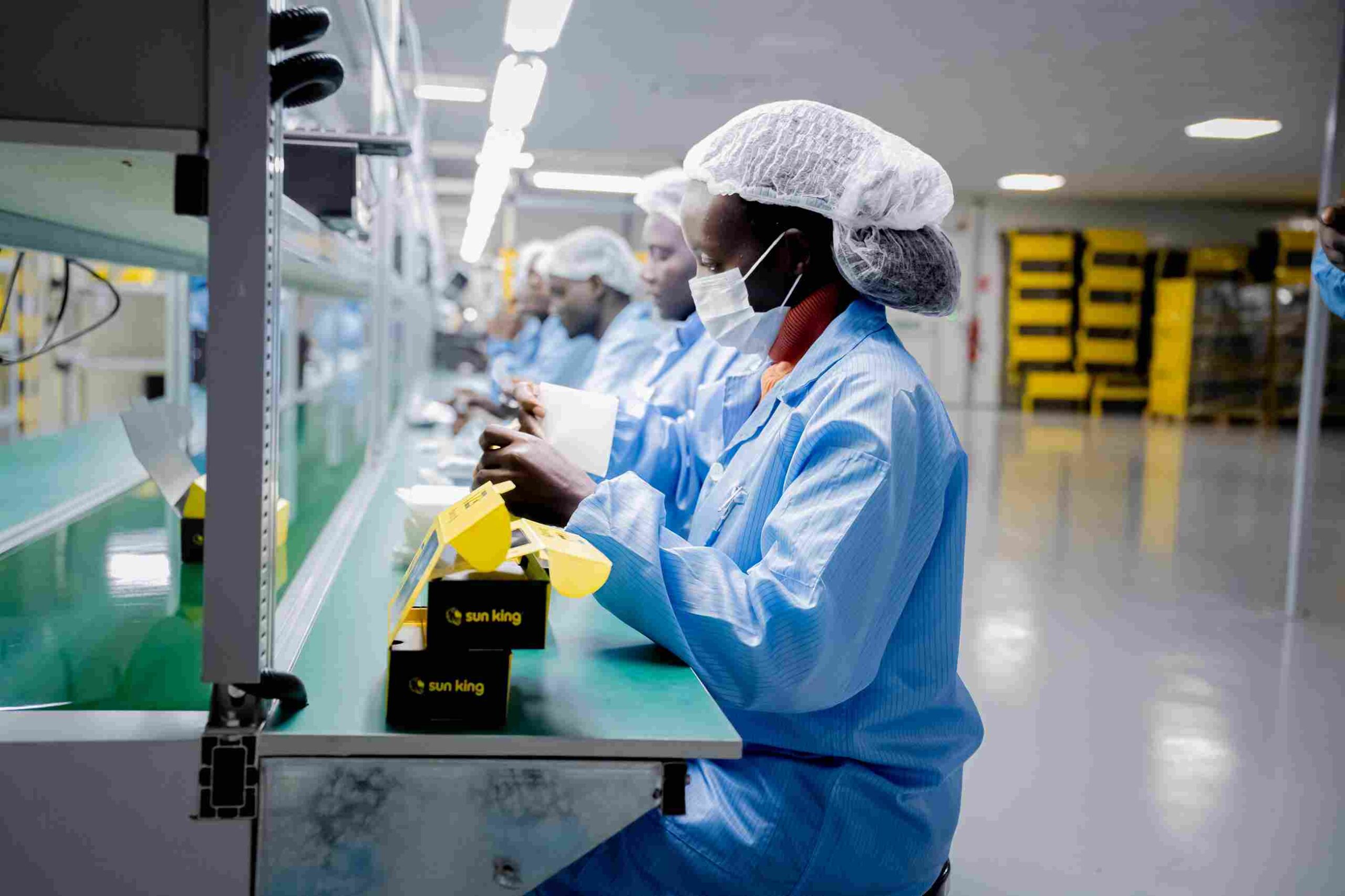
Nairobi wants an export-led manufacturing renaissance, but capital allocators want a tax regime that does not change its mind before the foundation concrete sets.
By Kirimi Mbogo
An exporter waiting for a cheque from the taxman understands the friction of Kenya’s industrial ambitions better than any government briefing document.
Nairobi wants a factory-floor revolution. State planners envision an economy pivoting away from raw commodity exports toward high-value manufacturing, anchored by the Bottom-Up Economic Transformation Agenda (BETA) and the draft National Industrialization Policy. Ministers speak the language of export-led growth, global competitiveness, and structural transformation.
Yet capital is notoriously cautious, and industrial assets do not materialise on rhetoric alone.
The friction lies in a glaring contradiction between what the state demands and what its fiscal policies deliver. While the Ministry of Investments, Trade and Industry courts long-term manufacturers, fiscal architects at the Treasury treat industrial inputs as convenient targets for short-term revenue collection.
The cost of policy volatility
Consider the treatment of production costs. Manufacturers across cement, steel, packaging, and agro-processing face a volatile tax regime where levies on essential industrial inputs are introduced, scrapped, and reintroduced with unsettling regularity. Capital expenditure that requires a decade-long line of sight is instead subjected to annual legislative chess matches.
The policy zigzags have tangible commercial consequences. For instance, the introduction of a 2.5 per cent excise duty on coal under previous tax amendments was subsequently scrapped, only for similar heavy industrial fuel penalties to resurface in subsequent legislative proposals. For energy-intensive sectors, these shifts make forward pricing an exercise in guesswork.
“Manufacturing investments are long-term commitments that require policy consistency and stability,” notes an analytical briefing from the Kenya Association of Manufacturers (KAM). “When tax rules shift with every budget cycle, long-term capital calculation becomes nearly impossible, forcing investors to price in regulatory risk rather than operational expansion.”
Industry leaders argue that this administrative instability directly undermines regional competitiveness. Locally produced goods struggle to retain market share within the East African Community when input costs fluctuate arbitrarily from one financial year to the next.
The liquidity squeeze
Compounding this unpredictability is a severe working capital squeeze. Exporters are weighed down by an outstanding value-added tax (VAT) refund backlog running into tens of billions of shillings. While statutory guidelines suggest prompt processing, the reality on the ground involves prolonged audits, electronic tax system verification hurdles, and delayed disbursements that trap millions in corporate cash.
As industrial monitoring data indicates, outstanding VAT refunds owed to businesses hover at approximately KES35 billion (USD 271 million). For mid-sized manufacturers, this backlog represents oxygen. When the state locks up corporate liquidity through delayed refunds while simultaneously increasing the cost of raw inputs through aggressive excise adjustments, it undermines the very export capacity it claims to champion.
“Businesses cannot expand production lines when tens of millions of shillings in legitimate input tax claims remain locked in administrative limbo,” explains a Nairobi-based tax advisory partner working closely with industrial clients. “The delay acts as an implicit, unbudgeted tax on domestic production.”
The implications extend to pharmaceutical and agro-processing value chains. Proposed shifts moving critical manufacturing inputs from zero-rated schedules to VAT-exempt categories mean producers can no longer recover input taxes, compounding production overheads and pushing final prices upward.
Policy on paper versus reality on the ground
The divergence between official aspiration and corporate reality is starkly evident in how industrial incentives are administered. Special economic zones and export processing zones promise tax holidays and streamlined logistics, yet firms operating outside these insulated enclaves find themselves grappling with a heavy compliance burden. County-level single business permits, overlapping sector levies, and stringent digital invoicing requirements add layers of friction that weigh disproportionately on smaller domestic enterprises trying to scale into regional markets.
Industrialists argue that the state must fundamentally recalibrate its relationship with productive enterprise. Rather than viewing the manufacturing sector primarily as an elastic tax handle to bridge fiscal deficits, economic architects need to treat predictability as the primary currency of investment attraction.
“If we want industrialisation to drive employment and generate sustainable foreign exchange, our fiscal policy must match our industrial policy,” a senior manufacturing executive observes. “You cannot legislate an export hub into existence while penalising the very raw materials and inputs required to build a competitive product.”
The path to industrial credibility
The economic reality is straightforward. Industrial growth cannot outpace the cash flows of the companies expected to deliver it. Until Kenya aligns its revenue collection machinery with its long-term industrial strategy, investors will continue to calculate risks rather than expand production floors.
The draft National Industrialization Policy sets out an ambitious roadmap across prioritised sectors, targeting a significant expansion of manufacturing’s share of gross domestic product. Yet its success will be measured not by the elegance of its strategy papers, but by whether an exporter can reclaim legitimate tax credits without waiting years for a cheque.
Restoring investor confidence requires concrete structural choices. Industry stakeholders maintain that clearing historical refund arrears through dedicated budgetary allocations and freezing frequent alterations to input levies are non-negotiable prerequisites. Without these adjustments, industrial policy risks remaining a collection of well-intentioned aspirations detached from market realities.
What structural adjustment in tax administration would do more to restore investor confidence: clearing the historical VAT refund backlog, or freezing frequent alterations to industrial input levies?