Local assembly lines are multiplying, but prohibitive financing, sparse charging networks and a shortage of technical skills threaten to strand the green transition in Nairobi’s wealthier suburbs.
By Kirimi Mbogo
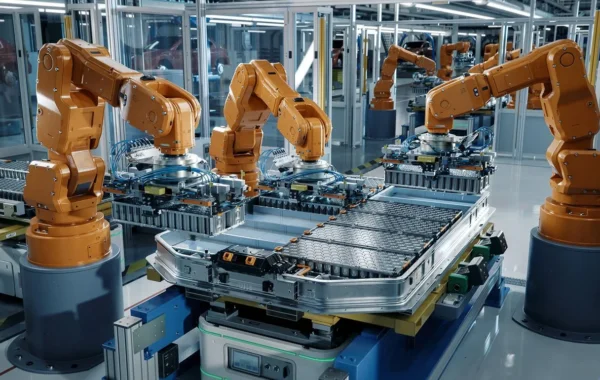
The showroom floor on Nairobi’s Mombasa Road tells an optimistic story of industrial transformation. Welded frames, imported lithium-ion cells and expanding assembly bays point to a future where Kenya’s transport network runs cleanly on homegrown electricity.
Yet, step off the assembly line and into the sobering economics of retail distribution, and a different reality emerges. While local assembly lines expand and public interest climbs, the mathematics of electric mobility in East Africa’s largest economy remain punishingly out of reach for the average motorist.
According to data compiled by the Electric Mobility Association of Kenya (EMAK), the country counts over 35,000 registered electric vehicles, overwhelmingly two-wheelers alongside a growing fleet of commercial buses and cars, up sharply from fewer than 800 units three years prior. State-backed data from Kenya Power indicates cumulative e-mobility electricity sales generated KES 382 million (approximately USD 2.9 million) over a recent 34-month window, prompting utility executives to project sector revenue reaching KES 5.9 billion by 2030.
Yet, for all the official enthusiasm surrounding this green transition, Kenya’s electric vehicle push is colliding with an unforgiving triad of capital costs, infrastructure deficits and technical skill shortages.
The upfront penalty
The primary barrier to mass adoption is not ideological reluctance; it is simple, cold arithmetic. While regulatory bodies have attempted to spur adoption—such as the Energy and Petroleum Regulatory Authority (EPRA) removing the 15,000-kilowatt-hour monthly ceiling on its special e-mobility tariff to encourage off-peak charging at KES 8 per unit—fully built units and core components still carry structural cost hurdles.
Commercial fleet operators, who drive the volume necessary to make urban electrification economically viable, operate on razor-thin margins. When diesel-powered minibuses, locally known as matatus, and delivery vans dominate the roads, switching to an electric alternative requires a heavy initial capital outlay that high interest rates in commercial banks make difficult to finance.
“The upfront capital required to transition a fleet remains exceptionally high,” notes an industry executive navigating Nairobi’s nascent market. “Operators look at the long-term fuel and maintenance savings, but when the immediate financing cost outweighs near-term cash flow, caution takes over.”
Tax incentives introduced in recent budget cycles have lowered excise duties and waived VAT on specific green transport components, but overlapping regulatory requirements and fiscal friction mean that these policy intentions often lose momentum before reaching the showroom floor.
The infrastructure desert
Beyond the showroom lies an equally formidable physical bottleneck: the charging network.
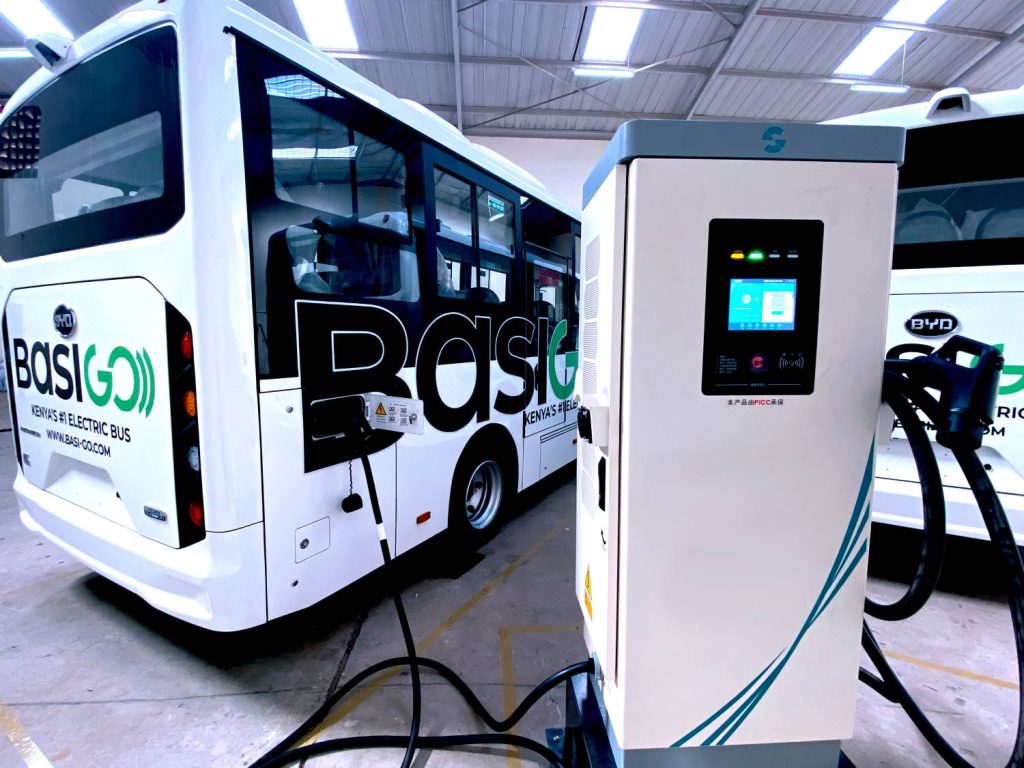
Recent data highlights that Kenya ranks near the forefront of public charging infrastructure in sub-Saharan Africa, boasting hundreds of public charging points nationally. Yet, these facilities remain highly fragmented and heavily concentrated in affluent urban enclaves like Westlands, Kilimani and Karen. For motorists operating outside these commercial nodes, or those attempting long-haul freight journeys along major arteries like the Northern Corridor connecting Mombasa to landlocked neighbours, the journey is fraught with anxiety.
Range anxiety is more than a psychological hurdle; it is a commercial risk. As Eric Tsui, Commercial Manager at asset financing firm Watu Credit, points out regarding the broader ecosystem, “At the moment, every player has its own battery and charging requirements. Without standardisation, expansion becomes expensive and inefficient, and those costs eventually find their way to the rider.”
Public chargers face high commercial markups to recover grid connection, land, software and hardware expenses—such as indicative highway charging rates hitting KES 48 per kWh—which can quickly erode projected operational savings. A delivery van stranded without grid access or compatible charging ports represents lost revenue, idle labour and crippled productivity.
While power generation capacity in Kenya is robust, anchored heavily by geothermal, hydro and wind assets, the distribution grid requires significant capital reinforcement to handle simultaneous high-capacity fast-charging demand without destabilising local transformers. Without coordinated public-private investment in out-of-town charging infrastructure, electric mobility remains tethered to city limits.
The skills deficit
A modern vehicle fleet requires a modern maintenance ecosystem. Here, Kenya faces a quiet human capital crisis.
High-voltage electrical systems demand specialized diagnostic equipment and certified technicians trained in battery chemistry, inverter maintenance and thermal management. At present, the formal and informal mechanical training pipeline is lagging behind the pace of vehicle imports and local assembly.
Reflecting on these operational constraints, the Kenya National Electric Mobility Policy framework notes that systemic barriers continue to be compounded by “misinformation, the high upfront costs of EVs, limited maintenance expertise, and insufficient charging infrastructure.”
Fleet managers express growing concern over long-term operational risks. When an electric powertrain fails, operators cannot rely on the ubiquitous roadside mechanics who keep internal combustion engines running for decades. The shortage of certified repair personnel inflates downtime and drives up insurance underwriting costs, casting a shadow over the lifetime cost-of-ownership advantage that electric vehicles promise.
Rethinking the transition
Kenya’s green transport strategy occupies a delicate space between progressive policy ambition and structural economic constraint.
As Kenya Power Managing Director and CEO Dr Joseph Siror observed during recent sector engagements, “This is clear evidence that EV adoption is no longer a pilot, but a mainstream reality.”
The momentum behind local assembly proves that industrial actors see long-term viability in the market. But industrial policy alone cannot override the laws of capital and infrastructure. Unless financing models evolve to absorb high initial costs, charging networks expand beyond wealthy suburbs, and technical training scales up to meet demand, the country’s electric transition risks becoming an urban luxury rather than a national transformation.
As energy and transport analyst Judith Mutua cautions regarding the commercial mechanics of the shift, “Solarisation lowers long-term energy costs and supports sustainability, but the upfront investment is high. That’s why policy support is critical—we want to avoid passing extra costs to riders.”
The assembly lines will keep moving, but until the economics work for the street, the revolution will idle in the slow lane.