The Japanese brewing giant inherits an undisputed regional champion—and a market where tax policy repeatedly outpaces consumer spending.
By The Ledger NewsBeat Desk
Japan’s Asahi Group Holdings has cleared the final regulatory hurdle to acquire a controlling 65% stake in East African Breweries PLC (EABL) from Diageo for KSh 284bn ($2.2bn). With unconditional approval granted by Kenya’s Competition Authority on Friday, the transaction represents a significant realignment of corporate capital across East Africa’s consumer markets.
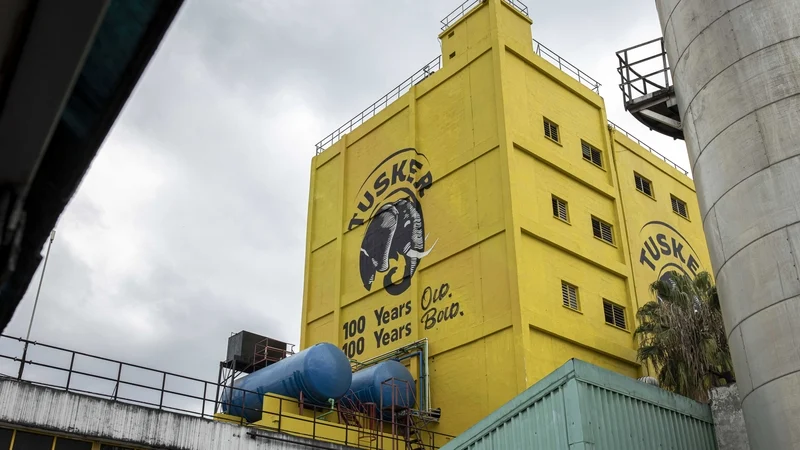
The deal is less a victory lap for the Tokyo-listed giant than an entry into a complex regional war of attrition. Inheriting Diageo’s dominant footprint—including staple brands such as Tusker, White Cap, and Senator Keg, alongside extensive malting and distilling infrastructure—also means inheriting the structural headwinds that have squeezed EABL’s operating margins in recent quarters.
Diverging corporate priorities
The transaction illustrates a clear divergence in global brewing strategies. Diageo is trimming non-core international assets to pare down net debt and reallocate capital toward higher-margin spirits in North America and Europe. Meanwhile, Asahi is buying volume abroad to offset a domestic Japanese market constrained by an aging, shrinking population.
The commercial footprint Asahi gains across Kenya, Uganda, and Tanzania is operationalised, but turning demographic growth into sustainable corporate profits will depend on how its new management navigates three distinct regional pressures.
The operational fronts
                       ASAHI'S EABL INHERITANCE
                                  │
    ┌─────────────────────────────┼─────────────────────────────┐
    ▼                             ▼                             ▼
Premium Push vs.            Fiscal Volatility             Capital Allocation
Value Reality               & Excise Duties               & Competition
• High-margin labels vs.     • Frequent tax hikes          • KSh 15bn Kisumu plant
• Low-cost Senator Keg       • Pressure on cash flows      • Rivalry with AB InBev
Premiumisation versus price sensitivity
Asahi’s global model relies heavily on scaling international premium labels such as Peroni Nastro Azzurro and Asahi Super Dry. Integrating these brands into EABL’s established distribution network will be an early priority.
However, East Africa’s consumer landscape differs sharply from Western Europe or Japan. In Kenya, EABL’s primary revenue market, persistent inflation and compressed real incomes have forced price-sensitive households down the value chain. While urban micro-pockets in Nairobi and Kampala support premium lager growth, overall volume relies heavily on mainstream options and low-cost offerings like Senator Keg. Pushing premium labels without starving the low-cost operations that protect EABL’s market share against illicit alcohol will require careful calibration.
The excise tax treadmill
Taxation remains the single largest risk factor for EABL’s cash flows. Kenya’s National Treasury has repeatedly relied on excise duties on alcoholic beverages as an immediate lever for revenue collection. These statutory increases directly compress sales volumes and erode operating margins, as EABL has limited room to pass cost hikes onto financially stretched consumers.
Asahi’s leadership is accustomed to navigating Japan’s liquor tax framework, which underwent structural updates in recent years. Yet predictable policy in Japan contrasts with the fiscal volatility of East Africa. Asahi’s success will hinge on driving supply-chain and malting efficiencies to absorb future tax shocks.
Regional competition and capital deployment
Under Diageo, EABL committed substantial capital to regional infrastructure, including a KSh 15bn ($116m) brewery in Kisumu designed specifically to expand Senator Keg capacity. Asahi takes over these capital-intensive operations amid fluctuating raw material and energy costs across the region.
At the same time, international rivals like Anheuser-Busch InBev maintain established positions in neighbouring southern markets and continue to monitor East Africa closely. Asahi must decide whether to maintain EABL’s current capital expenditure roadmap or reallocate funds toward aggressive regional marketing to defend its perimeter.
The horizon
The replacement of a legacy British multinational by Japanese corporate capital highlights how global investment patterns are shifting across African markets. The transaction is expected to close by the final quarter of the year following routine cross-border filings.
Asahi has secured control of an undisputed regional market leader. Whether it can extract profitable growth from a territory where tax policy frequently outpaces consumer purchasing power remains the central question facing its new subsidiary.