Aliko Dangote’s $16bn Kenyan mega-complex promises energy independence for East Africa—if it can survive unhedged crude, debt-choked balance sheets, and the region’s fractious politics.
By The Ledger Team
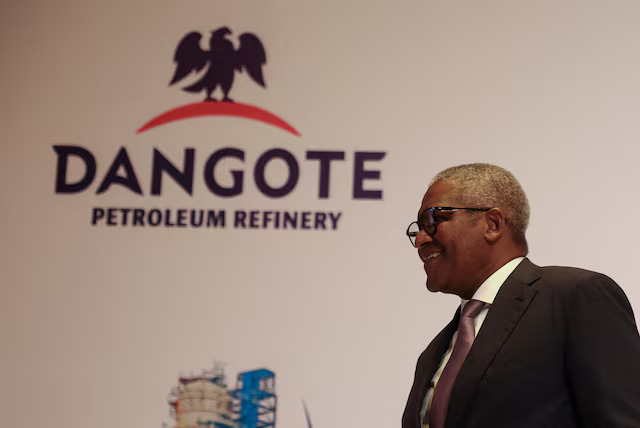
Between the low-slung mangroves and tidal flats of Lamu, a quiet coastal outpost in northern Kenya, earthmovers have begun clearing scrubland for what Aliko Dangote promises will be East Africa’s largest industrial effort. The Nigerian billionaire’s conglomerate, Dangote Industries, has set 30 September 2026 as the formal groundbreaking date for a $16bn energy infrastructure hub. At its heart sits a 700,000-barrel-per-day crude oil refinery alongside a 1,000-megawatt power plant fired by natural gas.
The physical footprint is massive, and the financial risk is equally clear. Should the facility proceed on schedule toward its 2030 target, the complex would eclipse even Mr Dangote’s 650,000-barrel-a-day plant outside Lagos, turning a coastal backwater into the primary petroleum processing site for the continent.
Nairobi is pitching the complex as a sovereign economic fix. The administration of President William Ruto believes the development will lower local pump prices, break the region’s structural reliance on refined fuel imports, and anchor the long-stalled Lamu Port-South Sudan-Ethiopia Transport corridor. State officials are so keen on the venture that Kenya is negotiating to acquire a 10% equity stake valued at $500m (about Sh64.74bn), while encouraging regional neighbours including Ethiopia and Rwanda to take up portions of a proposed 30% sovereign shareholding block.
Yet beneath the official optimism lies a thicket of practical and financial problems.
The feedstock dilemma
The primary vulnerability rests in the project’s upstream exposure. Kenya produces no commercial crude of its own. Unlike Mr Dangote’s Nigerian complex, which sits near domestic Niger Delta oil fields, the Lamu refinery must rely entirely on tankers imported via international shipping routes.
President Ruto’s chief economic adviser, David Ndii, has suggested that East Africa could eventually supply 600,000 barrels of crude a day from South Sudan, Uganda, and Kenya’s own Lokichar Basin. However, energy sector analysts remain deeply chary of these regional sourcing projections. As Maximillian Ezeude, an oil and gas lawyer based in Lagos, noted to Reuters: “Ugandan crude must be routed to Tanzania via the EACOP pipeline, while South Sudan’s exports leave through Sudan. That leaves the coastal facility dependent on a volatile international seaborne market”.
| Category | Project Metric | Commercial Details |
| 💰 Capital Outlay | $16.0 Billion | Integrated downstream refinery & gas power infrastructure |
| 🛢️ Refine Capacity | 700,000 bpd | Eclipses Lagos facility to become Africa’s largest site |
| ⚡ Power Output | 1,000 MW | Gas-fired station fed via proposed Tanzanian LNG import deal |
| 🏛️ Sovereign Stake | 30% Block | Kenya pursuing 10% ($500m); balance offered to regional states |
| 📅 Timeline | 2026 – 2030 | Groundbreaking targeted for 30 Sept 2026; 48-month buildout |
| 👷 Workforce Impact | 60,000 Jobs | Estimated total direct construction and indirect logistical roles |
Operating a facility fed mostly by imported seaborne crude leaves refining margins thin and highly vulnerable to shipping rate spikes and Middle Eastern geopolitical disruptions.
The power generation component carries its own diplomatic entanglements. According to local news reports, the Kenyan government actively negotiated to double the planned capacity of the gas-fired power station to 1,000MW to cover domestic electricity shortfalls and balance the national grid. To fuel the plant, the project relies on securing long-term gas supplies from offshore fields in neighbouring Tanzania via pipeline or tankers. The two East African nations have spent years locked in trade disputes over agricultural tariffs, customs clearances, and air transit rights. Piping or shipping gas across the border assumes a level of sustained bilateral harmony that regional history suggests is far from guaranteed.
Sovereign balance sheets under strain
The project’s proposed capital structure presents another severe friction point. As detailed by Semafor, the broader $40bn five-year energy expansion plan pursued by Dangote Group relies heavily on a 70% debt-to-equity financing model. Securing tens of billions in commercial debt for traditional fossil-fuel assets has grown increasingly difficult as global financial institutions tighten climate lending criteria.
Kaase Gbakon, a petroleum economist formerly with Nigeria’s state-owned NNPC, highlighted the capital constraints to Reuters: “Given that the group is seeking some $40 billion between 2025 and 2030 for announced energy projects, raising the capital for Lamu could become a formidable challenge”.
| Financing Slice | Share (%) | Capital Value | Target Lenders & Shareholders |
| 🔴 Commercial Debt | 70% | $11.2 Billion | International banking syndicates, export credit agencies & private debt |
| 🟢 Equity Capital | 30% | $4.8 Billion | Dangote Industries, State of Kenya ($500m), regional sovereign partners |
| 📊 Total Structure | 100% | $16.0 Billion | Total capital expenditure requirement for the Lamu energy complex |
Local financial markets in East Africa lack the depth to absorb debt of this size, while international syndicates remain wary of issuing long-term loans backed by regional governments already burdened by heavy debt loads.
Then there is the matter of construction. Building large infrastructure in Africa is rarely straightforward. Mr Dangote’s Lekki refinery outside Lagos suffered years of delays, supply bottlenecks, land disputes, and rising costs before producing commercial fuel.
Replicating such an engineering task in Lamu—a remote region without deep-water port terminals, heavy transport roads, specialized grid tie-ins, or high-capacity security coverage—presents an operational test of extraordinary difficulty. Environmental campaigners have also raised alarms; Greenpeace Africa warned that siting the facility near Lamu Old Town, a UNESCO World Heritage property, threatens coastal mangrove habitats and marine life.
The race against peak demand
Hovering over the entire enterprise is a basic question about long-term fuel demand. While Africa’s rapid population growth currently drives steady consumption of diesel and petrol, the multi-year construction schedule lands the refinery squarely in a period where clean energy adoption is picking up speed.
Research by energy think tank E3G points out that global oil demand is likely to plateau during the coming decade, creating long-term commercial uncertainty for high-cost new refiners. In East Africa, small-scale solar installations and the rapid adoption of electric two- and three-wheel vehicles threaten to flatten the growth curve for traditional fuels far sooner than energy planners previously assumed.
For Mr Dangote, the venture represents a high-stakes calculation that sheer industrial scale can overcome Africa’s stubborn structural friction. However, independent analysts caution against underestimating execution risks. As Brendon Verster, senior economist at Oxford Economics, succinctly warned Reuters: “If not successfully implemented, it runs the risk of becoming a very expensive white elephant”.