By collapsing a KSh.1 million death sentence into an affordable state subsidy, Nairobi and Pfizer have struck an unprecedented bargain. Yet whether a notoriously leaky supply chain can deliver life-saving molecules without corruption stalling the pipeline remains the state’s true test.
By Kirimi Mbogo
A single treatment cycle costing KSh.1 million, roughly US$7,700, is a death sentence in a country where per capita income hovers near US$2,000.
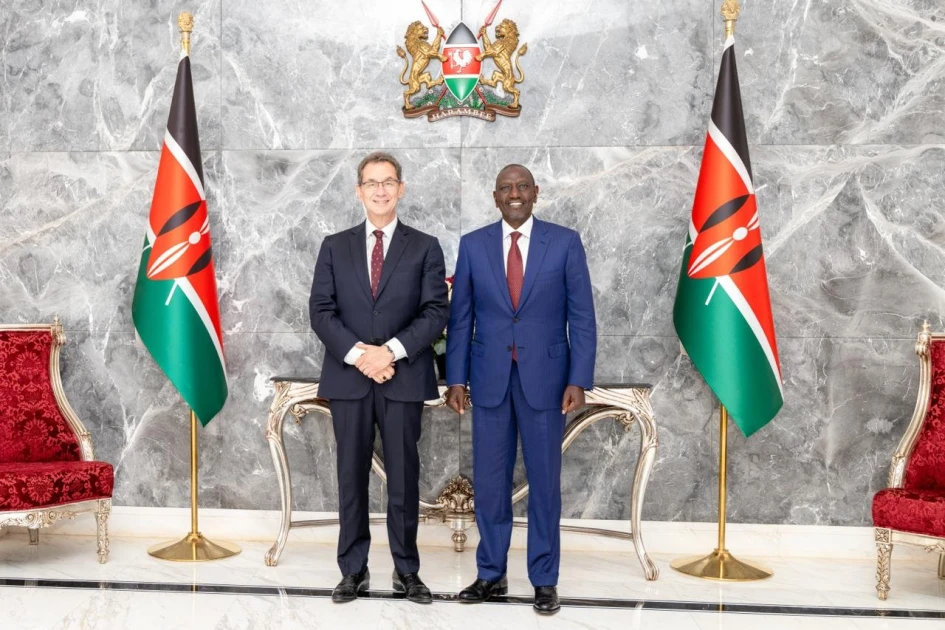
On August 31st, inside the grand reception rooms of State House in Nairobi, President William Ruto welcomed Albert Bourla, the chairman and chief executive of Pfizer, to sign off on an arithmetic shift that seems almost non-sensical on paper. Under a fresh bilateral deal struck between the American pharmaceutical titan and the Kenya Medical Supplies Authority, the price tag attached to nine primary oncology treatments will drop by more than sevenfold. Certain specialized therapies, hitherto priced at that prohibitive KSh.1 million ceiling, are set to fall below KSh.50,000 per cycle.
The arrangement falls under Pfizer’s global non-profit initiative, known as the Accord for a Healthier World, which Kenya formally joined in June last year. The procurement list targets the country’s most lethal oncological burdens: breast, stomach, colon, lung, prostate, and oesophageal cancers, alongside leukaemia, lymphoma, and multiple myeloma.
“Today, Kenya has made a major breakthrough in the treatment of several cancers following the signing of a consequential agreement with Pfizer,” Mr Ruto announced shortly after the meeting.
The fiscal ramifications for Nairobi’s newly minted healthcare infrastructure are immediate. Under the state-backed Social Health Authority, the government provides a KSh.800,000 cancer coverage allowance per household. Previously, that sum was swallowed instantly by initial rounds of therapy, leaving desperate families to gouge their savings or rely on public appeals to fund the deficit. Mr Ruto noted that the radical price cuts will “make the KSh.800,000 Social Health Authority cancer package fully adequate without additional cost to patients.”
Yet the fiscal arithmetic is only half the battle. Sub-Saharan African health systems have long suffered from chronic delay, typically waiting a decade or more for western pharmaceutical breakthroughs to trickle down through regional distribution networks. Under the terms outlined on Monday, Kenyan state buyers gain immediate access to Pfizer’s newest patented therapies, bypassing the historic lag entirely.
“Additionally, Kenya will access newer medicines without the 10-year wait that cancer patients are currently subjected to,” Mr Ruto said.
Whether the state distribution apparatus can handle the sudden influx is another matter. Public medical supply chains across East Africa remain notoriously prone to bottlenecks, corruption, and cold-chain breakdowns. Nevertheless, state officials insist administrative reforms are already yielding results; the state buyer’s order fulfillment rate has reportedly surged to 91 per cent from a dismal 40 per cent baseline.
Looking beyond immediate relief, the state is angling for structural self-reliance. As the African Union’s designated champion for local manufacturing of medical commodities, Mr Ruto stressed that the long-term objective remains domestic production rather than permanent reliance on foreign finished imports.
“As the African Union Champion for Local Manufacturing of Medical Commodities, I am proud that Pfizer is making available these technologies and newer medicines for local pharmaceutical production in the continent,” Mr Ruto added, signaling an intent to transfer manufacturing technology directly to African facilities.
The high-profile signing—attended by Health Cabinet Secretary Aden Duale, Medical Services Principal Secretary Ouma Oluga, and US Chargé d’Affaires Susan M. Burns—marks a rare moment where global corporate strategy aligns neatly with low-income public policy. If the promises hold up against the harsh reality of African logistics, Nairobi may have carved out a blueprint for continental drug procurement that turns exorbitant western patents into accessible public goods.