Informal businesses account for most new jobs in Kenya, yet employment figures reveal little about their productivity, profits or resilience. Better measurement matters for a government trying to tax, finance and support an economy that operates largely beyond conventional payrolls.
By Kirimi Mbogo
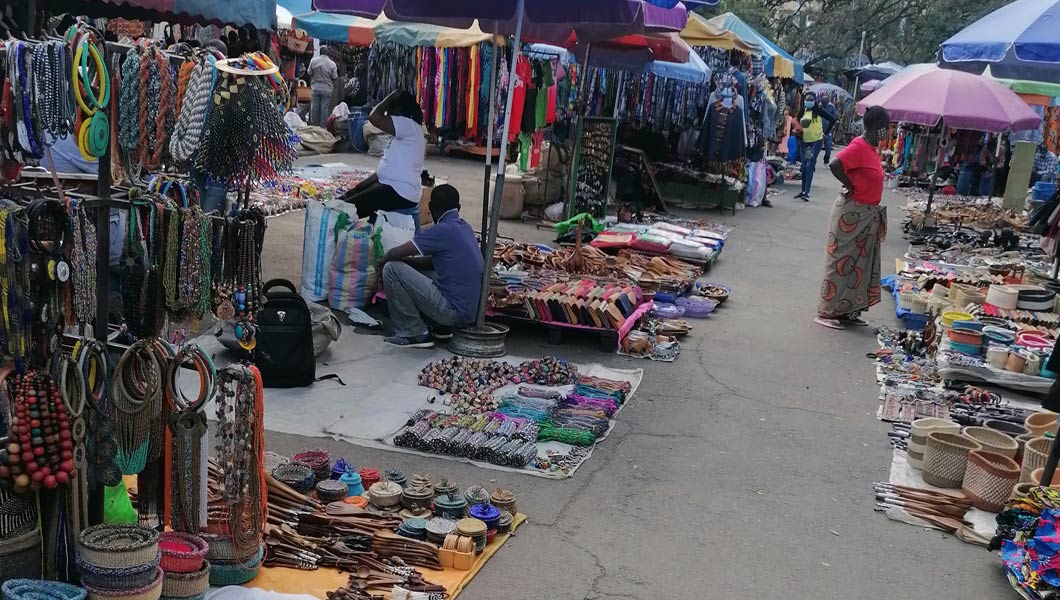
A trader buying vegetables before dawn, a fundi fabricating metal gates in a roadside workshop and a woman selling household goods from a kiosk are all contributing to Kenya’s economy. Yet their economic circumstances are radically different. One may employ several people; another may barely cover the cost of stock. Both may be classified as informal businesses. Neither is adequately understood through a simple count of jobs.
The scale of the challenge is apparent in the Economic Survey 2026 published by the Kenya National Bureau of Statistics (KNBS). Total recorded employment, excluding rural small-scale agriculture and pastoral activities, rose to 21.6m people in 2025, from 20.8m in 2024. The informal sector accounted for 87.2% of the 822,100 additional jobs. Informal-sector employment reached an estimated 18.1m people.
These figures tell an important story about where Kenyans find work. They tell a less complete one about the economic value that work creates.
The distinction matters. Employment is not the same as productivity, turnover is not the same as profit, and a growing number of businesses does not necessarily mean rising household incomes. For policymakers, investors and lenders, the challenge is to understand not simply how many people participate in the informal economy, but how it functions and what prevents its enterprises from becoming more productive.
The economy behind the headline figures
Kenya’s informal economy encompasses far more than roadside traders and open-air workshops. It includes small manufacturers, casual construction workers, domestic workers, transport operators, home-based producers and people providing services without the employment protections associated with formal jobs.
The International Labour Organization (ILO) defines the informal economy as economic activities by workers and economic units that are “in law or in practice, not covered or insufficiently covered by formal arrangements”. The definition captures both enterprises and workers, a distinction that matters when interpreting the statistics.
A registered company can employ people informally. Conversely, a person working independently may have customers, keep records and earn a regular income without operating a formally registered enterprise. Informality is therefore not a single condition, and the boundary between formal and informal activity is not always straightforward.
KNBS’s 2026 survey offers a useful breakdown. Wholesale and retail trade, hotels and restaurants accounted for an estimated 10.7m informal-sector workers in 2025. Manufacturing accounted for 3.6m, while community, social and personal services accounted for 1.9m. These figures suggest that informal activity is not a marginal corner of the economy. It is central to how goods are distributed, services are delivered and livelihoods are sustained.
But the figures should not be mistaken for a measure of economic contribution. A headcount cannot establish how much value each worker produces, how much an enterprise earns or how much remains after expenses. Nor does it reveal whether a worker has a reliable income, paid leave or protection against illness.
What the national accounts can see
There is an important misconception behind many discussions of the informal economy: that activity outside formal registration or taxation is automatically excluded from gross domestic product (GDP).
That is not how national accounting is supposed to work.
The United Nations’ System of National Accounts sets out an internationally agreed framework for measuring economic activity. Its 2025 edition makes the principle explicit: “the integrated framework of the SNA includes all productive activities irrespective of whether these activities are formal or informal”.
In other words, informal production should be counted in GDP even when businesses do not submit company accounts or tax returns. Statistical agencies use surveys, administrative records and estimation techniques to capture activity that cannot be observed directly.
The difficulty lies in achieving comprehensive coverage and reliable estimates. Small enterprises may have no written accounts. Household spending and business expenses can be difficult to separate. Production may fluctuate with weather, customer demand, transport costs or access to working capital. Some activities are seasonal; others are conducted from homes or temporary premises that conventional business surveys may overlook.
These problems do not establish that Kenya’s GDP is systematically understated by any particular amount. They do, however, create uncertainty about the completeness and precision of the underlying estimates.
The distinction is especially important when the economy changes faster than its measurement systems. New digital services, changing trading patterns and shifts in consumer behaviour may not be reflected immediately in the data used to estimate production. Statistical revisions and updated surveys can improve the picture, but they cannot turn every small transaction into a precisely observed economic fact.
The missing measure is productivity
Consider two small businesses employing three people each. One generates enough revenue to pay its workers, replace equipment and invest in expansion. The other earns just enough to replenish stock and meet daily expenses. Employment statistics may treat them similarly. Their economic prospects are not.
This is the central limitation of using job creation as a proxy for economic progress. Kenya can add hundreds of thousands of informal jobs without a corresponding improvement in productivity, earnings or financial security.
The distinction also complicates assessments of government policy. A tax measure may raise the cost of goods sold by a small trader, while higher transport or electricity costs squeeze a workshop’s margins. But the number of people classified as informally employed cannot reveal how these pressures affect individual enterprises. Nor can it establish how many businesses respond by raising prices, reducing investment or leaving the market.
Such questions require more detailed evidence: enterprise revenues and expenses, hours worked, earnings, access to credit, business survival rates and the extent of social protection. Household surveys can help establish how work affects living standards, while enterprise surveys can shed light on productivity and constraints to growth.
Mobile-money records and digital payments may provide additional clues, but they are not a complete solution. Transactions do not necessarily represent final production, and a business’s receipts are not equivalent to its value added. Cash remains important, while digital records may capture transfers between people rather than sales of goods and services.
The objective should be to combine complementary sources of evidence, not to treat any single data stream as a definitive account of the informal economy.
Better data, better policy
Measurement matters because the consequences extend beyond GDP estimates. Banks need to assess whether small enterprises can repay loans. Governments need to understand the distribution of incomes and the effects of taxation. Workers need policies that improve earnings and access to social protection. Investors need to distinguish expanding markets from businesses trapped in low-productivity activity.
Poor information can distort each decision. Lenders may reject viable businesses because their records do not fit conventional credit assessments. Policymakers may design compliance requirements that impose disproportionate costs on small operators. Equally, the assumption that informality represents an enormous reservoir of untapped wealth can encourage unrealistic expectations about tax revenue or enterprise growth.
Formalisation alone will not resolve these problems. Registration is useful when it gives businesses access to finance, legal protections, public services and larger markets. It is less attractive when compliance costs rise before an enterprise has the capacity to meet them.
The ILO’s Recommendation No. 204, adopted in 2015, accordingly calls for a transition to the formal economy that respects workers’ rights and supports income security, livelihoods and entrepreneurship.
For Kenya, the statistical priority is to improve the evidence on both informal enterprises and informal employment, while making the limitations of estimates clear. More regular surveys, consistent definitions and better information on earnings and productivity would help establish whether the economy is creating viable businesses or merely absorbing workers who have few alternatives.
The 2026 Economic Survey already demonstrates the importance of looking beyond formal payrolls: nearly nine out of every ten additional recorded jobs in 2025 were attributed to the informal sector. The next question is what those jobs provide in return.
Kenya does not need statistics that pretend to see every transaction. It needs statistics that distinguish what is observed from what is estimated, and employment growth from improvements in living standards. The informal economy is not absent from the national accounts by definition. The harder task is to measure its performance well enough to understand where value is being created, where it is being lost and what might help more businesses grow.