
The bill for the digital boom is only starting to arrive
By Muturi Githae
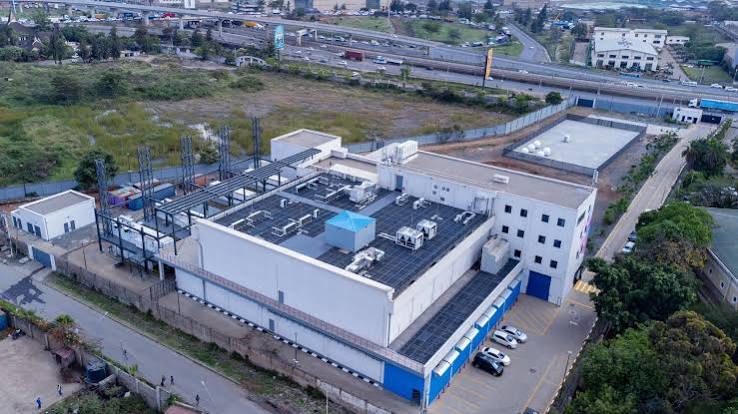
In Nairobi, a data-centre expansion that will add 20MW of computing capacity is being financed not by a technology giant but by a bank. Rand Merchant Bank has structured funding for iXAfrica’s campus, taking its planned capacity to 22.5MW. The terms were not disclosed.
That is the less glamorous side of the AI boom.
Someone has to pay for the buildings, transformers, fibre, cooling systems, batteries and electricity contracts before an algorithm earns its first shilling. In Africa, where capital is scarce and power grids are uneven, the question is becoming rather more interesting: who carries the risk when the continent builds infrastructure for a digital economy whose future revenues are still being guessed at?
The answer is not simply Big Tech.
Banks are stepping in. Development financiers are taking equity positions. Infrastructure funds are raising capital. Telecoms companies are spending from their balance sheets. Governments are offering land, tax incentives or infrastructure. Consumers will eventually pay through the price of electricity, connectivity and digital services.
And some of the risk will sit, rather quietly, with taxpayers.
The economics are already visible in Kenya. iXAfrica’s Nairobi campus, backed by a $50m investment from Helios, is expanding from 2.25MW to 22.5MW. Guy Willner, the company’s chairman, said the RMB financing would position it to welcome “more hyperscale and AI customers”.
That sounds like a straightforward commercial proposition.
It is not.
A data centre is a peculiar hybrid. Part technology business, part property development, part utility customer and, increasingly, part piece of national infrastructure. Its owners need long-term capital because the buildings and power systems are expensive. Its customers want flexibility. Its lenders want predictable cash flows. Governments want investment without having to subsidise it indefinitely.
Those interests do not always rhyme.
Africa’s financing gap makes the calculation harder. The continent still accounts for less than 1% of global data-centre capacity, even as mobile-data consumption grows rapidly. The International Finance Corporation invested $100m in Raxio Group in 2025 to expand facilities across Ethiopia, Angola, Côte d’Ivoire, Mozambique, the Democratic Republic of Congo and Uganda. (Reuters)
The IFC’s investment is significant for another reason. It is not merely financing racks and servers. It is helping to make an infrastructure market investable.
That is often how development finance works at its most useful: take a risk that commercial lenders regard as awkward, demonstrate that the business can function, then hope private capital follows.
It is following.
RMB’s financing of iXAfrica is one example. Across the continent, Africa Data Centres, Raxio, Liquid Intelligent Technologies and other operators are building capacity as cloud computing and AI increase demand. South Africa remains the continent’s dominant data-centre market, accounting for roughly 70% of African capacity, while Kenya is emerging as the principal East African hub.
But there is an inconvenient dependency beneath all this investment.
Electricity.
A data centre without reliable power is a very expensive warehouse.
Kenya has an advantage. More than 90% of its electricity generation comes from renewable sources, giving data-centre developers an unusually attractive proposition for customers concerned about carbon emissions. iXAfrica’s Nairobi campus is among those positioning Kenyan power as part of the investment case.
Yet clean electricity is not the same as cheap electricity, and neither guarantees availability.
The proposed Microsoft-G42 data-centre project in Kenya has provided a useful warning. The $1bn facility, intended to run on geothermal power, has faced delays amid negotiations over payment arrangements and the scale of its electricity requirements. Kenya’s government has said the project has not been cancelled, but discussions have continued over how its power needs should be structured.
That distinction matters enormously.
When a hyperscale facility arrives, the public sector may be asked to provide more than permits. It may need to strengthen transmission lines, guarantee power availability, improve roads, extend fibre or offer fiscal concessions.
At that point, the question changes.
Who is paying?
If a government spends public money to enable a private data centre, taxpayers are financing part of the digital infrastructure. If a utility builds capacity for a large customer and recovers the cost through tariffs, electricity users may eventually carry some of it. If a bank lends against projected revenues and the project underperforms, shareholders and creditors take the hit.
There is nothing inherently wrong with any of these arrangements.
But they should be visible.
The temptation in the AI era is to treat data centres as an unquestionable public good. They are not. They are businesses. Some will succeed spectacularly. Others will be rendered obsolete, underused or simply stranded by the next generation of computing technology.
The useful question for African governments is therefore not whether to attract data centres. It is what they are prepared to guarantee in order to attract them.
South Africa’s recent experience is instructive. Eskom, the state-owned power utility, is now courting data-centre operators after years of electricity shortages. The utility has reported a substantial power surplus and sees large digital facilities as attractive customers. But it still carries enormous debts and faces municipal arrears of about R118bn. (Financial Times)
The irony is hard to miss.
A utility once unable to provide enough electricity is now hoping that some of the world’s hungriest electricity consumers will help repair its finances.
Perhaps.
The business case for data centres is strongest where the private and public interests overlap. Reliable electricity, abundant fibre, political stability and proximity to customers benefit both the operator and the wider economy. But governments should resist paying for everything in the hope that a few server farms will magically create a technology industry.
They might not.
A data centre creates construction jobs. It creates demand for engineers, technicians, security and maintenance. It can lower latency and improve cloud access. It can support banks, hospitals, universities and start-ups. But its direct employment footprint is relatively modest compared with its capital cost.
The bigger economic prize lies downstream.
African businesses need computing power to process payments, train models, analyse satellite imagery, manage logistics and deliver health services. Local data hosting can improve speed, reduce some costs and strengthen control over sensitive information. Those benefits are real. (Reuters)
But they depend on demand.
That is why the financing structure matters more than the ribbon-cutting ceremony.
Kenya’s government is already seeking large-scale investment in AI computing infrastructure, fibre networks and submarine cables. Its ten-year digital plan is estimated at KSh484bn. (Business Daily Africa) The ambition is considerable. So is the financing requirement.
Some of the money will come from private investors. Some from development institutions. Some from domestic banks. Some, inevitably, from the state.
The trick is to ensure that public money buys public value rather than merely reducing the risk of private capital.
That means transparent concessions. Competitive power agreements. Clear rules on land and infrastructure. Disclosure of subsidies. Proper assessments of grid impact. And contracts that do not leave governments paying for capacity that nobody eventually needs.
The continent has seen versions of this story before. Roads, ports, power plants and telecommunications networks have all been sold as transformational infrastructure. Some were. Others became expensive monuments to optimistic forecasts.
AI should not receive a special exemption from arithmetic.
The irony is that the technology industry’s greatest promise to Africa is partly dependent on some decidedly old-economy disciplines: project finance, power generation, construction, land, debt and regulation.
The server is glamorous.
The transformer is not.
Yet the transformer may determine who wins.
Africa does not need to finance every data centre that arrives with an impressive logo and a forecast of exponential AI demand. It needs enough of them to create a functioning digital economy, financed on terms that do not quietly transfer excessive risk to the public.
That is a narrower proposition.
It is also a more credible one.
The AI boom may produce Africa’s next generation of infrastructure. Whether it produces a comparable generation of returns will depend on who paid for the foundations — and who is left holding the bill if the forecasts prove wrong.